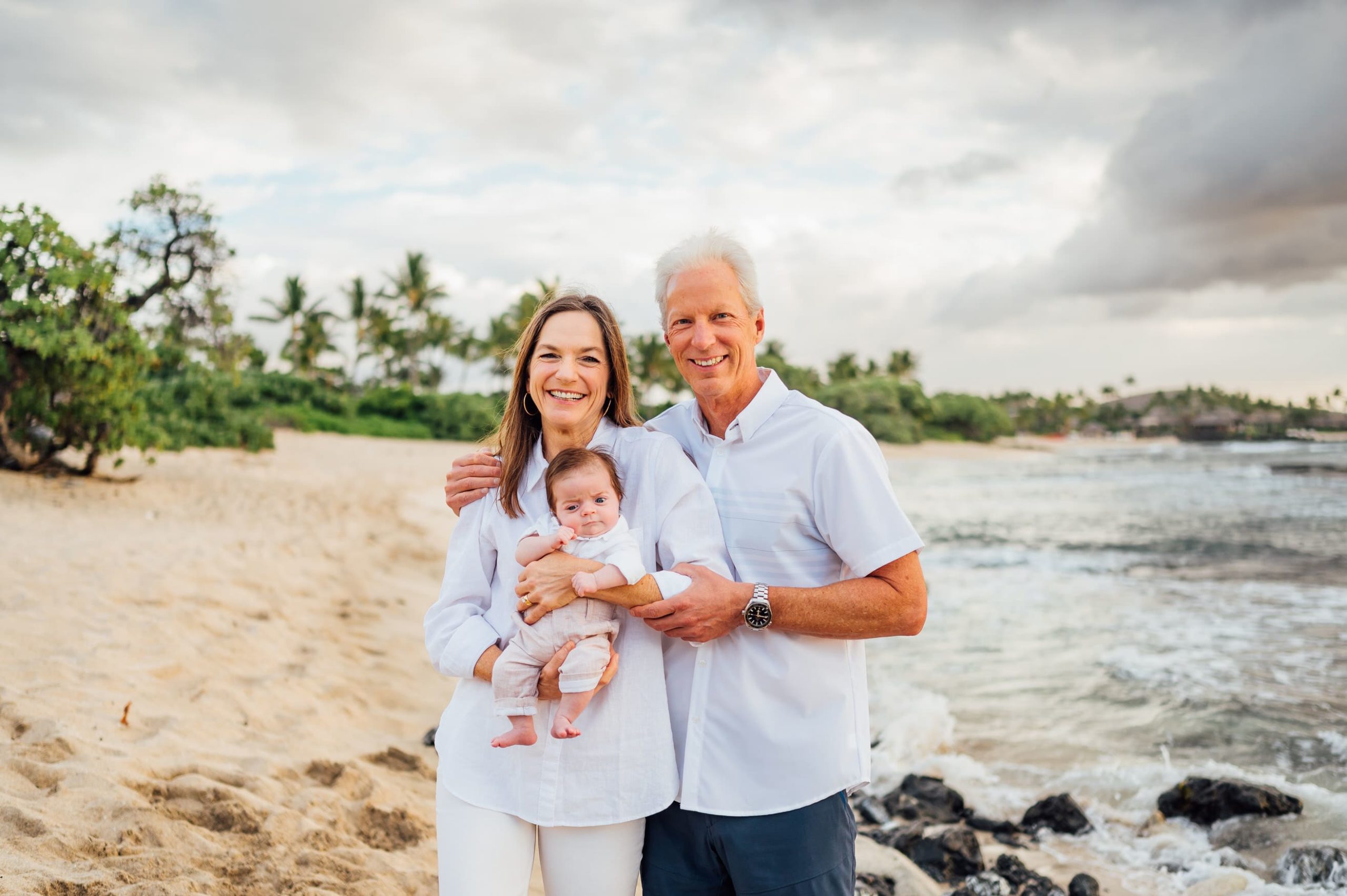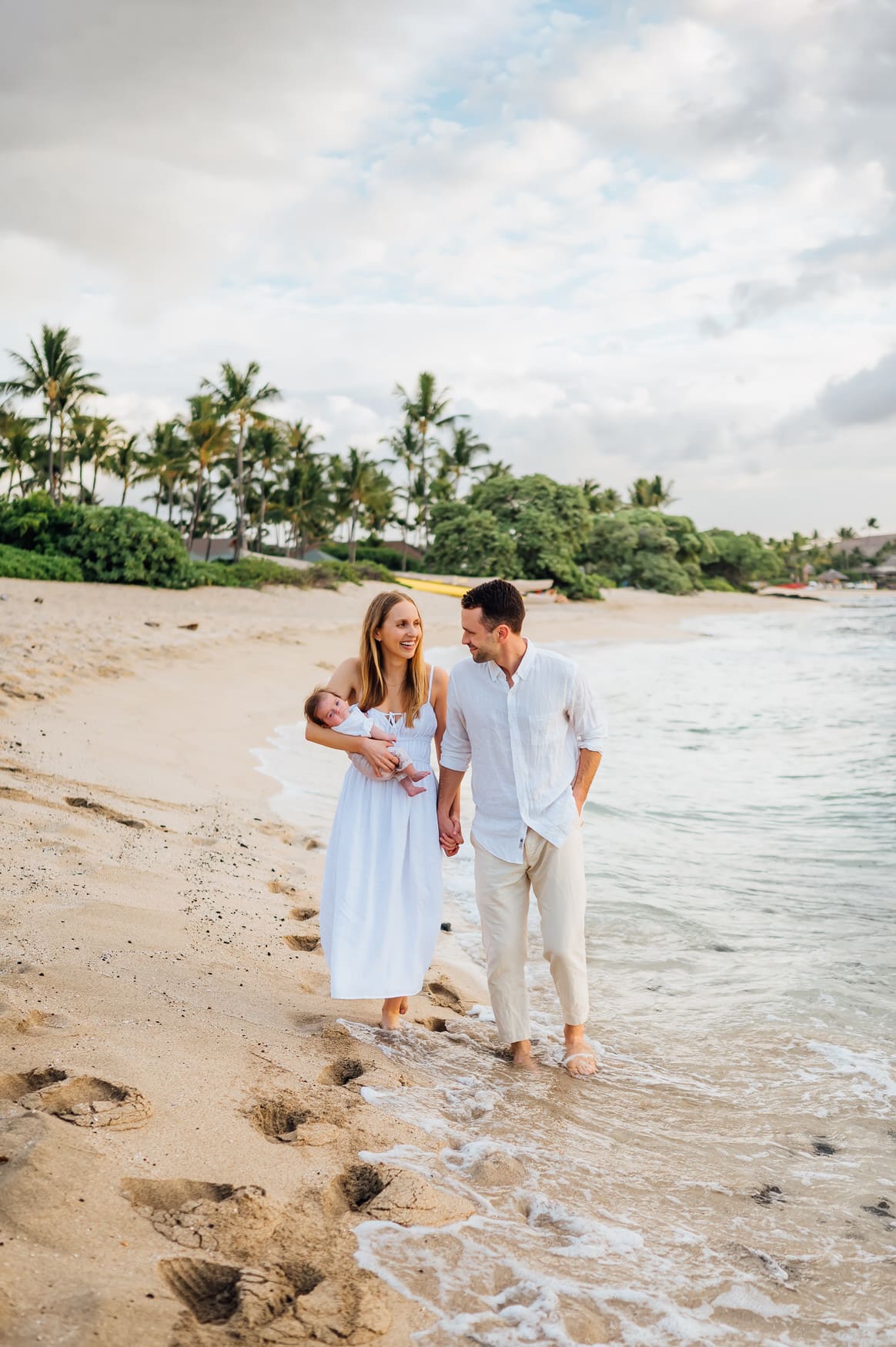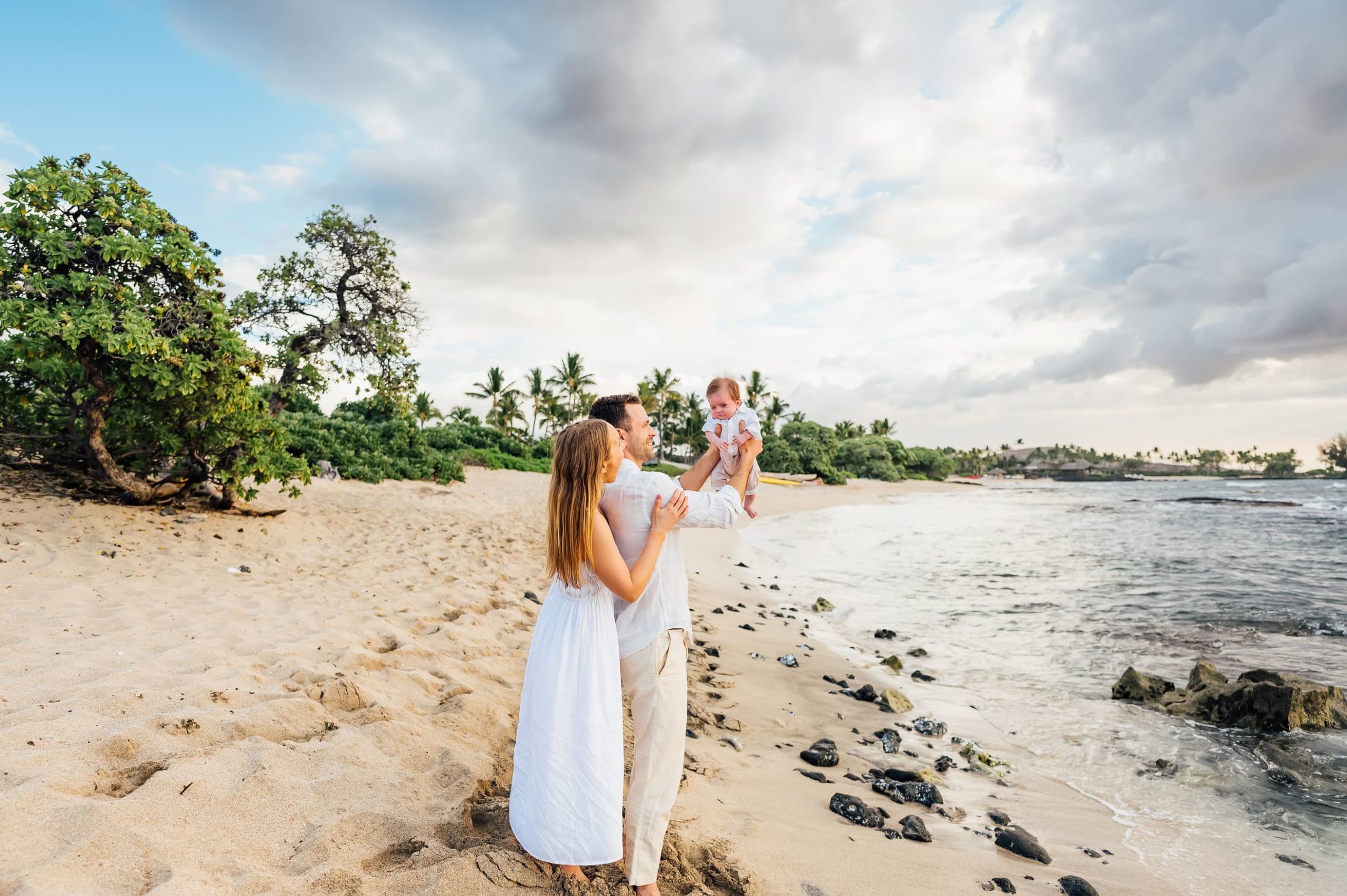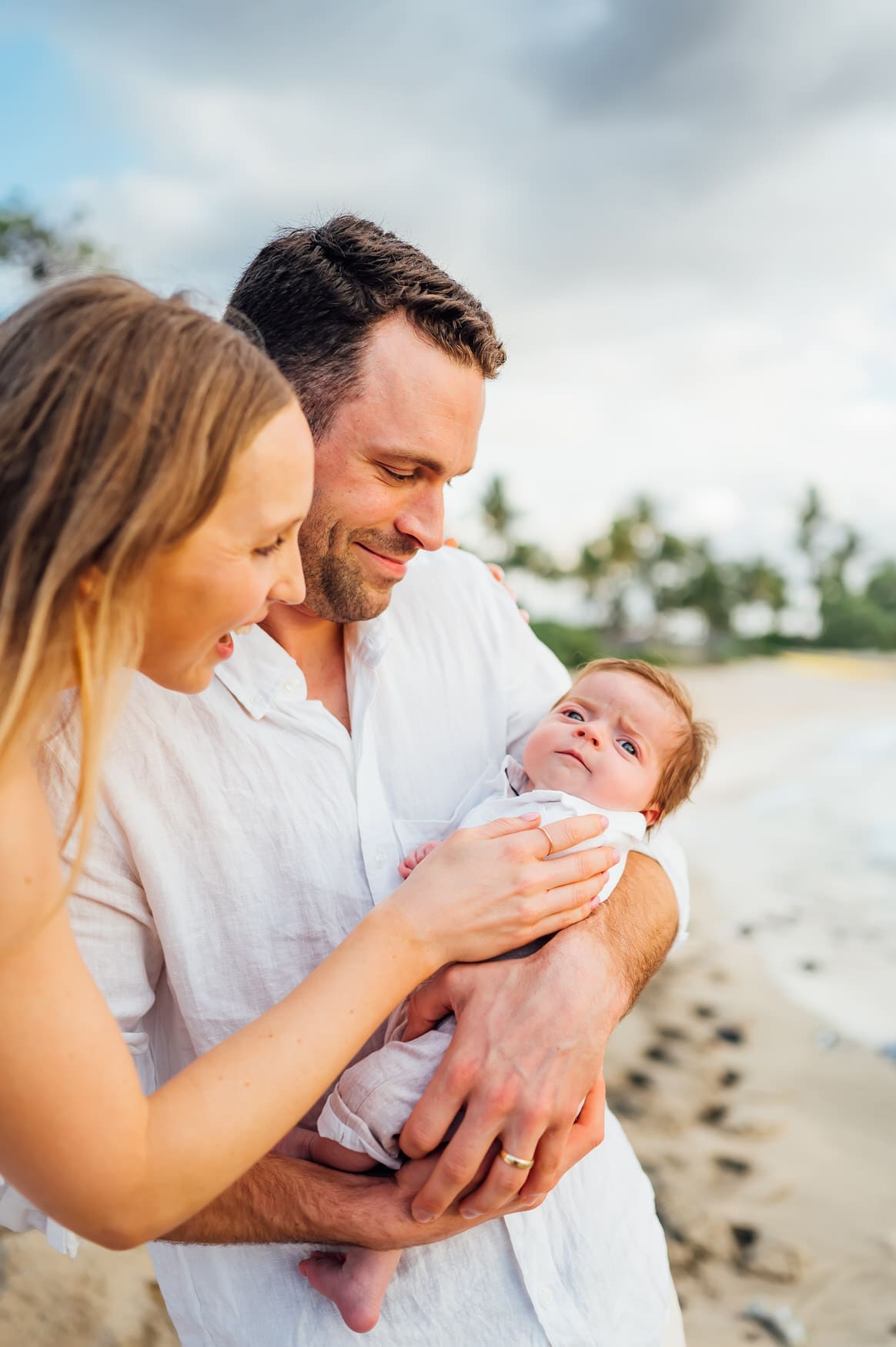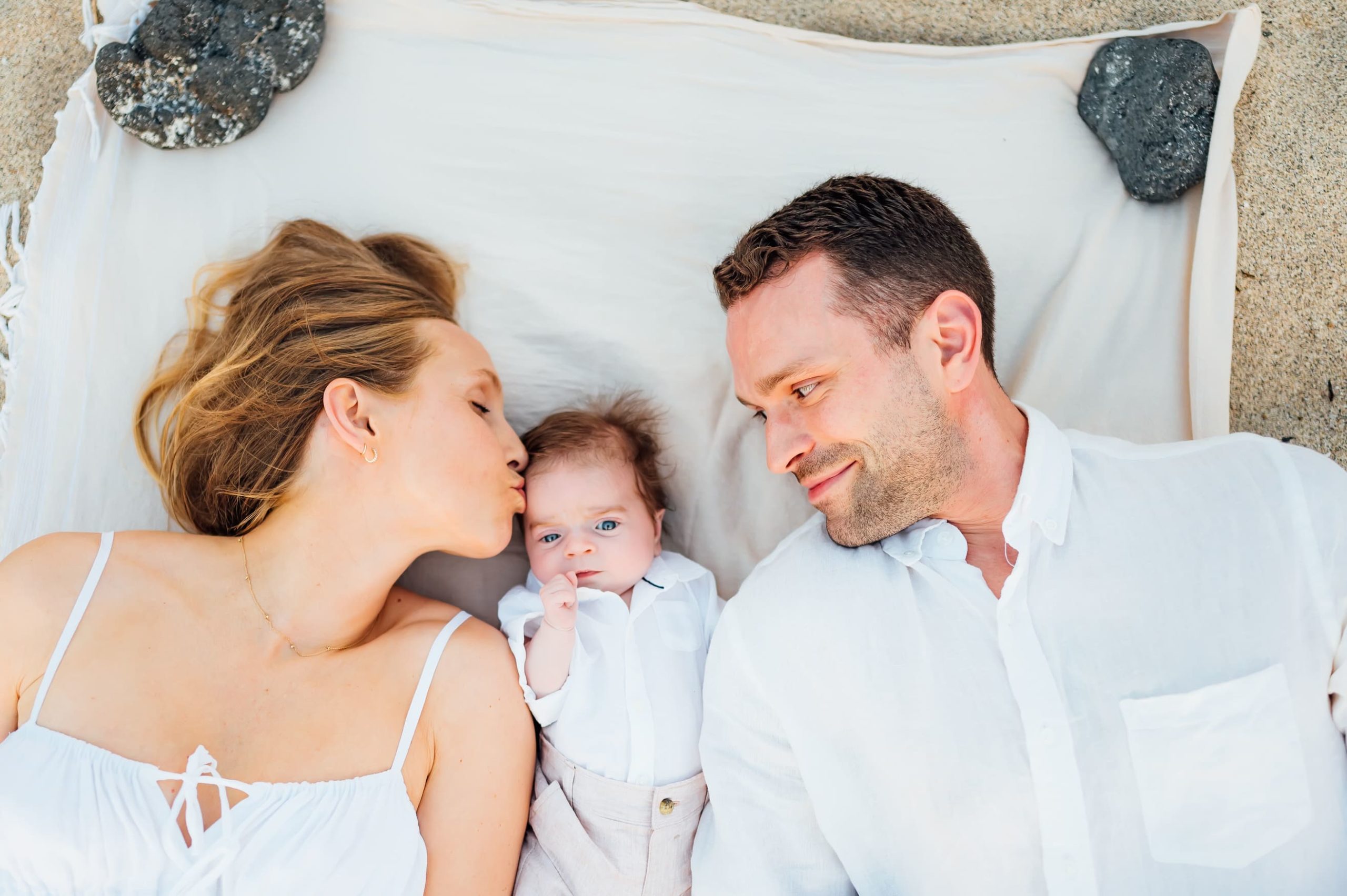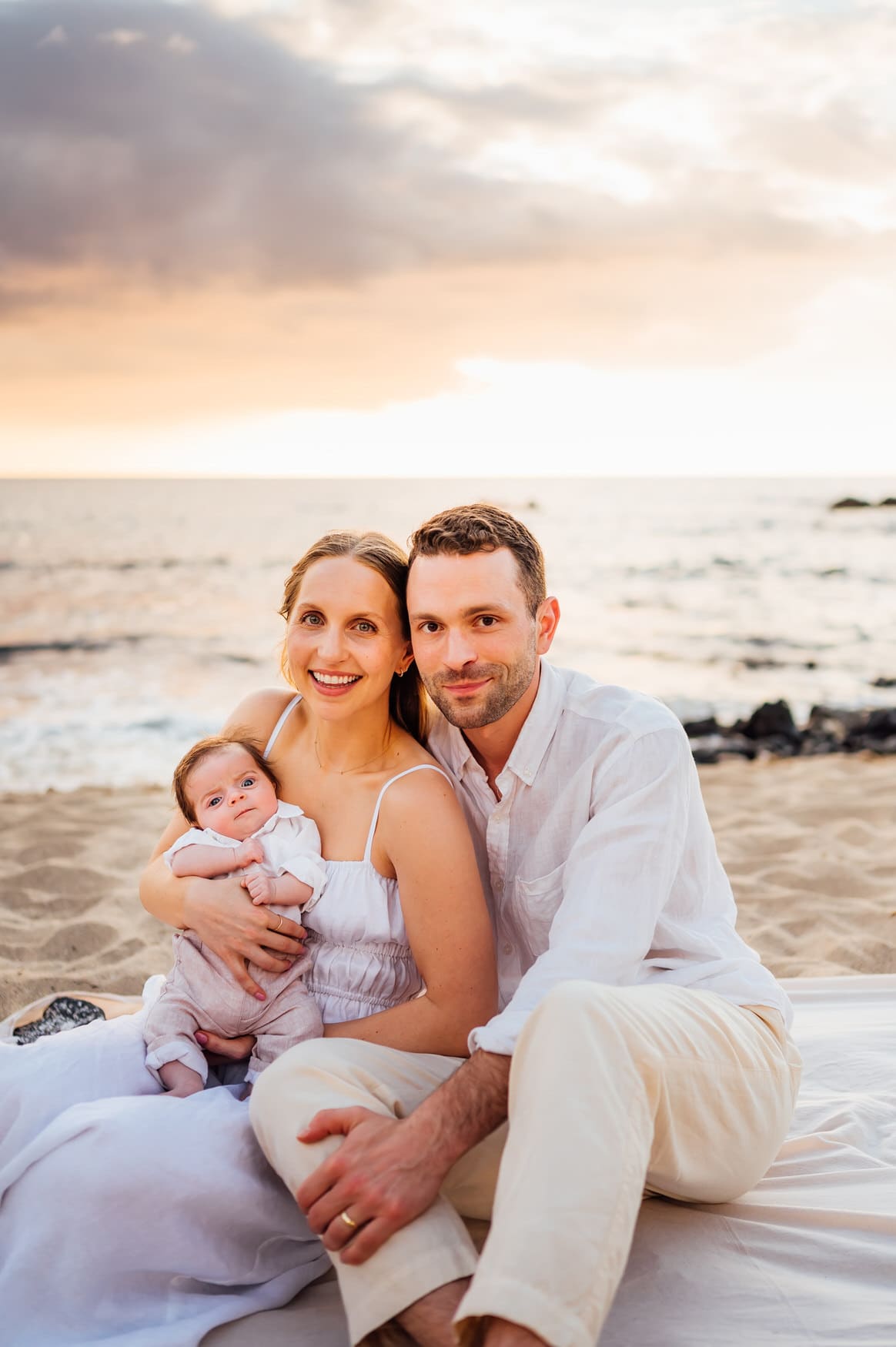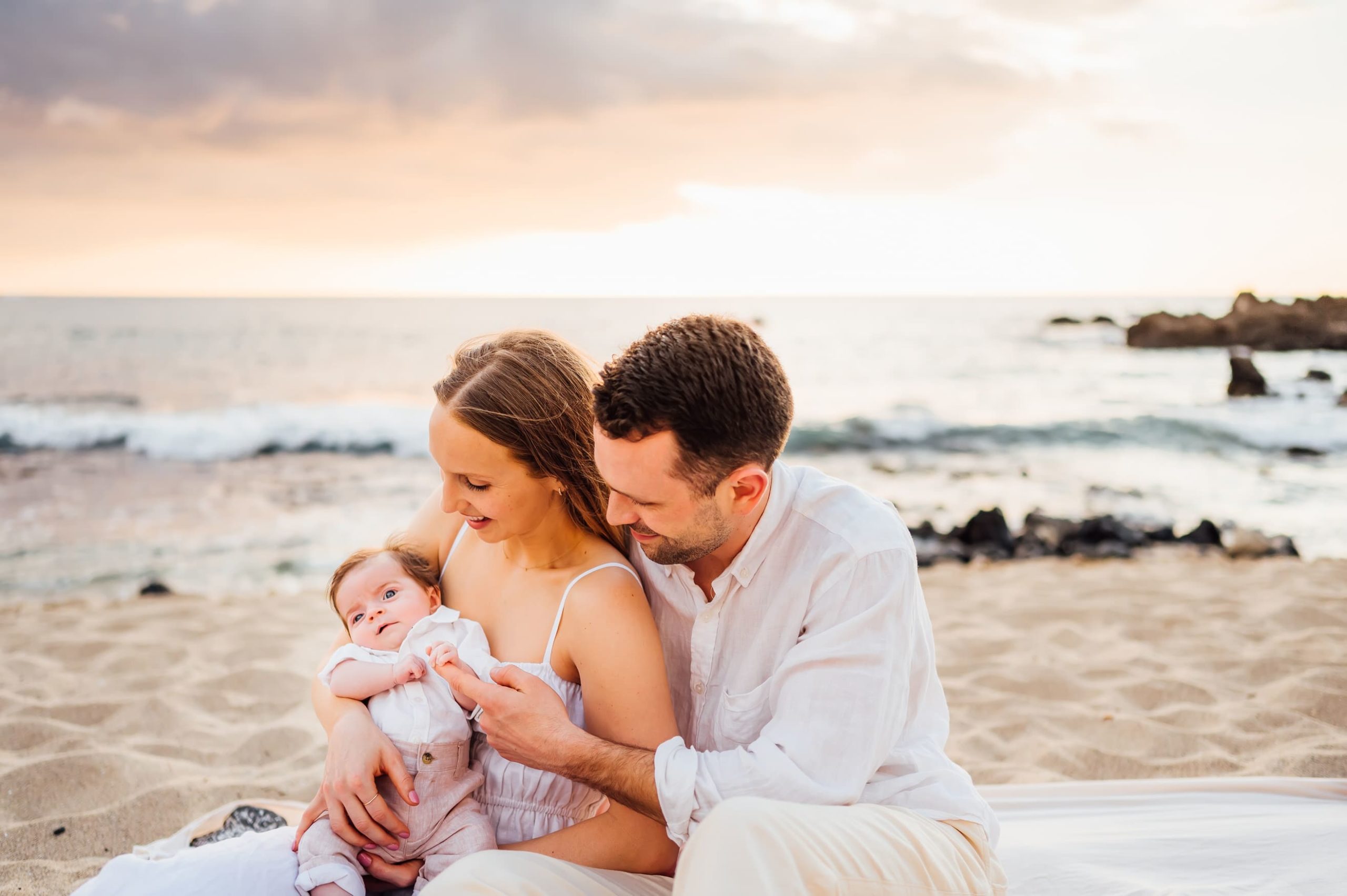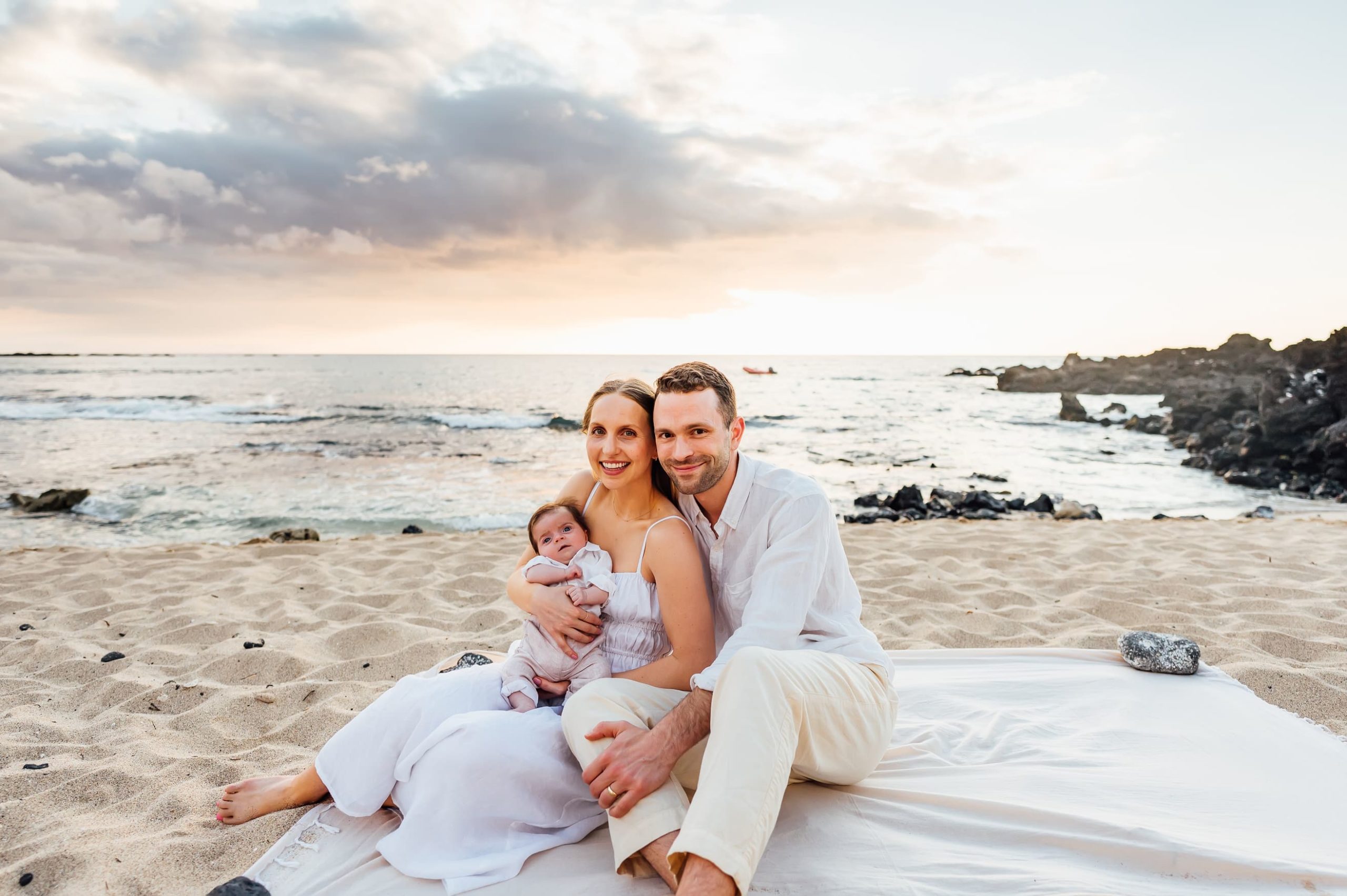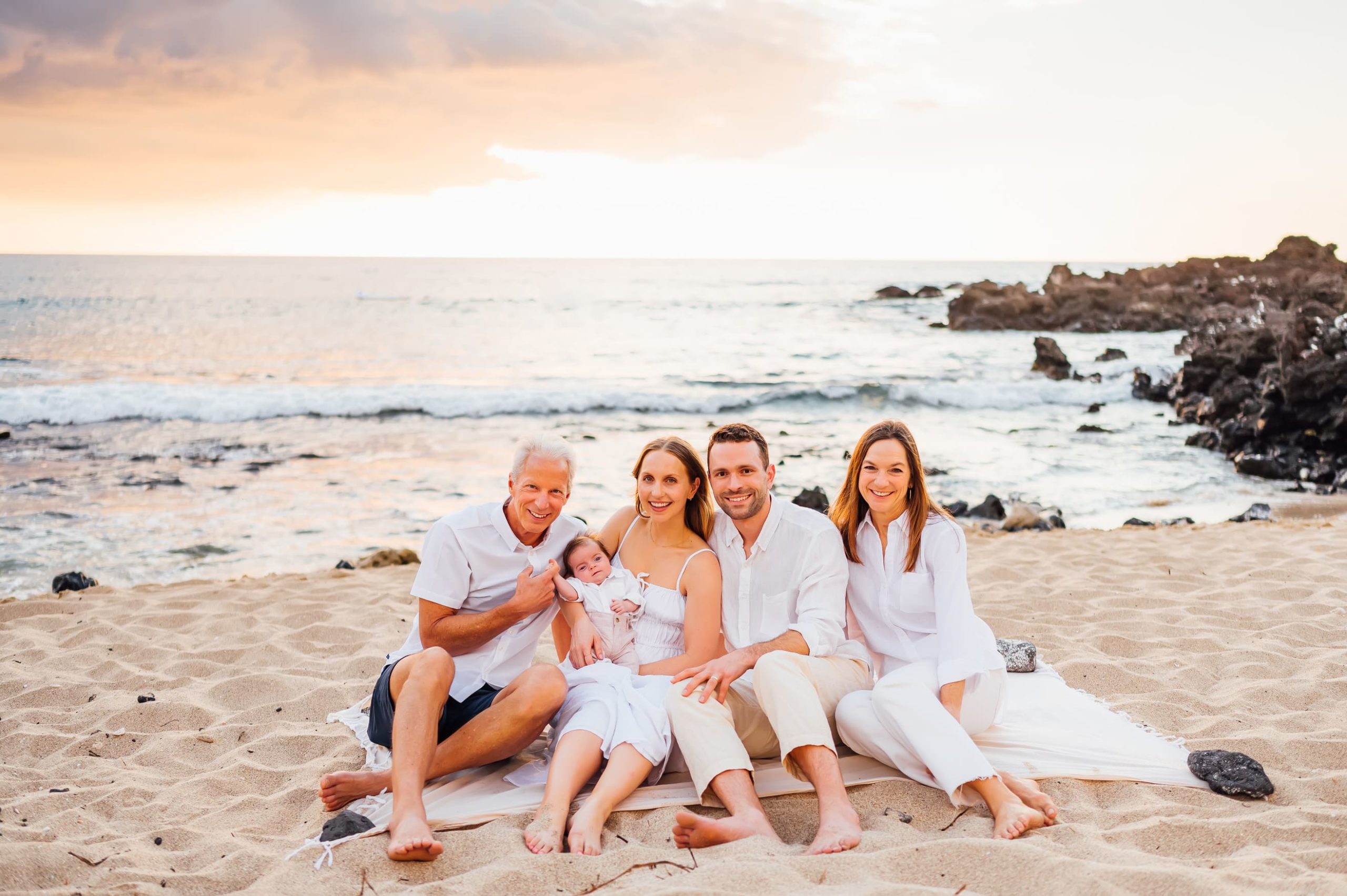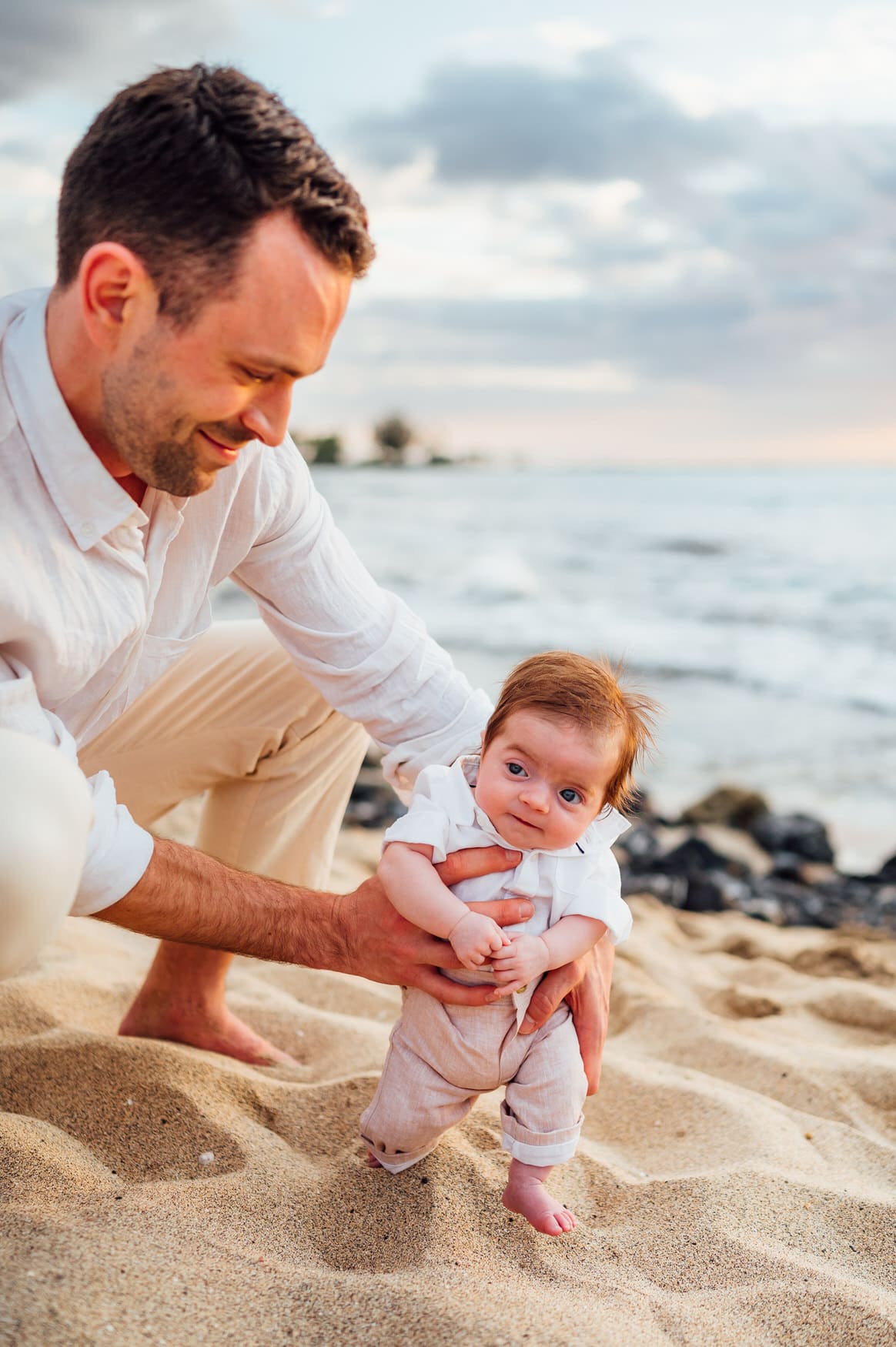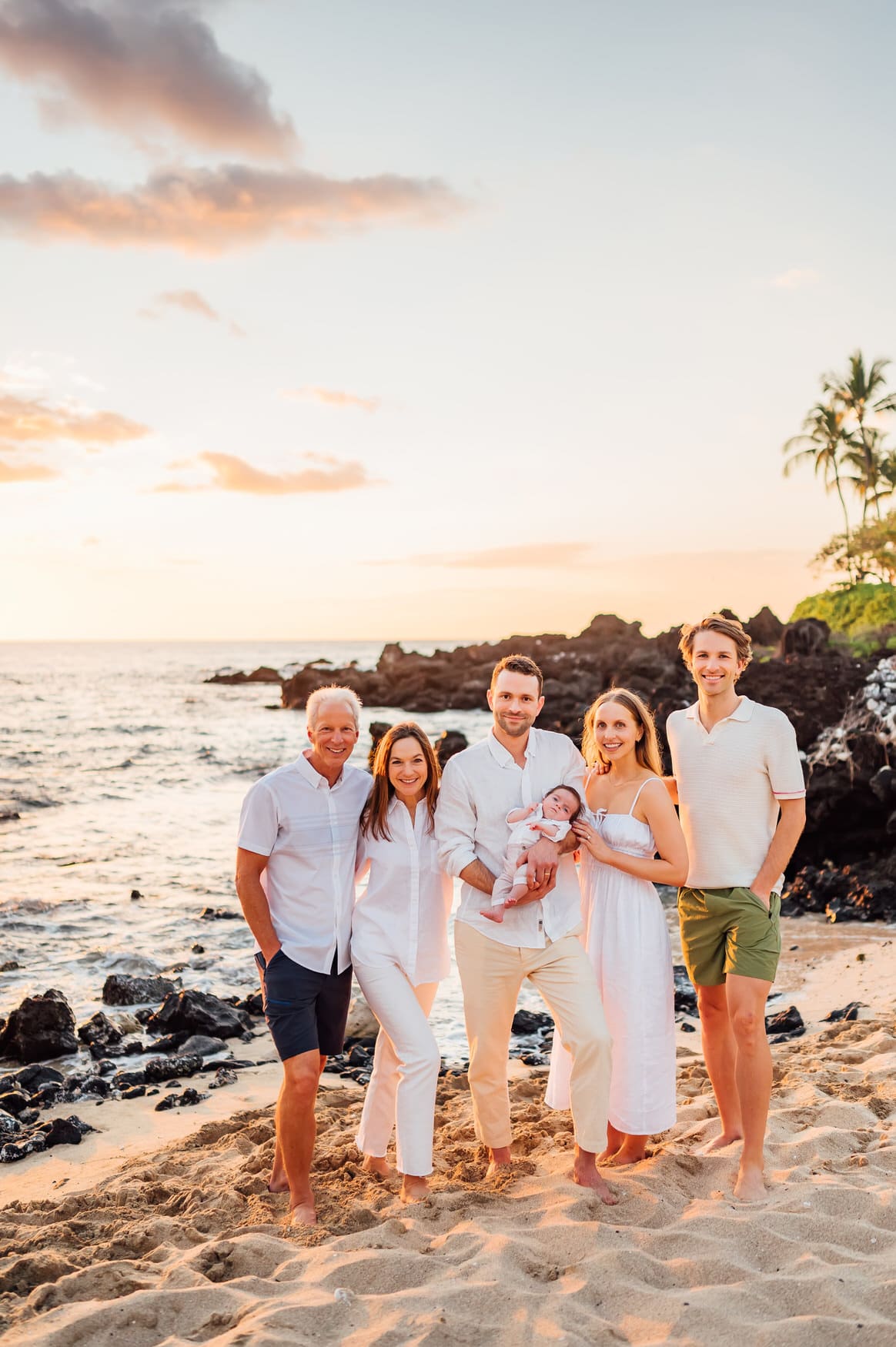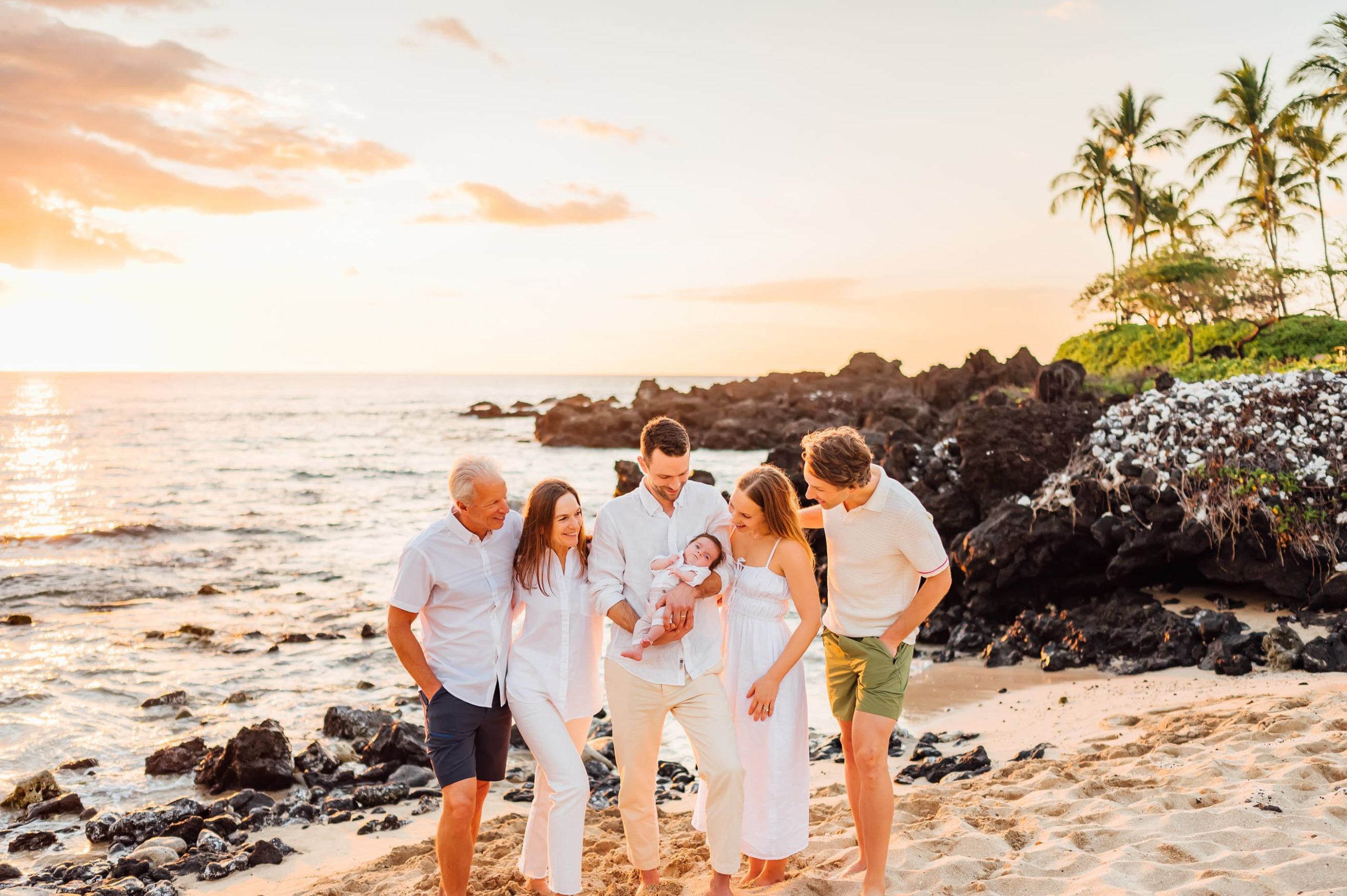

Hawaii Family Beach Photos with a Newborn
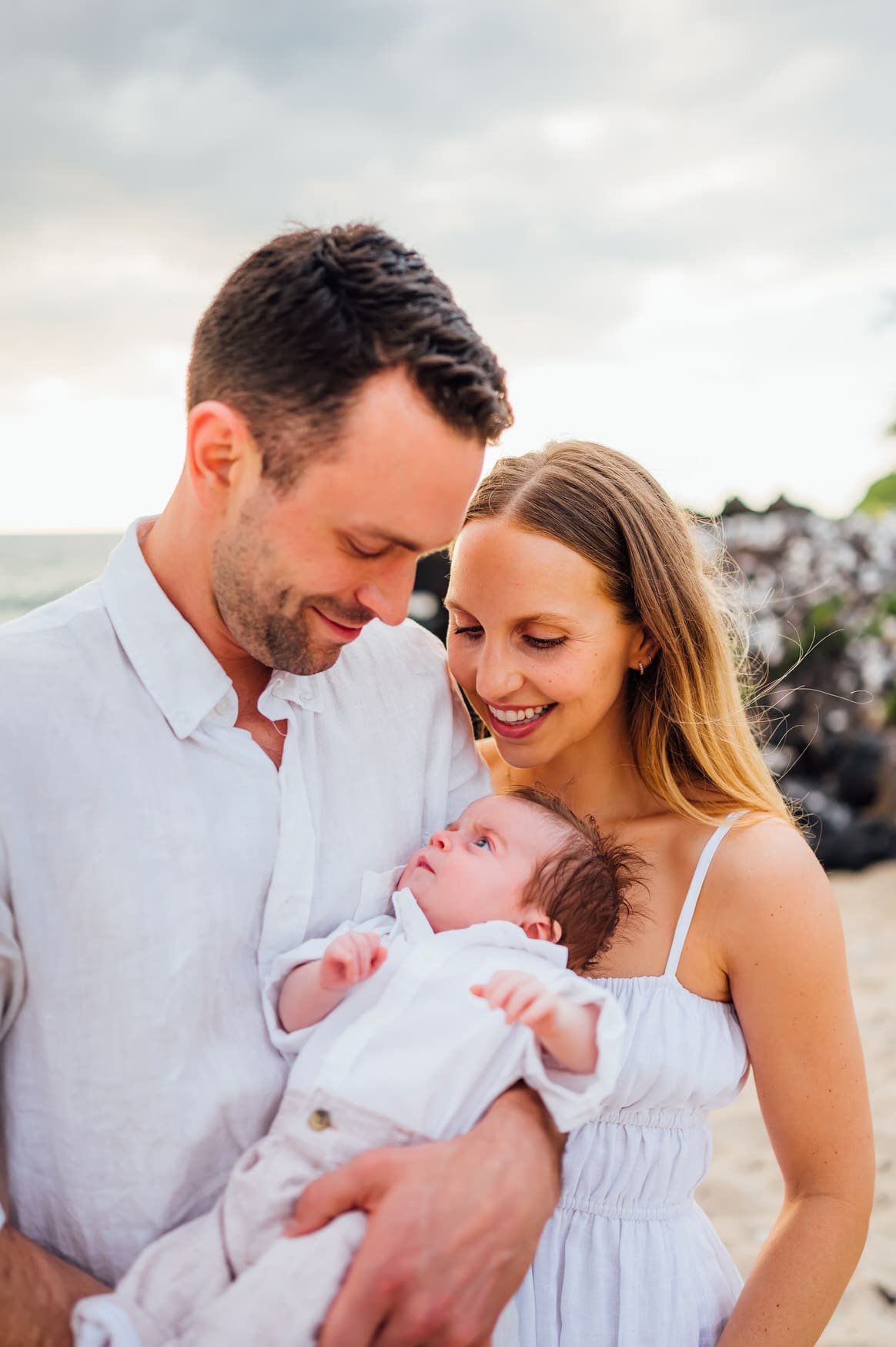
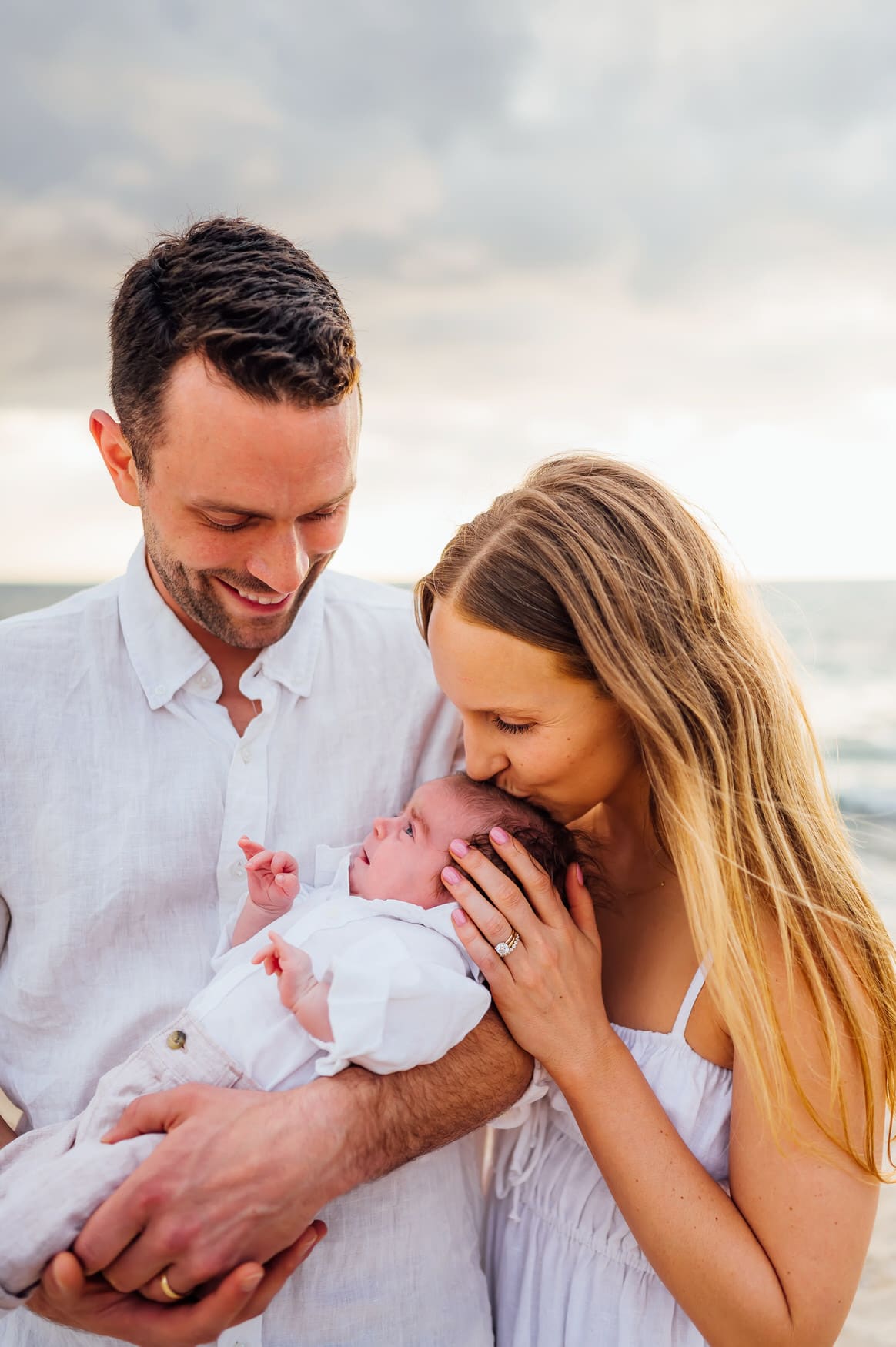
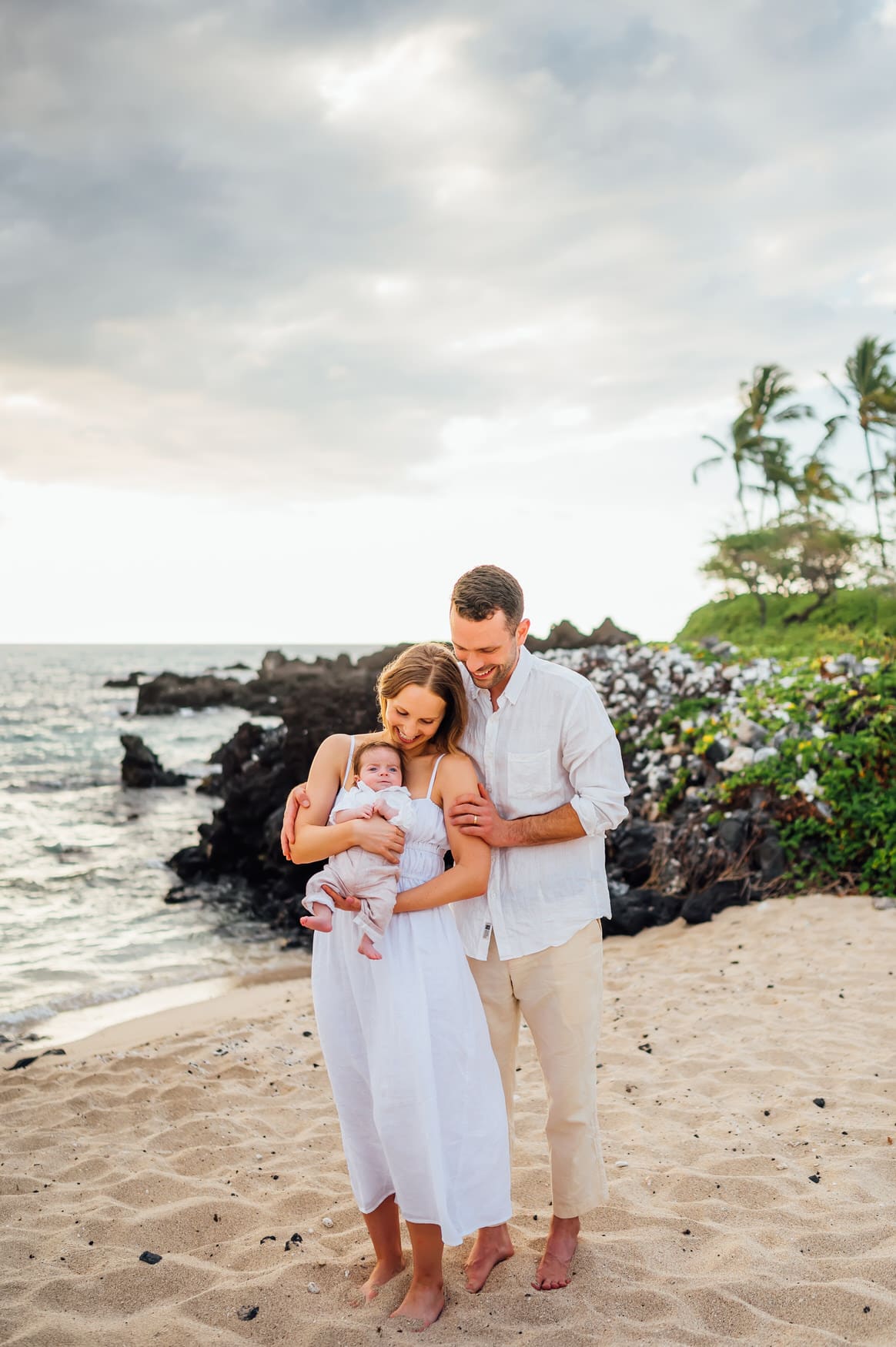
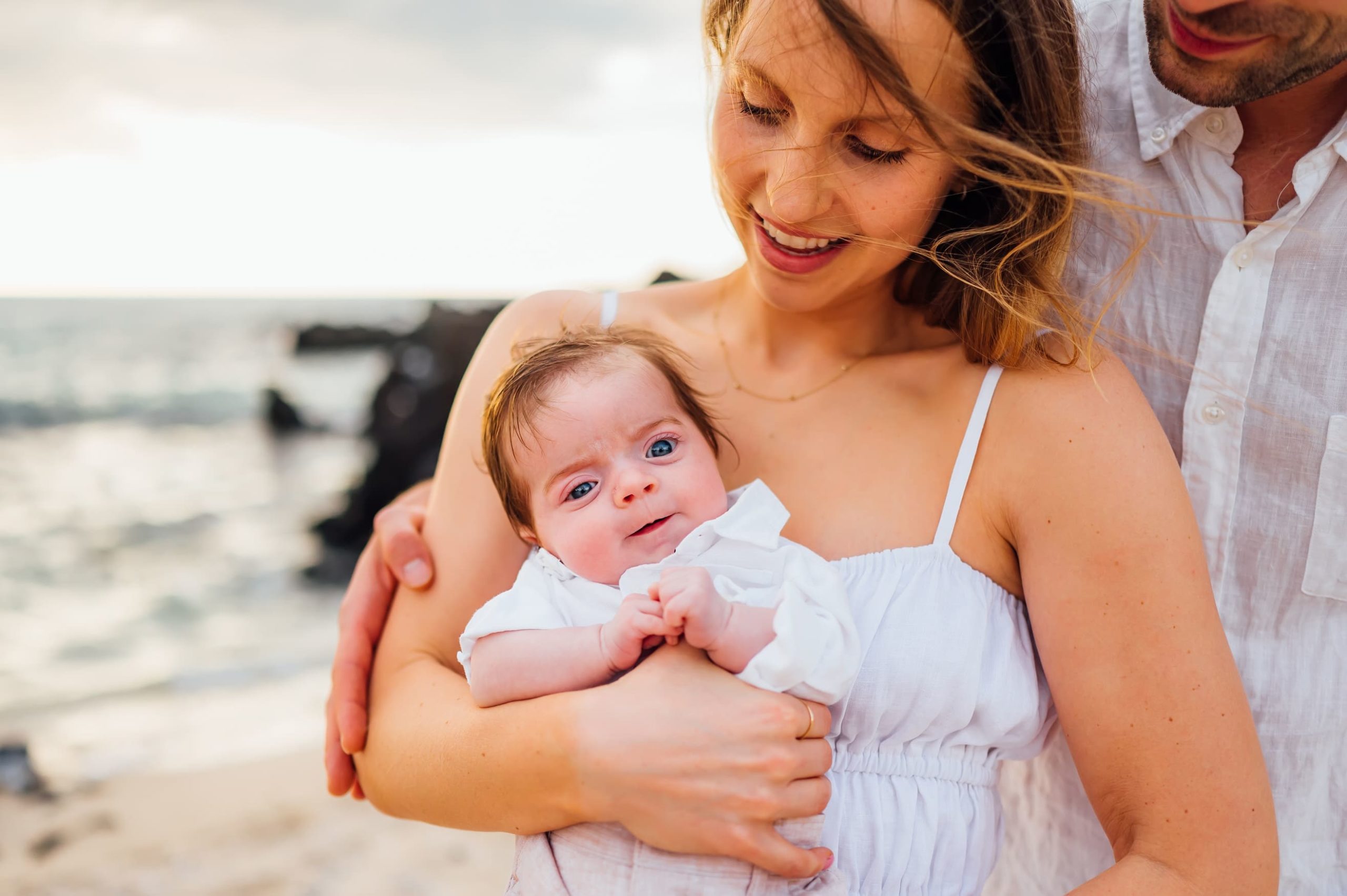
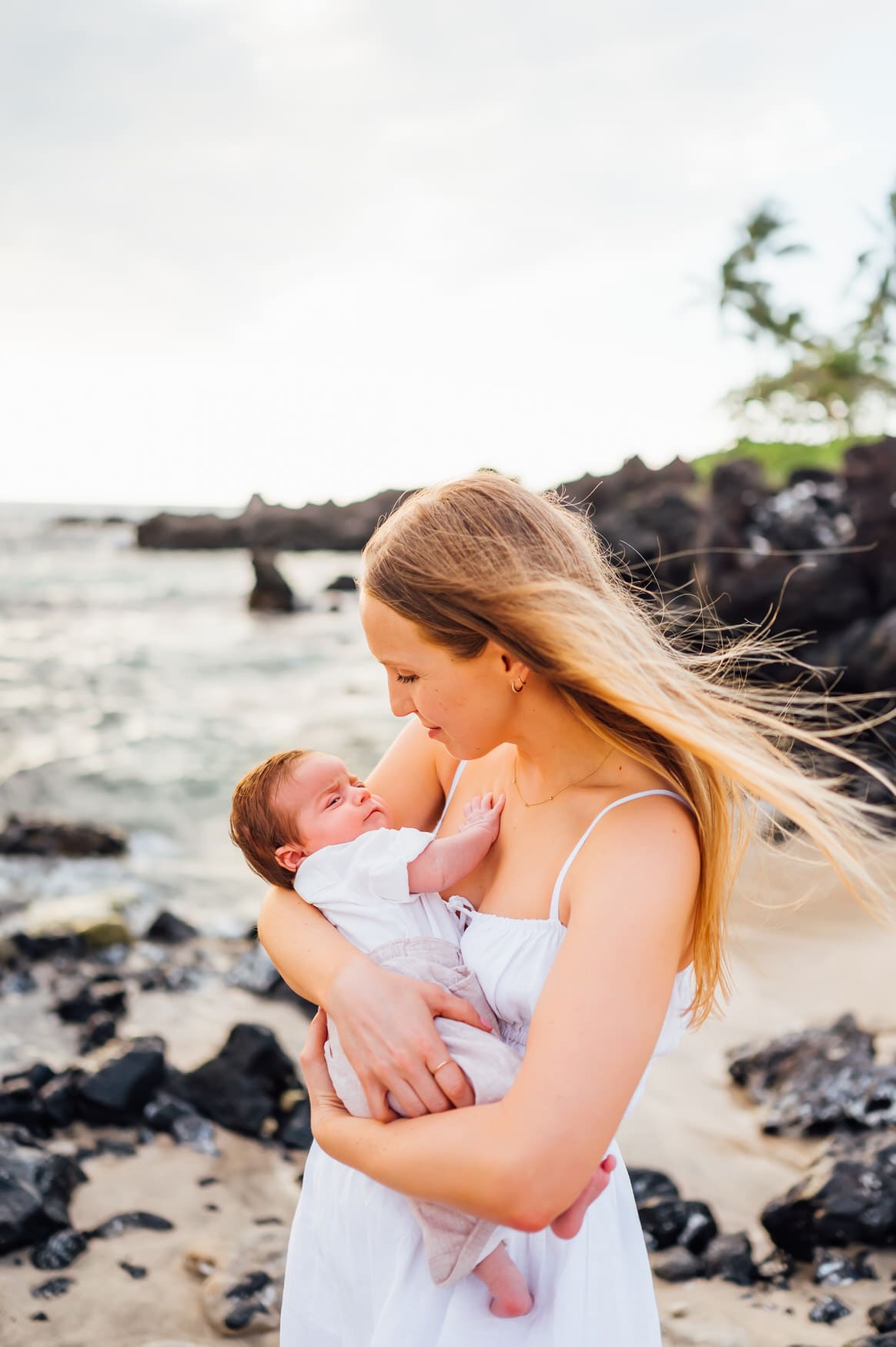
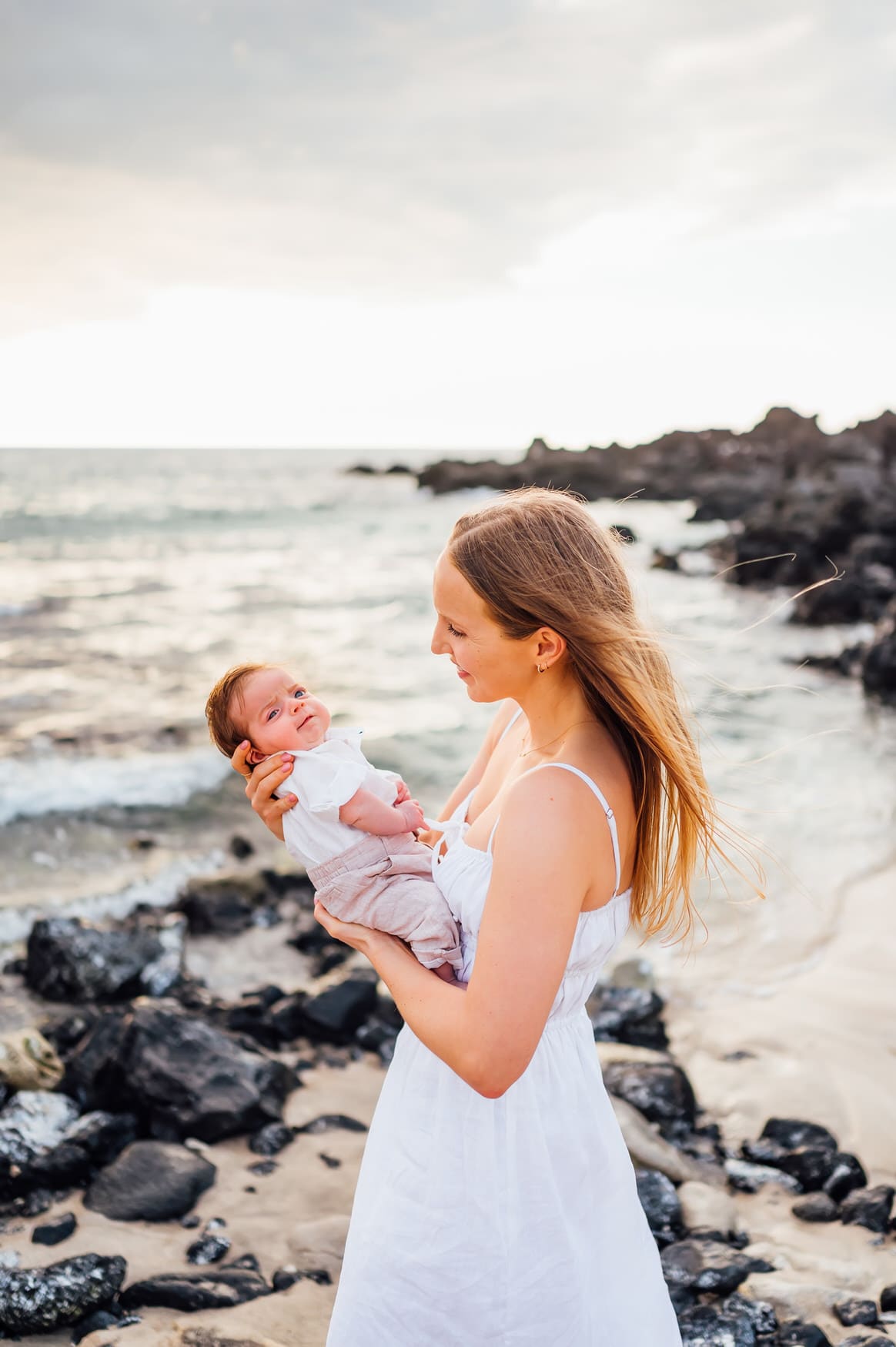
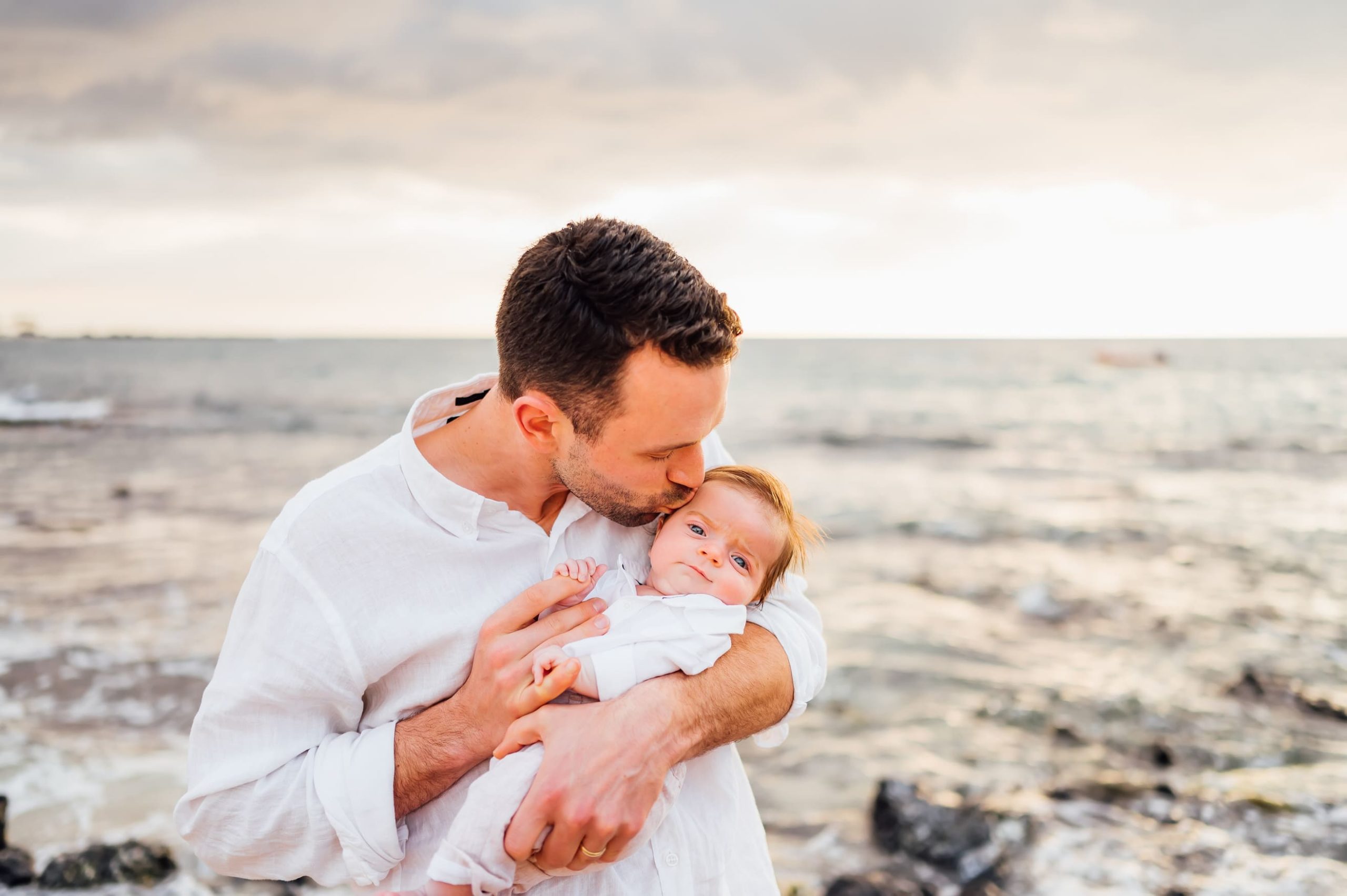
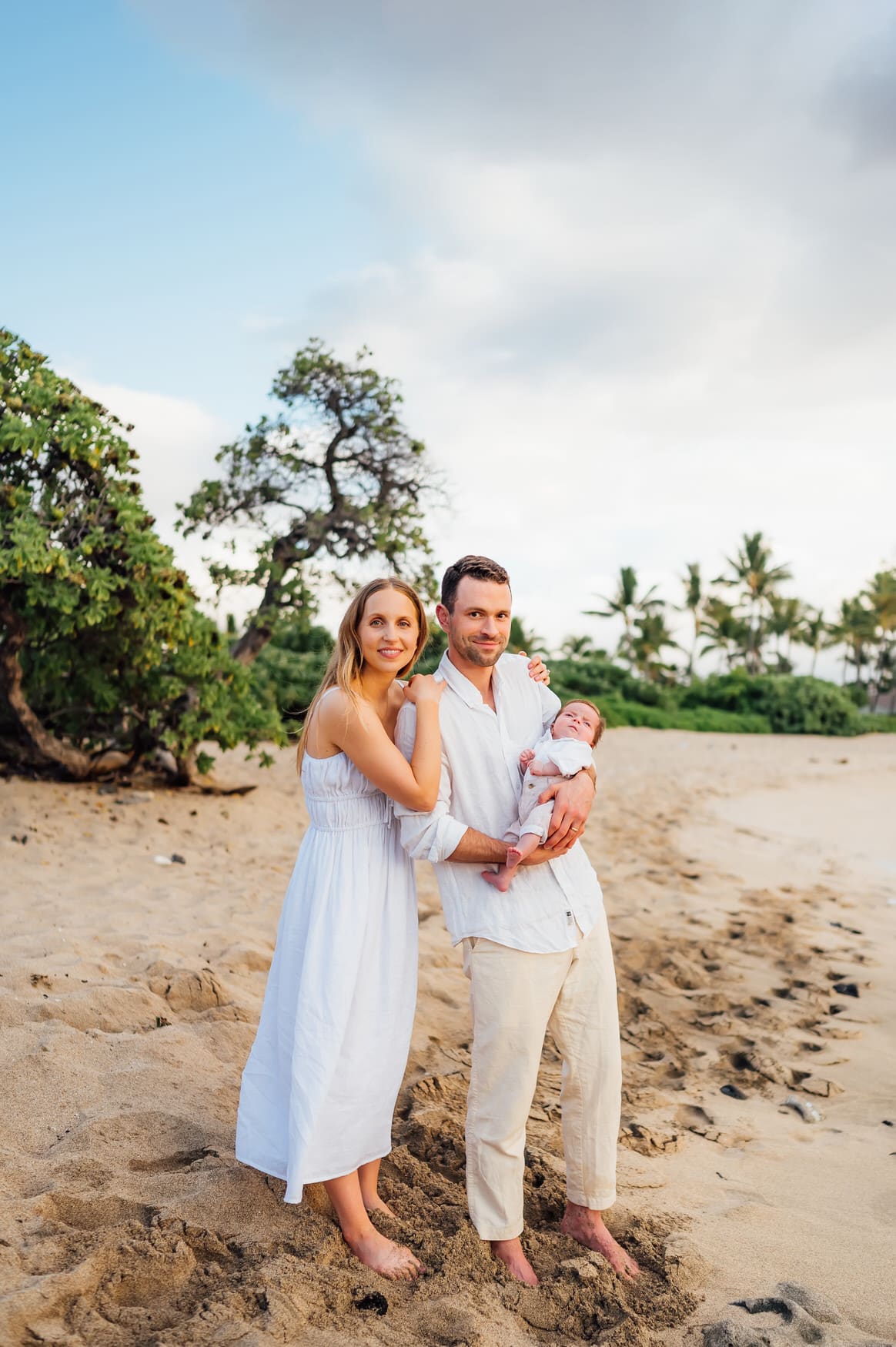
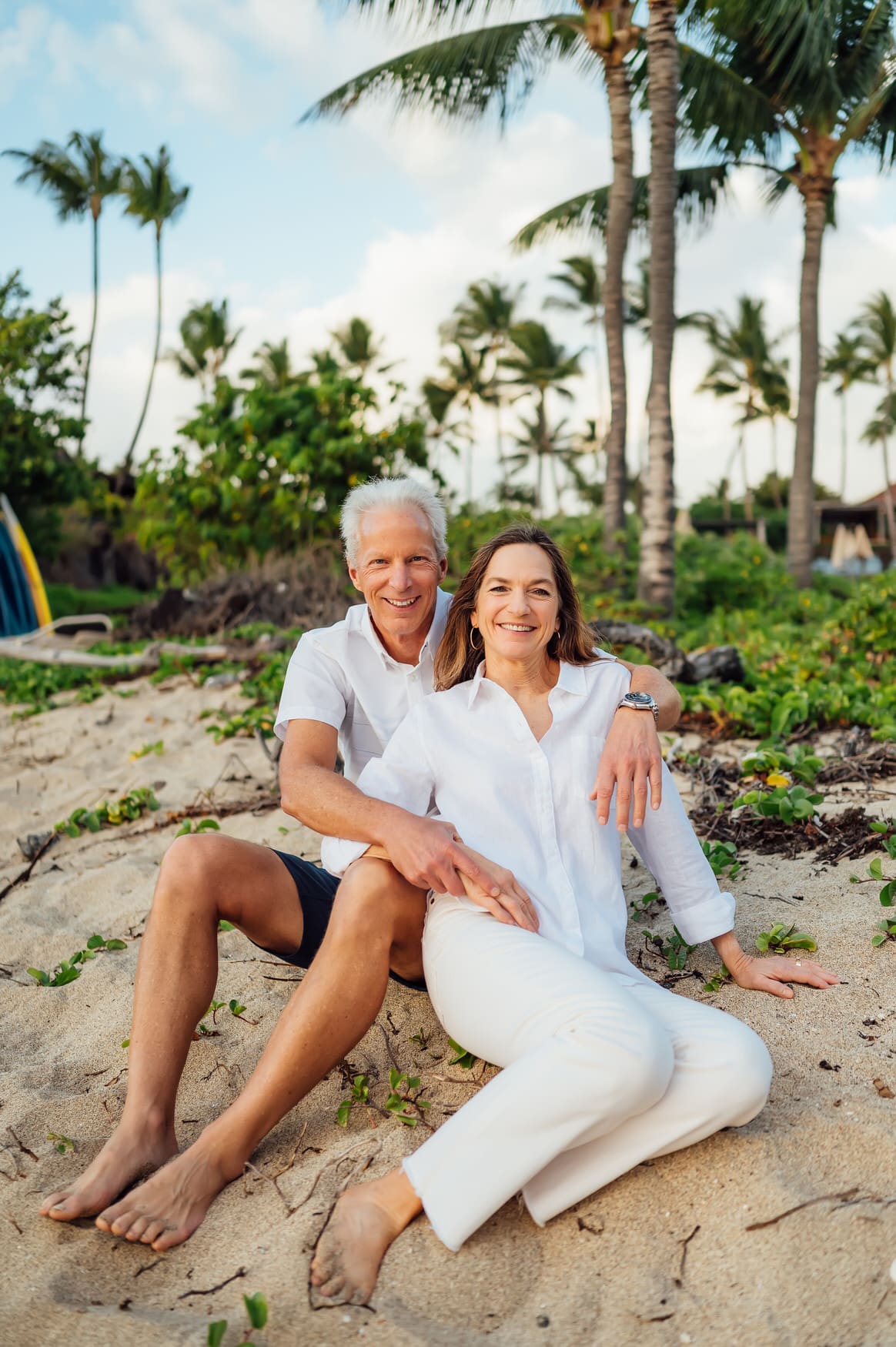
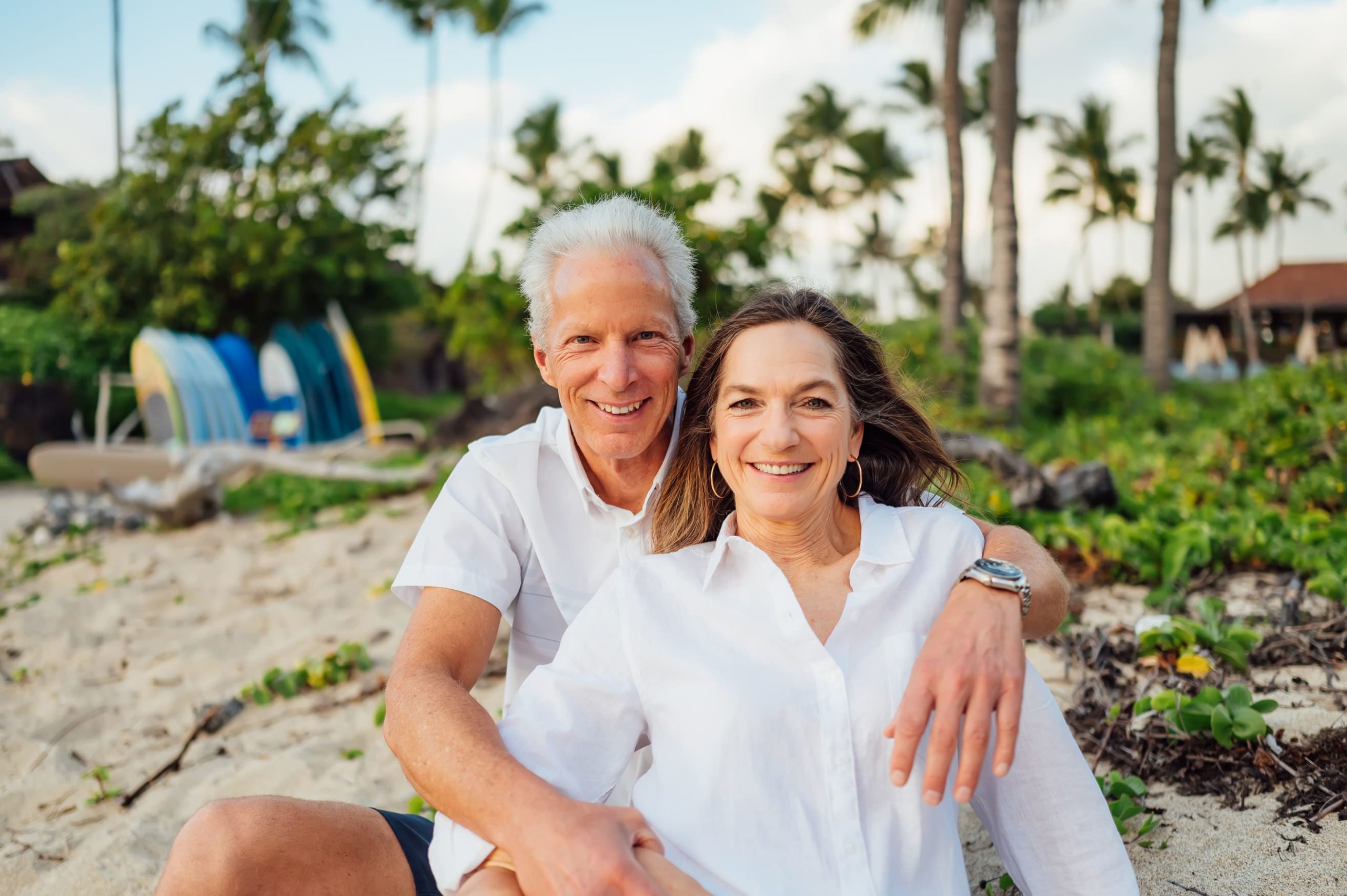
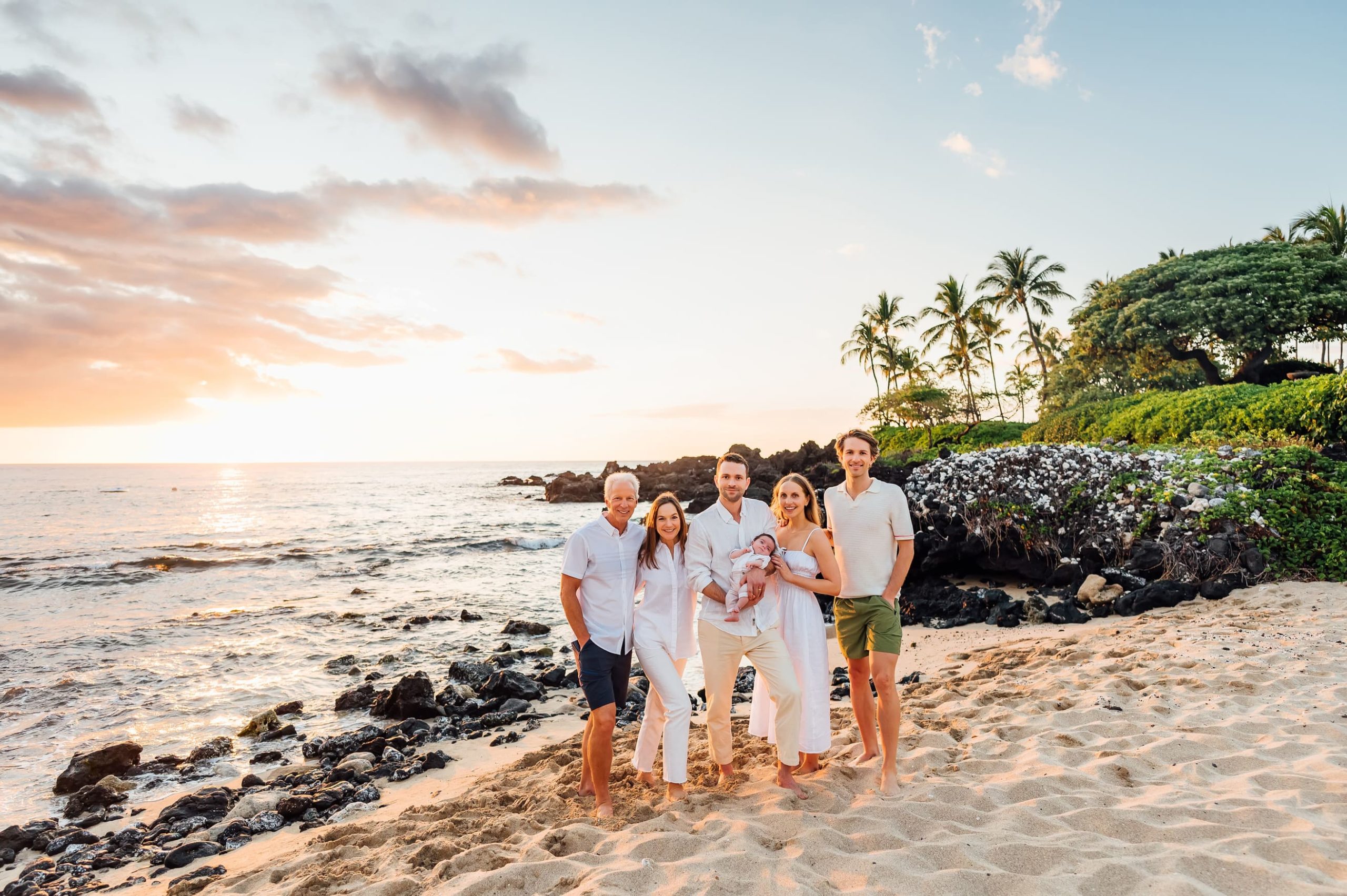
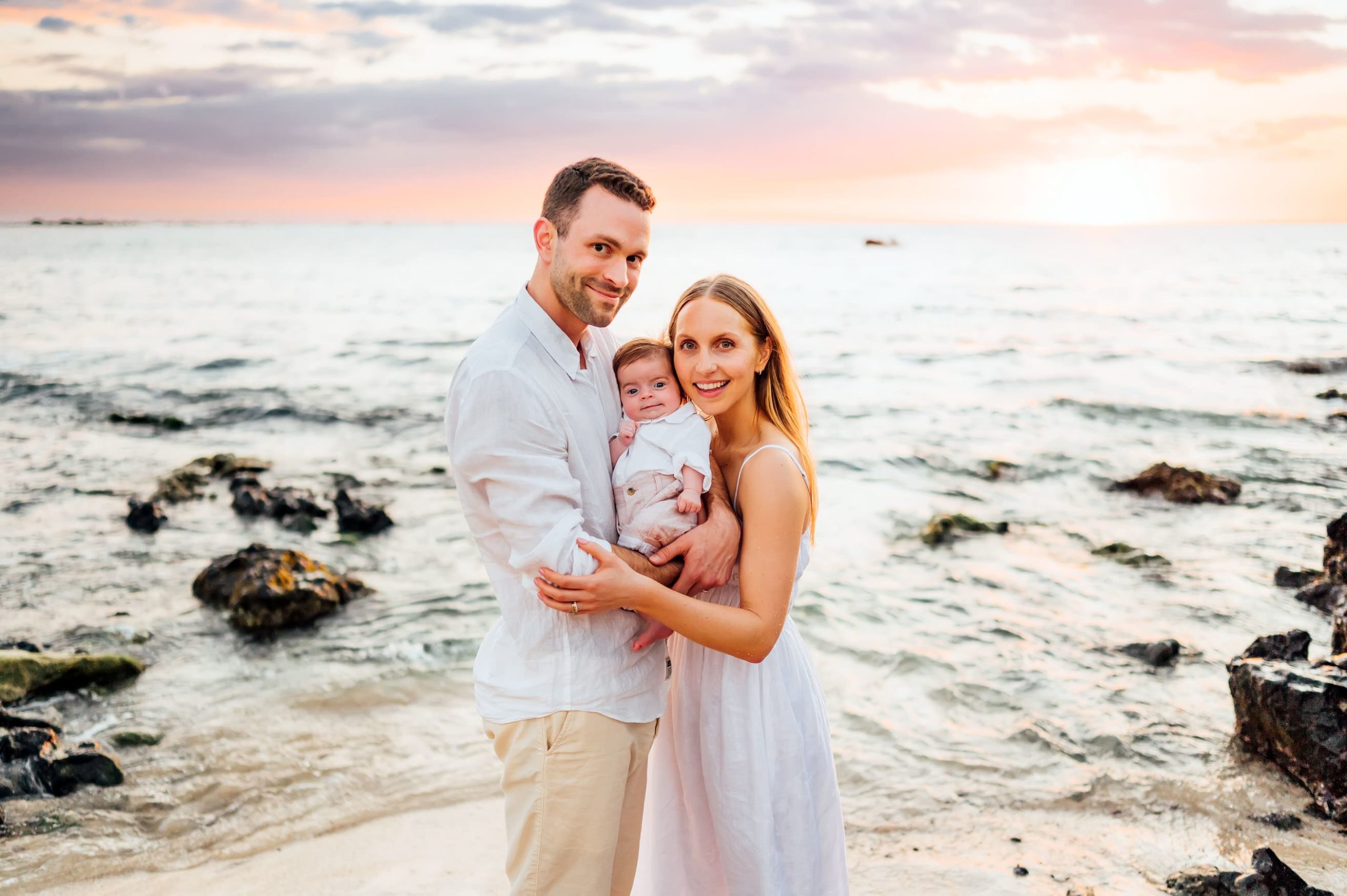
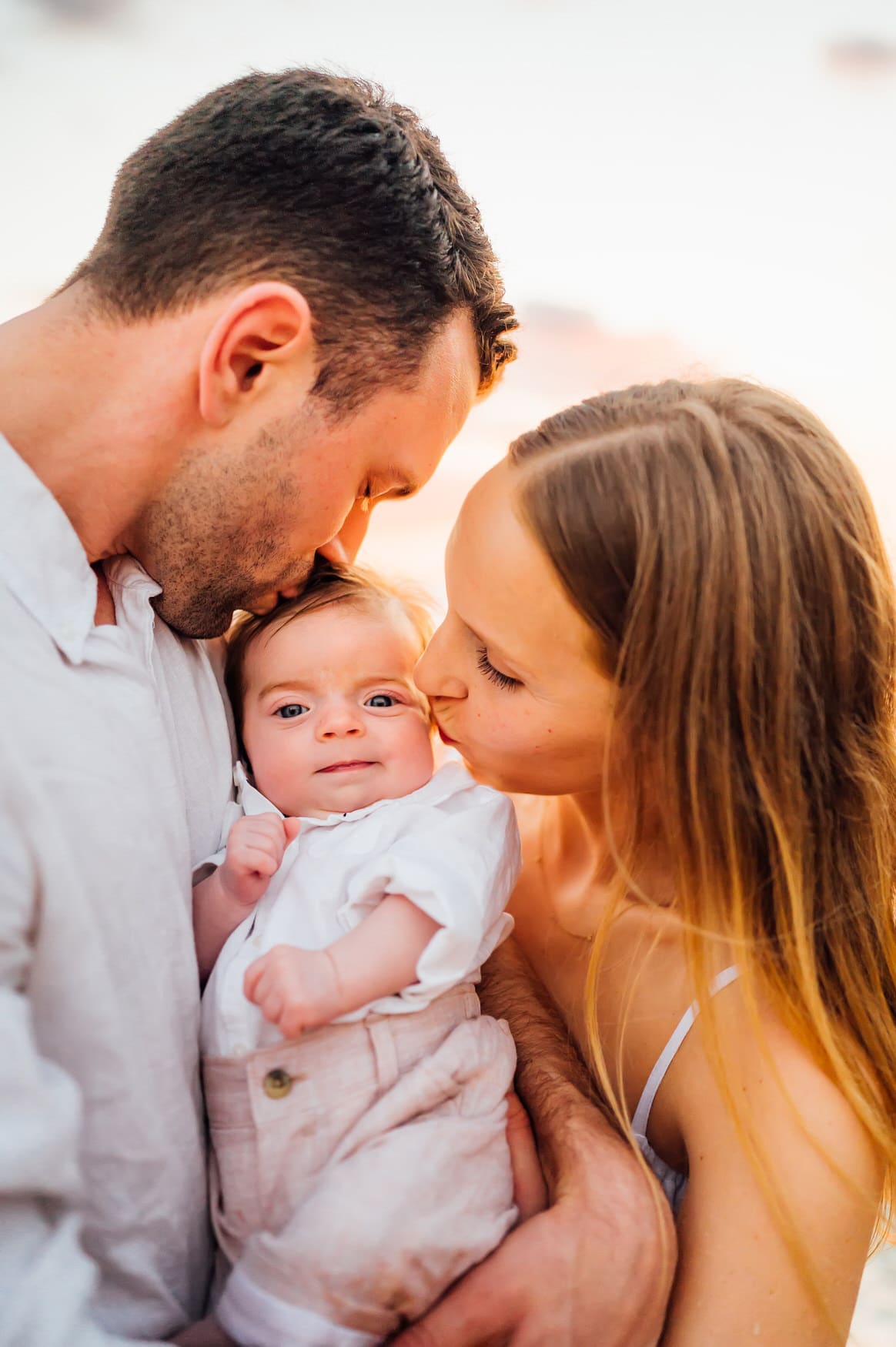
People often ask whether Hawaii family beach photos with a newborn are even possible. The honest answer is yes, with some planning. It’s not the same as a studio newborn session, and it’s not the same as photographing a six-month-old who can sit up and look around. But a beach session with a brand-new baby and the rest of your family? It works, and the photos can be some of the most natural, emotional ones you’ll ever have.
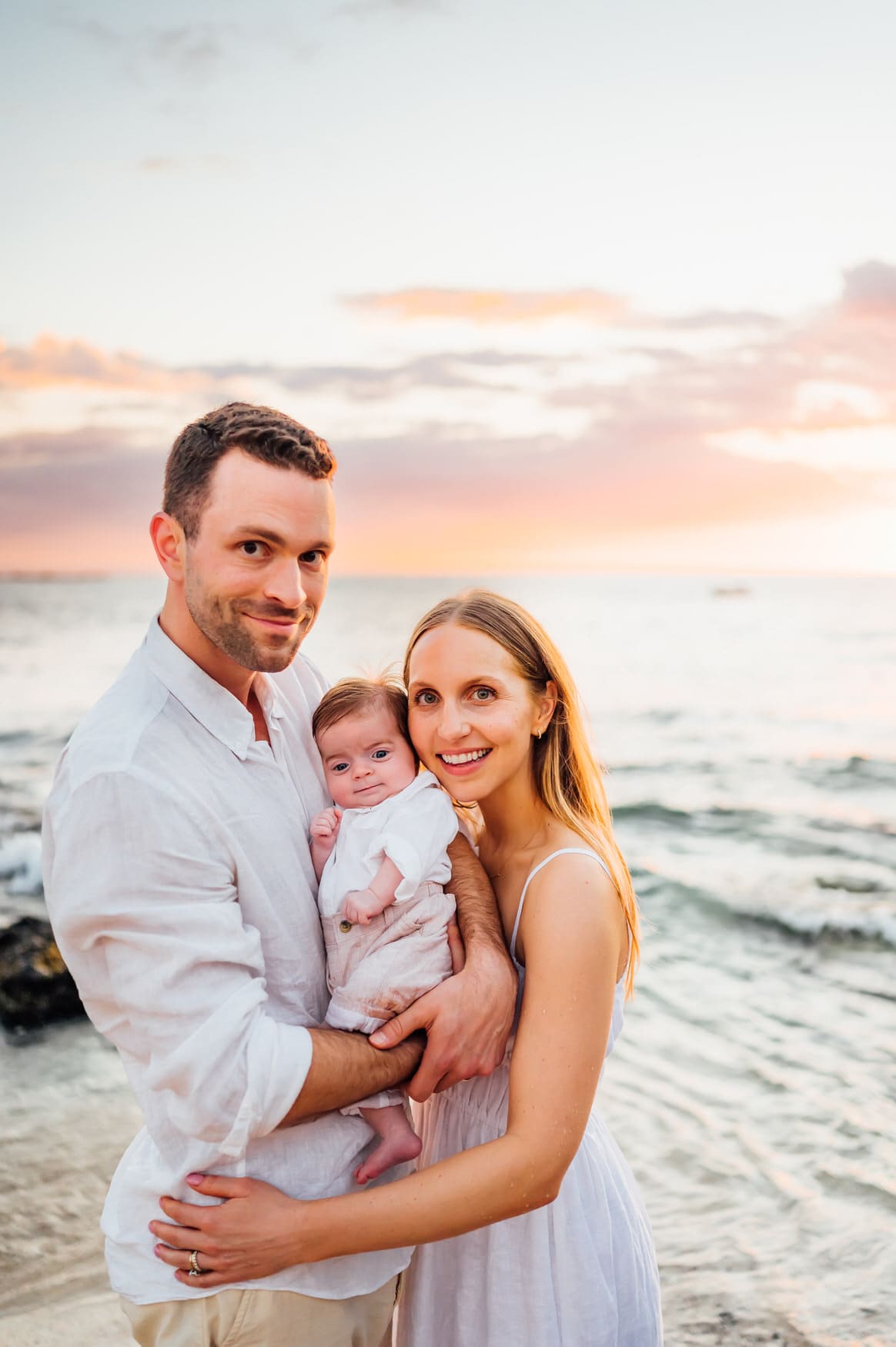
I made the switch from studio newborn photography to outdoor sessions years ago. Studio newborn work is technically demanding and I found I wasn’t very good at it. Beaches, though, I know. I know how the light moves and where the shade is, I know when to slow down for a feeding break and when to keep shooting, and I know how to get a genuinely happy photo of a dad holding a tiny sleeping baby with the ocean behind them. That’s what I’m good at.
This guide covers everything families ask me before booking Hawaii family beach photos with a newborn: age, timing, what to bring, sun safety, outfits, and what the session actually looks like.
What age is best for a beach newborn session?
There’s a real tradeoff here and I want to be honest about it.
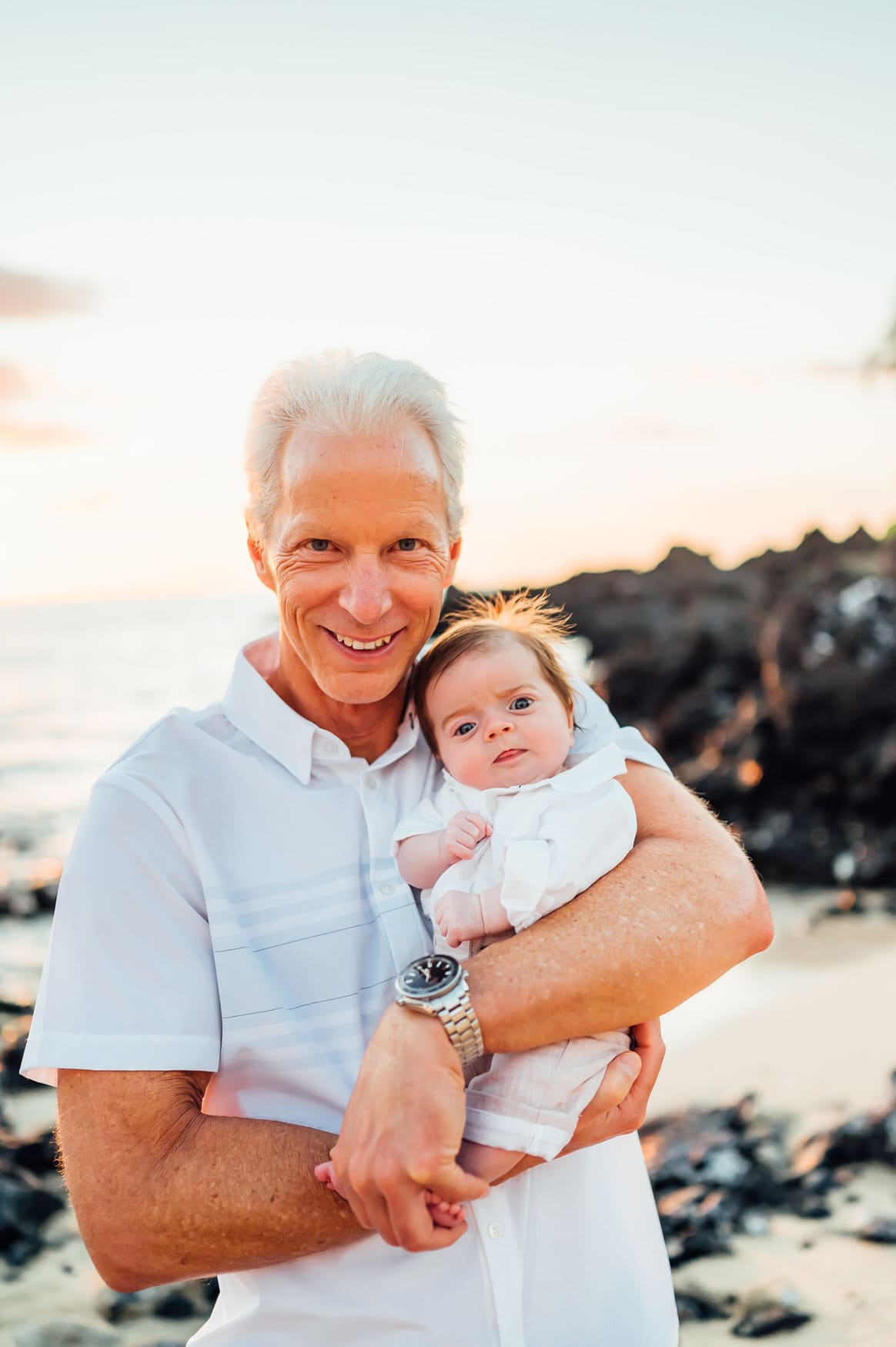
Very young newborns (under 6 weeks) are sleepy and portable. A two-week-old will sleep through almost anything, which means you can pose them however you like, they won’t crawl away, and the shots of them curled up in someone’s arms tend to be incredibly sweet. The limitation is that the poses are more restricted. You’re mostly doing held shots, swaddled shots, and “everyone gathered around the baby” shots. Which is fine, and which many families love. But it is limited.
Babies 6 months and up can sit, hold their heads up, look at the camera, and interact. Sessions become more dynamic and we can do more varied setups. The tradeoff is they’re not as easy to pose, they need more entertainment, and they may want to put sand in their mouths.
My honest preference is babies over 6 months, but I photograph newborns regularly and the sessions work. You just need to go in with the right expectations: plan for more breaks, plan for a longer session, and plan for the possibility that baby has a different idea about how the afternoon should go.
The main thing to decide is what you actually want from your Hawaii family beach photos. If you want that tiny, curled-up newborn look, do it early. If you want more variety and interaction, wait until they can sit up.
When to schedule: time of day and season
Always schedule Hawaii family beach photos during golden hour. For newborns especially, this matters. Golden hour means the hour or so after sunrise or before sunset, when the sun is low and the light is soft and warm. At this time of day, there’s no harsh overhead sun, temperatures are cooler, and the beach tends to be quieter.
Midday sessions on a Hawaii beach are uncomfortable for everyone, and with a newborn they’re genuinely not a good idea. The sun is too direct, there’s no softness to the light, and the heat alone makes it hard to keep a baby content. For a full breakdown of light and timing, see this guide to golden hour photography in Hawaii.
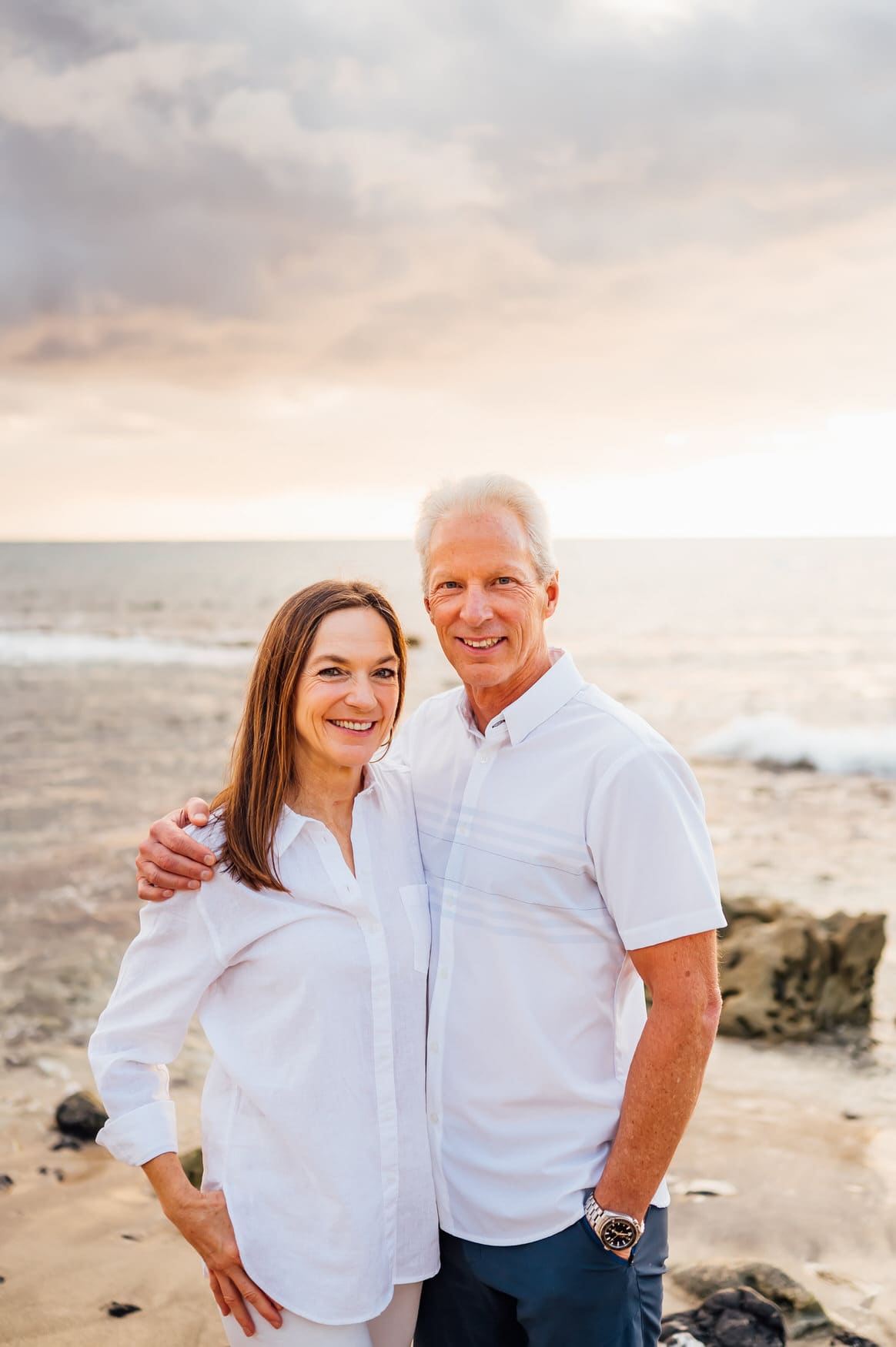
I slightly prefer sunrise sessions for newborns. Beaches are emptier, the air is cooler, and newborns who have been fed and are drowsy in the early morning tend to stay settled. The light at sunrise on a Hawaii beach has a cooler, softer tone that photographs beautifully. Sunset sessions are also great and the warm amber light is hard to beat for family portraits, but the beach is more crowded and the afternoon heat means baby may arrive already uncomfortable.
If you’re visiting Hawaii and dealing with a jet-lagged newborn who’s been up since 3 a.m., a sunrise session might actually work in your favor. The baby is up, you’re up, the beach is empty, and you get it done before the day starts.
Sun safety for newborns at the beach
This is the part I want everyone to read carefully.
Babies under 6 months old cannot use sunscreen. Their skin is too sensitive and their bodies absorb chemicals differently. The American Academy of Pediatrics recommends keeping babies under 6 months out of direct sunlight and using shade as the primary protection. That means planning specifically for shade at the beach.
Here’s how we handle it in sessions: I always choose shoot locations with access to natural shade or we bring shade with us. A pop-up umbrella or a canopy is genuinely useful. We position the family in shaded or filtered light rather than direct sun whenever we’re working with an infant. The baby is not sitting in open sunlight.
Golden hour light is low-angle rather than overhead, which helps significantly. But we’re also intentional about not putting the baby in a spot where they’re squinting into reflected light off the sand or water.
For babies 6 months and older, baby-safe mineral sunscreen works well. Apply it about 20 minutes before you arrive so it has time to absorb.
A few things worth bringing specifically for sun safety: a pop-up shade canopy or beach umbrella, a wide-brim hat for baby (soft cotton, not the stiff kind), UV-protective clothing in lightweight cotton, and more water or formula than you think you need since heat increases how much babies drink.
What to Wear
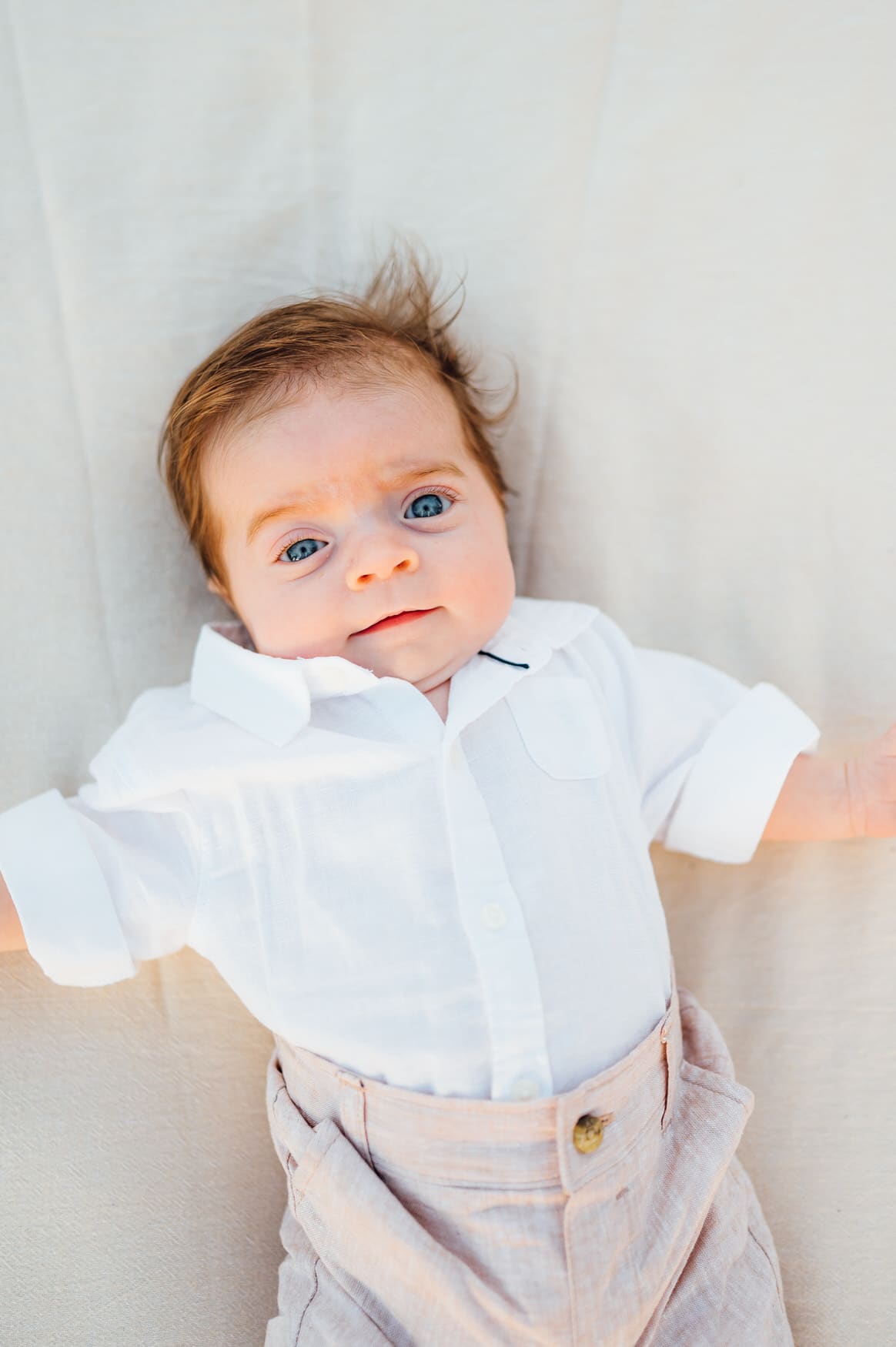
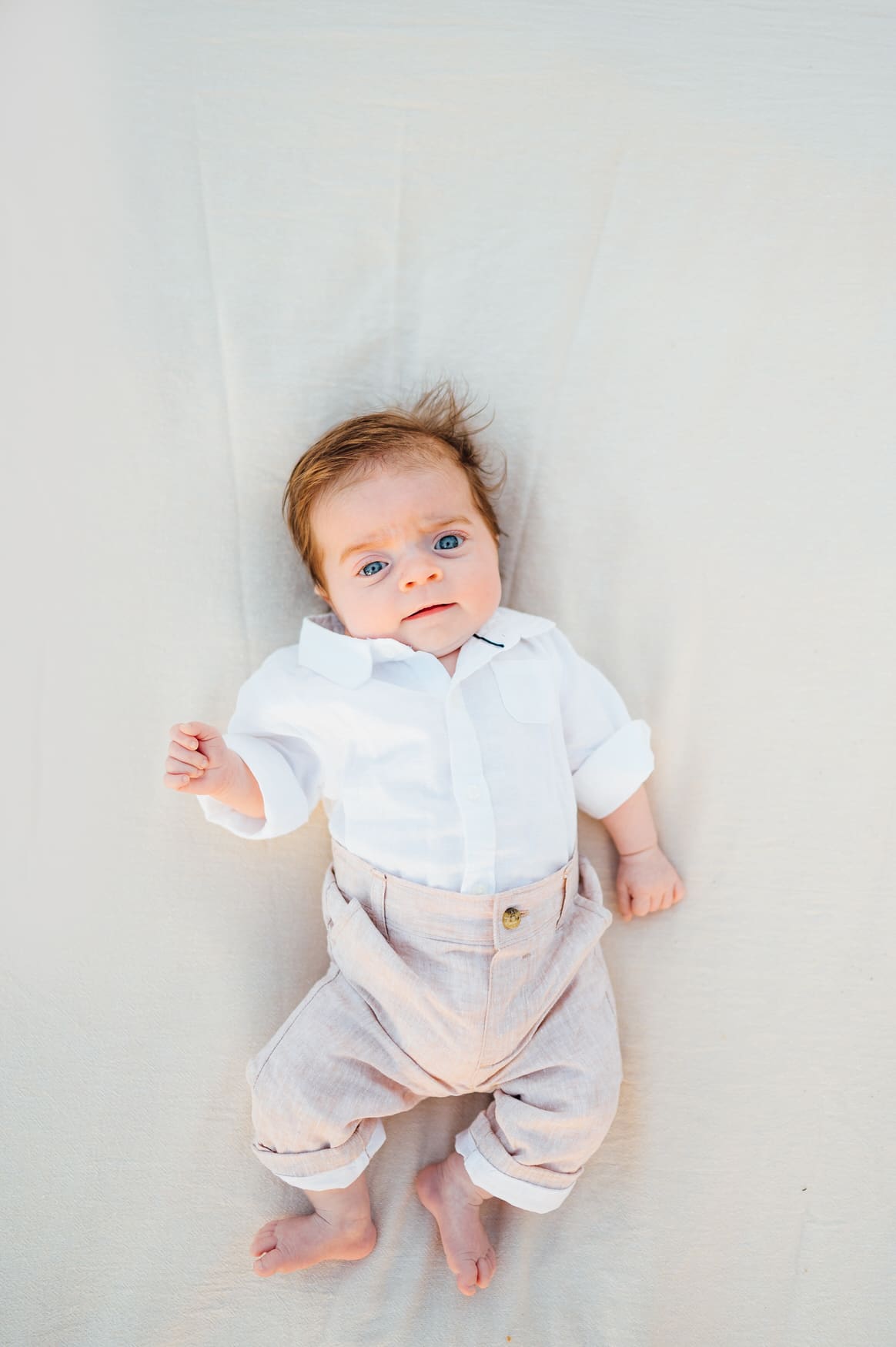
For the baby, simple is best. A soft cotton onesie, a light romper, or a simple swaddle all photograph well. You don’t need anything elaborate. Avoid stiff fabrics, anything with lots of buttons at the back, and anything that takes more than 30 seconds to put on, because you’ll be doing outfit changes on the beach.
Neutral tones work best for newborns in Hawaii light: cream, white, soft blush, pale grey. These sit quietly in the frame and let the baby’s features stand out rather than competing with their clothing.
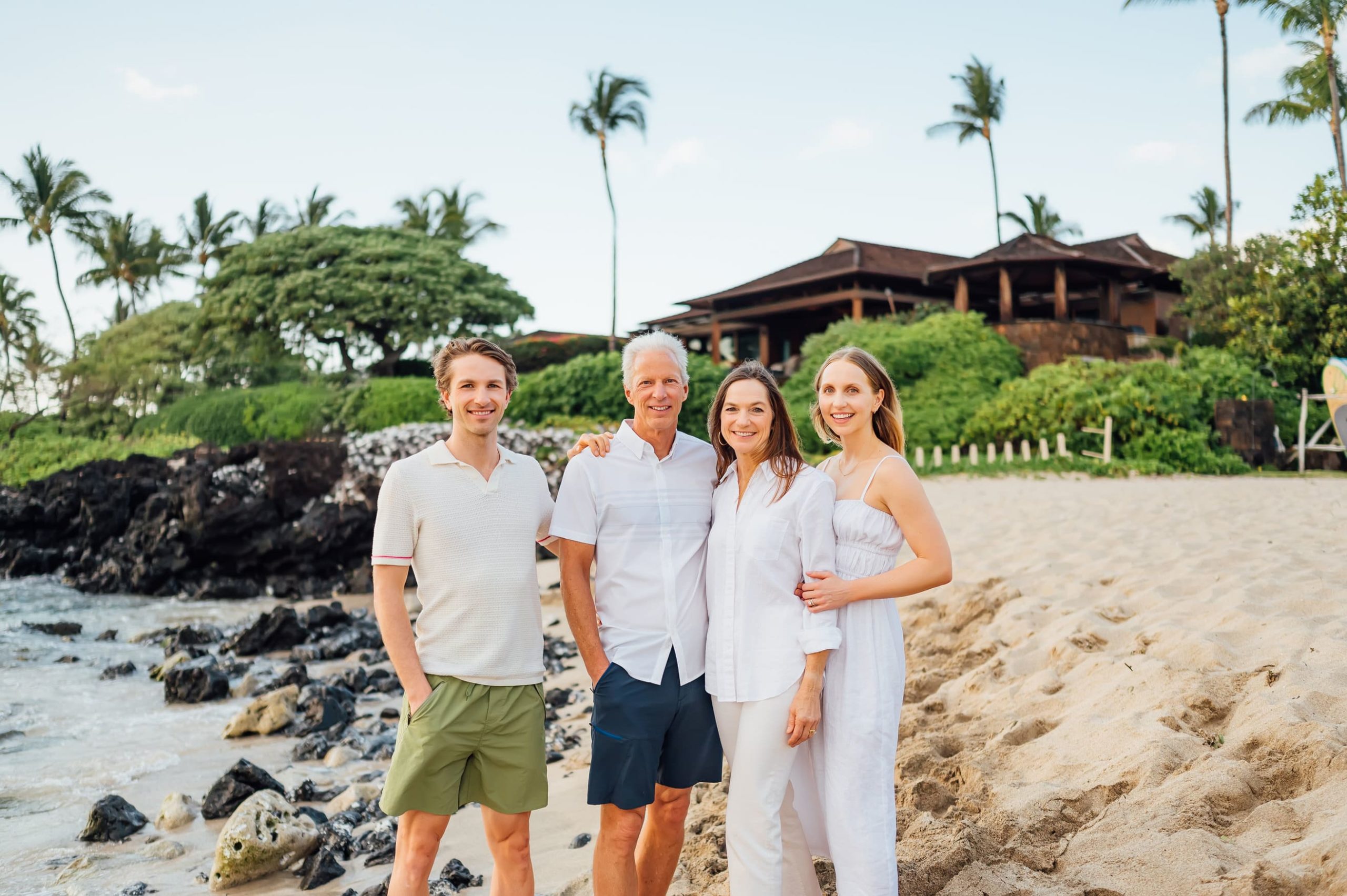
For the rest of the family, the same principles from any Hawaii beach session apply. Soft neutrals, breathable fabrics, coordinate without matching exactly. For a full breakdown of what works and what to avoid, see this guide to Hawaii family beach photo outfits. One tip specific to newborn sessions: choose outfits that are easy to move in and that you won’t mind getting a little sandy or damp. You’re going to be sitting on sand, crouching, and holding a baby at different angles. This isn’t the session to wear your most delicate dress.
Plan at least two complete backup outfits for the baby. Spit-up, sand, a diaper incident, getting splashed: any of these can happen. Two backups gives you breathing room.
What to bring
Beyond the normal beach bag, here’s what actually gets used.
For the baby: bring two to three complete backup outfits, extra diapers and wipes (twice what you’d normally bring), swaddle blankets in neutral or white, formula or pumped milk even if you’re nursing (a bottle of pumped milk can settle a fussy baby faster than anything else), a pacifier if baby uses one, and a small portable changing mat.
For the session itself: a light blanket or wrap for posed shots on the sand works well, along with any small props that are meaningful to your family, though I generally keep it simple. You’ll also want a bag that stays close with easy access while we’re shooting.
For you: bring a backup outfit of your own in case someone gets wet, flip-flops for walking to and from the beach since most sessions are barefoot, and hair ties or pins because wind is real.
The thing I tell every family: bring more than you think you need, and plan to not use most of it. The sessions where families come overprepared go smoothly. The ones where someone forgot the backup outfit are the stressful ones.
What to expect during your Hawaii family beach photo session
Newborn beach sessions move differently than sessions with older kids. Here’s a realistic picture of what happens.
We start with the family. We typically begin with shots of the whole group together while everyone is fresh and settled. This gets us the group images early, before anyone is tired or the baby needs something.
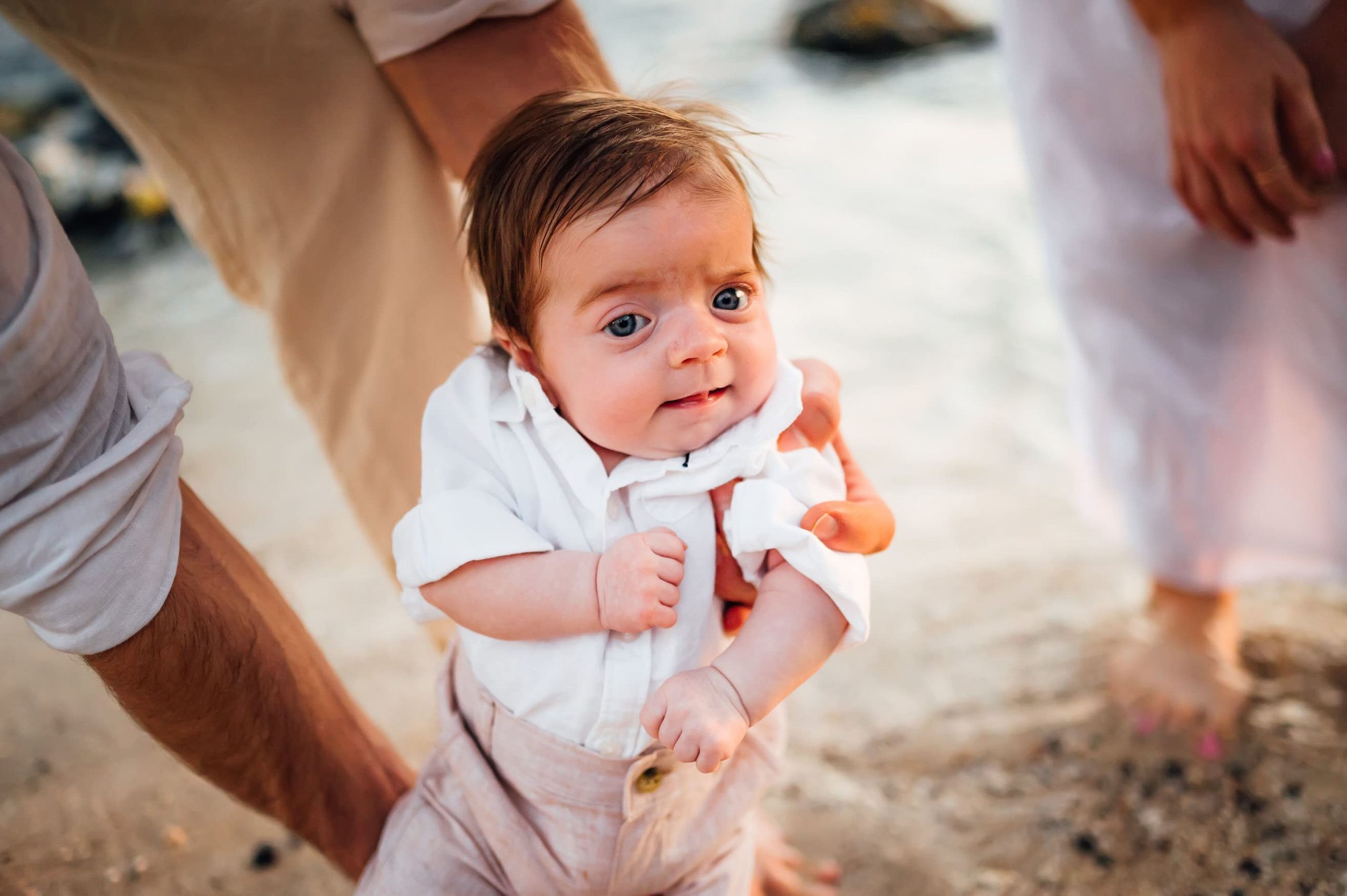
Then we slow down for the baby. We work around what they need. If they’re awake and looking around, we shoot that. If they fall asleep in someone’s arms, we shoot that. If they need a feed in the middle, we stop, give them time, and pick back up when they’re settled.
We don’t rush. This is why I recommend booking a longer session than you think you need. An extra 30 minutes of buffer means that a 20-minute feeding break doesn’t eat into your photo time. It just becomes part of the flow.
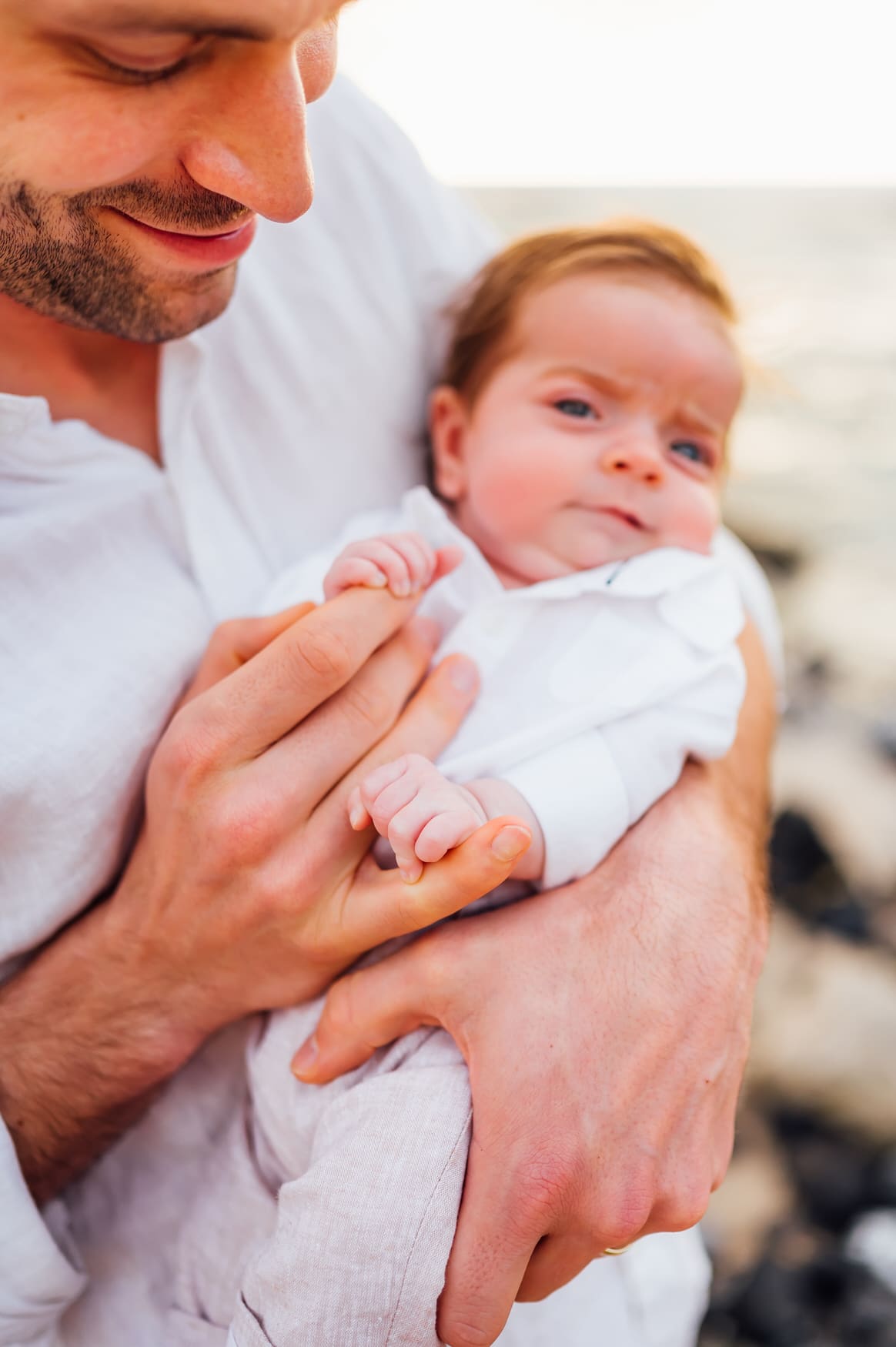
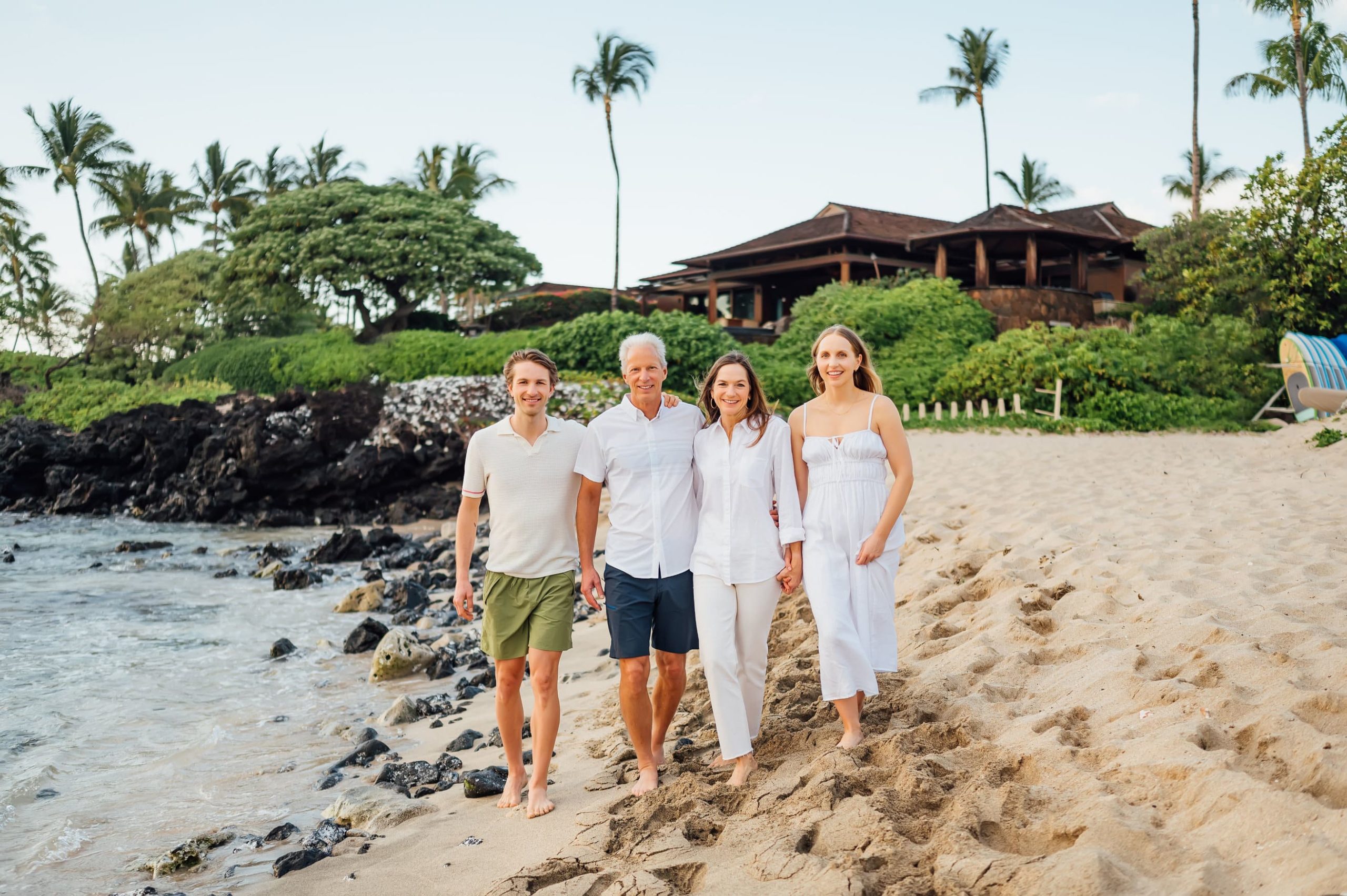
The best shots often happen in the in-between moments. Dad walking along the water’s edge with baby on his chest. Mom sitting on the sand nursing while the light turns gold behind her. Grandparents looking at the baby and forgetting anyone is watching. These aren’t posed; they just happen when everyone is relaxed enough to stop performing for the camera.
Best beaches for Hawaii family beach photos with a newborn
Not every beach works well for newborns. You want calm water, soft sand, available shade, and easy access from the parking area. Carrying a full beach setup plus a newborn across a quarter mile of lava rock is not the move.
Kukio and the beaches around the Kohala Coast resort area are some of my favorites for Hawaii family beach photos with a newborn. The water is calm, there are natural shade options from the vegetation line, and the sand is soft and pale. The light at golden hour along this stretch of coastline is consistent and reliable.
Hapuna Beach is also worth considering for families comfortable with a slightly more open setting. It’s one of the most beautiful beaches on the island and the sand is particularly fine and white, which reflects light well and makes for clean, bright images.
For families based on Maui, the area around Kaanapali and the quieter North Maui beaches offer similar qualities: calm water, soft sand, and good golden hour light. I’d steer away from beaches with significant wave action for newborn sessions specifically.
Frequently asked questions
How soon after birth can we do a beach session?
I’ve photographed babies as young as 10 days at the beach. It’s more common to wait until 3-4 weeks, by which point most families have settled into some version of a routine and feel ready to leave the house for a few hours. There’s no hard minimum, but I’d encourage you to wait until you feel ready rather than rushing it.
What if the baby cries the whole time?
It happens sometimes, and it’s not a disaster. Fussy babies in a parent’s arms still produce real, emotional photos. And in my experience, the transition from “crying at home” to “actually at the beach in the evening air” often helps. Something about the sound and smell of the ocean settles babies down. Not every time, but often enough.
Should we do a dedicated newborn session or add the baby to an existing family session?
Either works. If your main goal is newborn portraits specifically, a dedicated session gives you more time and flexibility to focus on the baby. If you have older kids and want everyone together, folding the newborn into a standard family session is very natural. I’ve done both many times and both produce good results.
What if the baby needs to nurse during the session?
Please do it. I will keep photographing, step away, or take a break, whatever you prefer. Nursing photos can be genuinely beautiful if you want them, or I can give you complete privacy. There’s nothing unusual about this for me and it won’t disrupt the session.
Can we do hair and makeup before a beach newborn session?
Yes! Just plan around the time. For a sunset session, you have most of the day. For a sunrise session, you’ll be up early. Keep it light and natural, and bear in mind you’ll be on a beach in the wind. Our team can help you book these add-on services and connect you with our favorite island vendors.
Ready to book Hawaii family beach photos with a newborn?
If you’re planning a trip to Hawaii with a new baby, or you’ve just had a baby on the island and want to mark the moment, I’d love to work with you. Sessions are available on the Big Island year-round.
Reach out through the contact page to check availability and talk through what the session could look like for your family. https://wildesparrow.com/contact