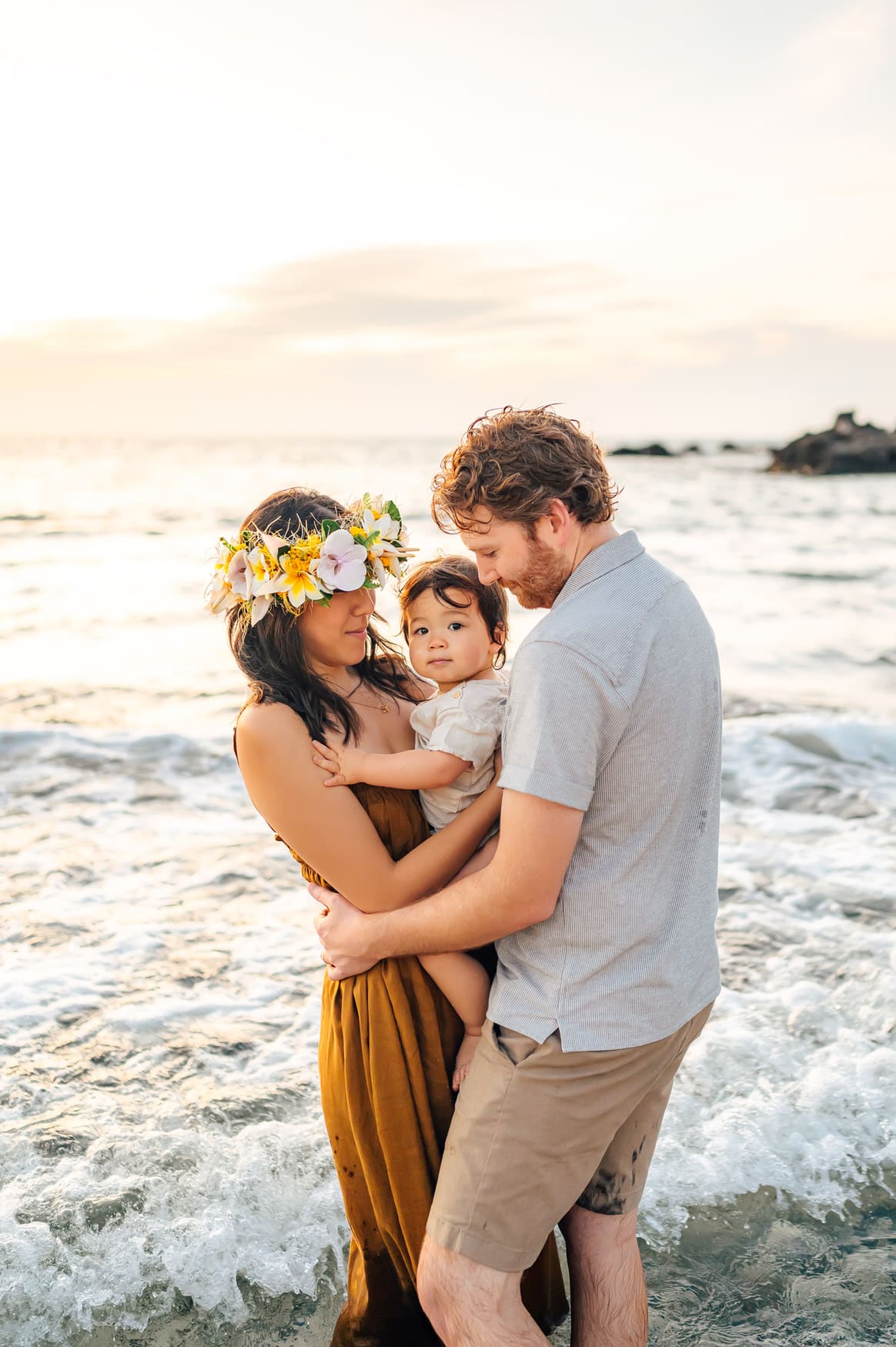

Golden Hour Photography Tips: Timing, Outfits & Best Light
When I first started photographing families on Hawaii’s beaches, golden hour terrified me. So much sun! So many shadows! The light changes by the minute, kids are melting down, and you have maybe 45 minutes to capture something beautiful before it all goes dark.
I’ve spent years figuring this out. Now it’s my absolute favorite time to shoot. If you’re a family planning a Hawaii session, or a photographer just starting out in a bright beach environment, this covers what golden hour means in Hawaii, when to schedule by island and season, what to wear, and the exact approach I use to get clean, flattering light every single time.
What is golden hour (and why does it matter for photos)?
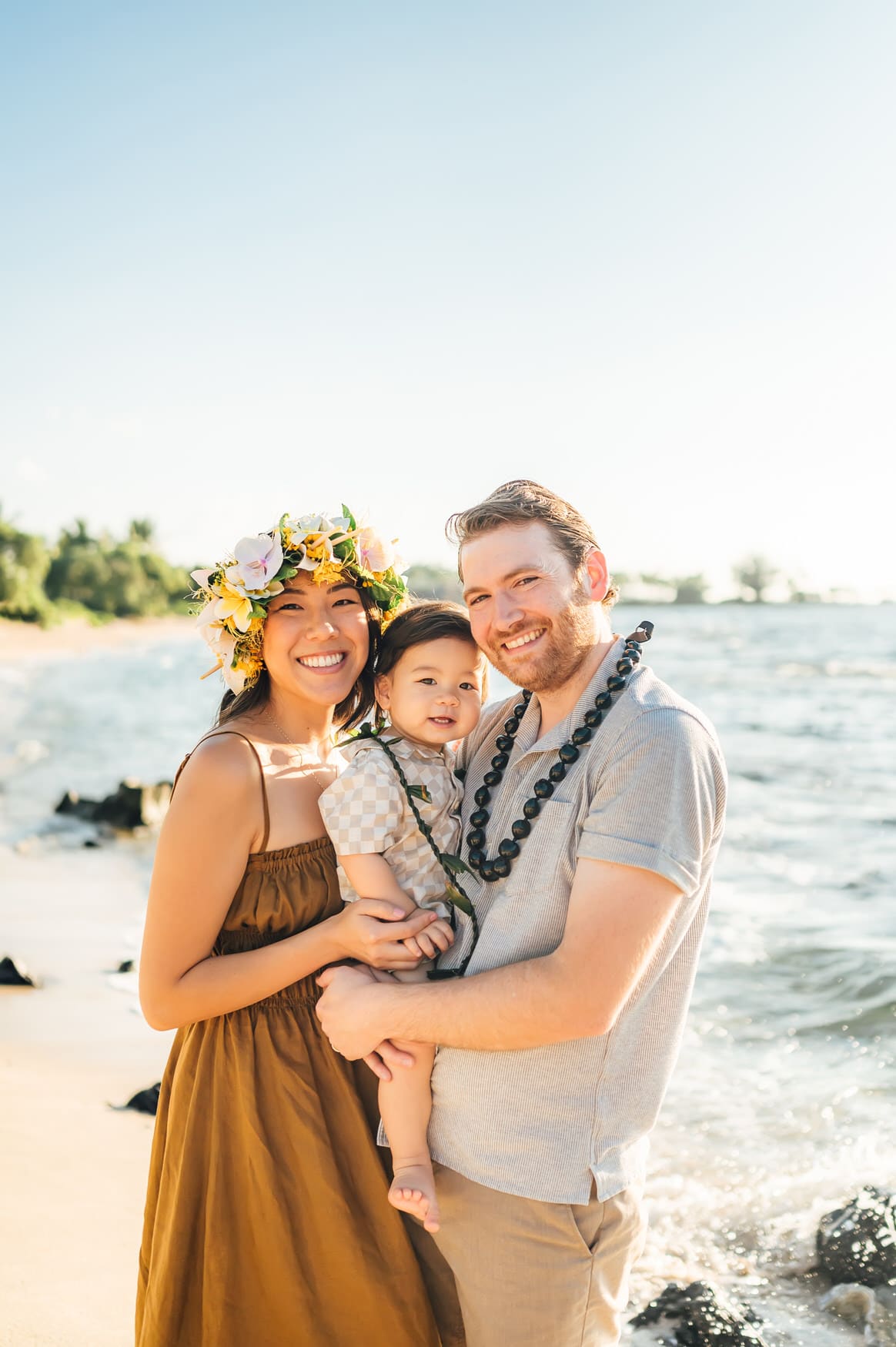
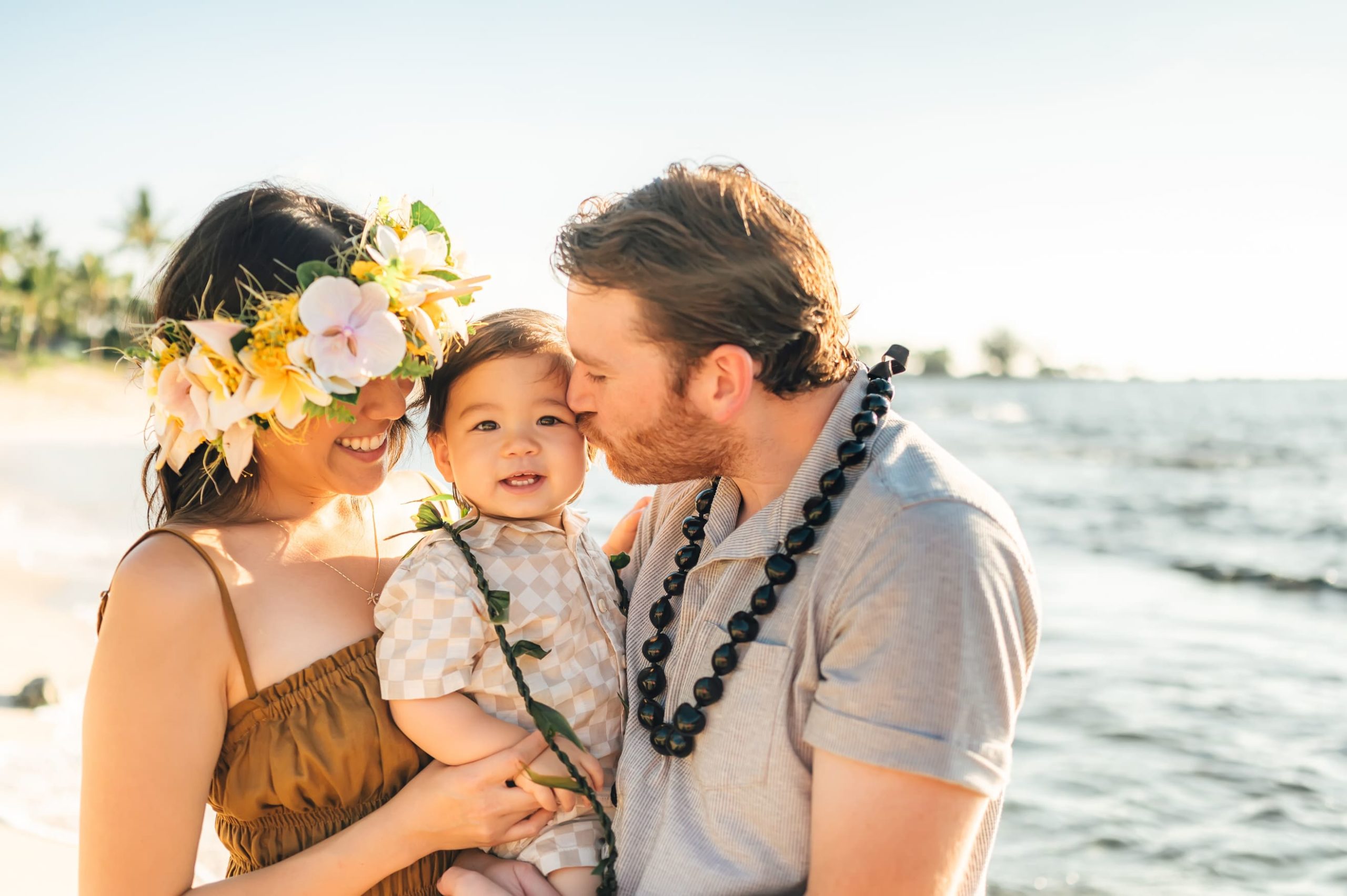
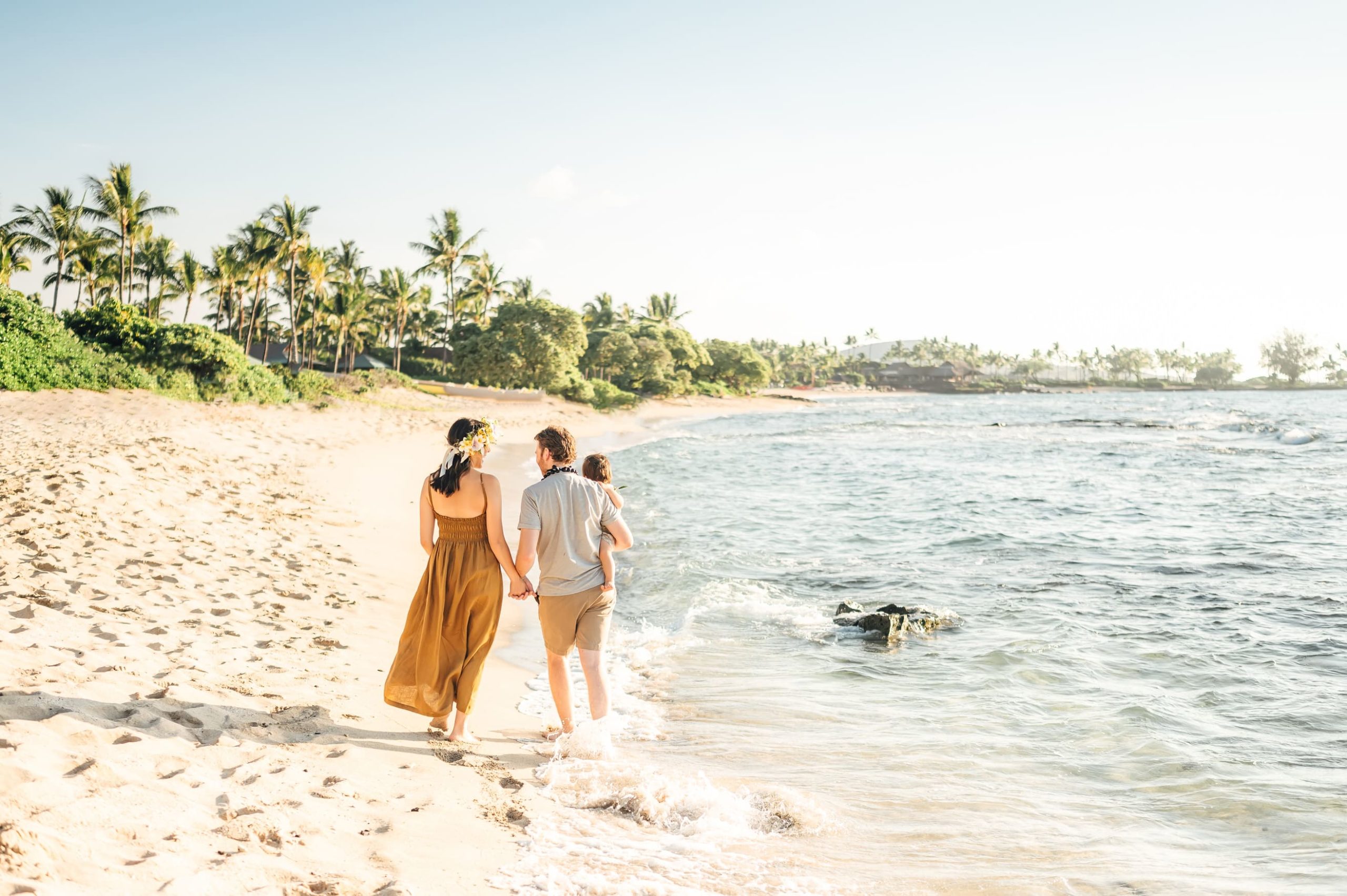
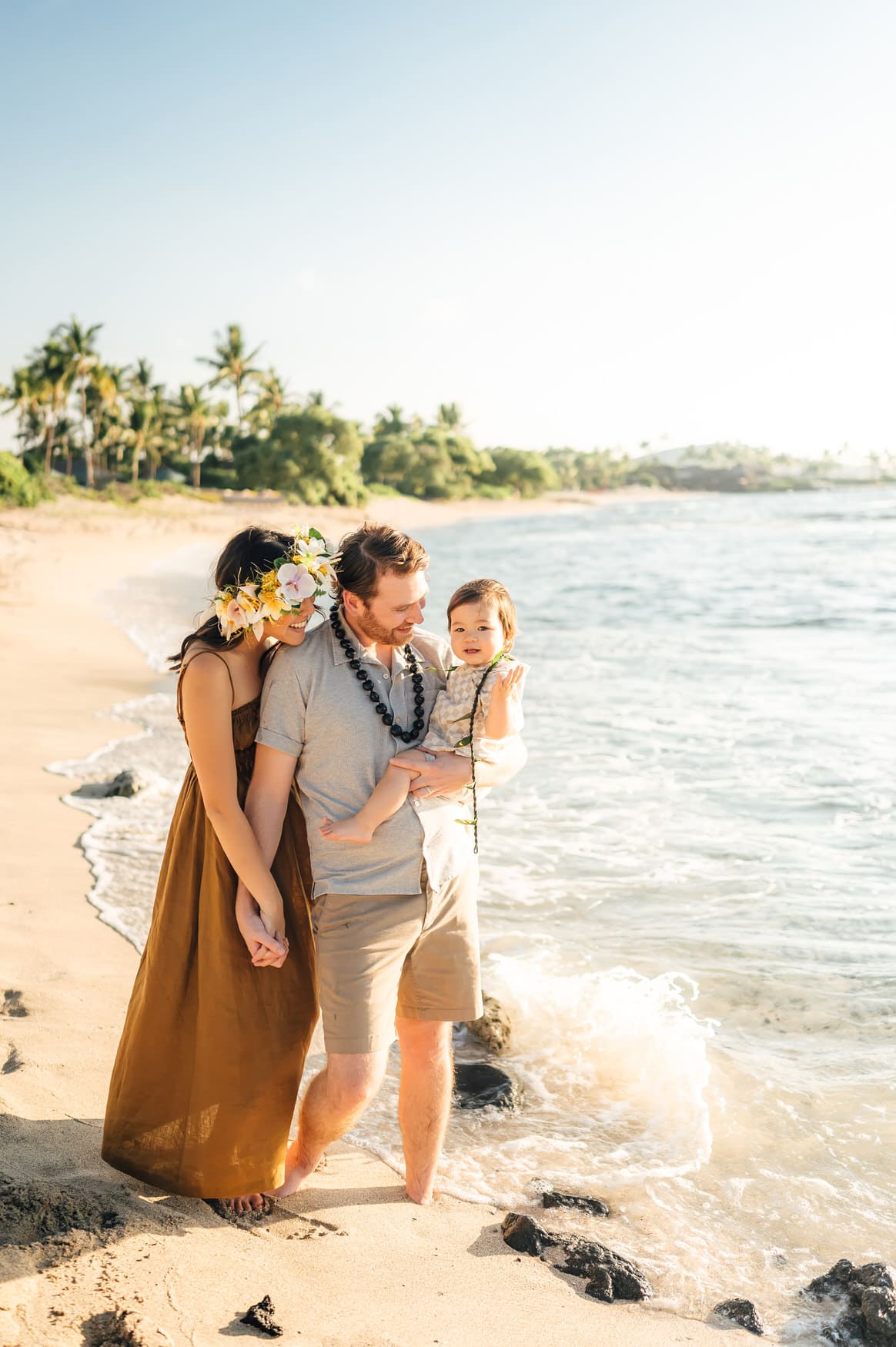
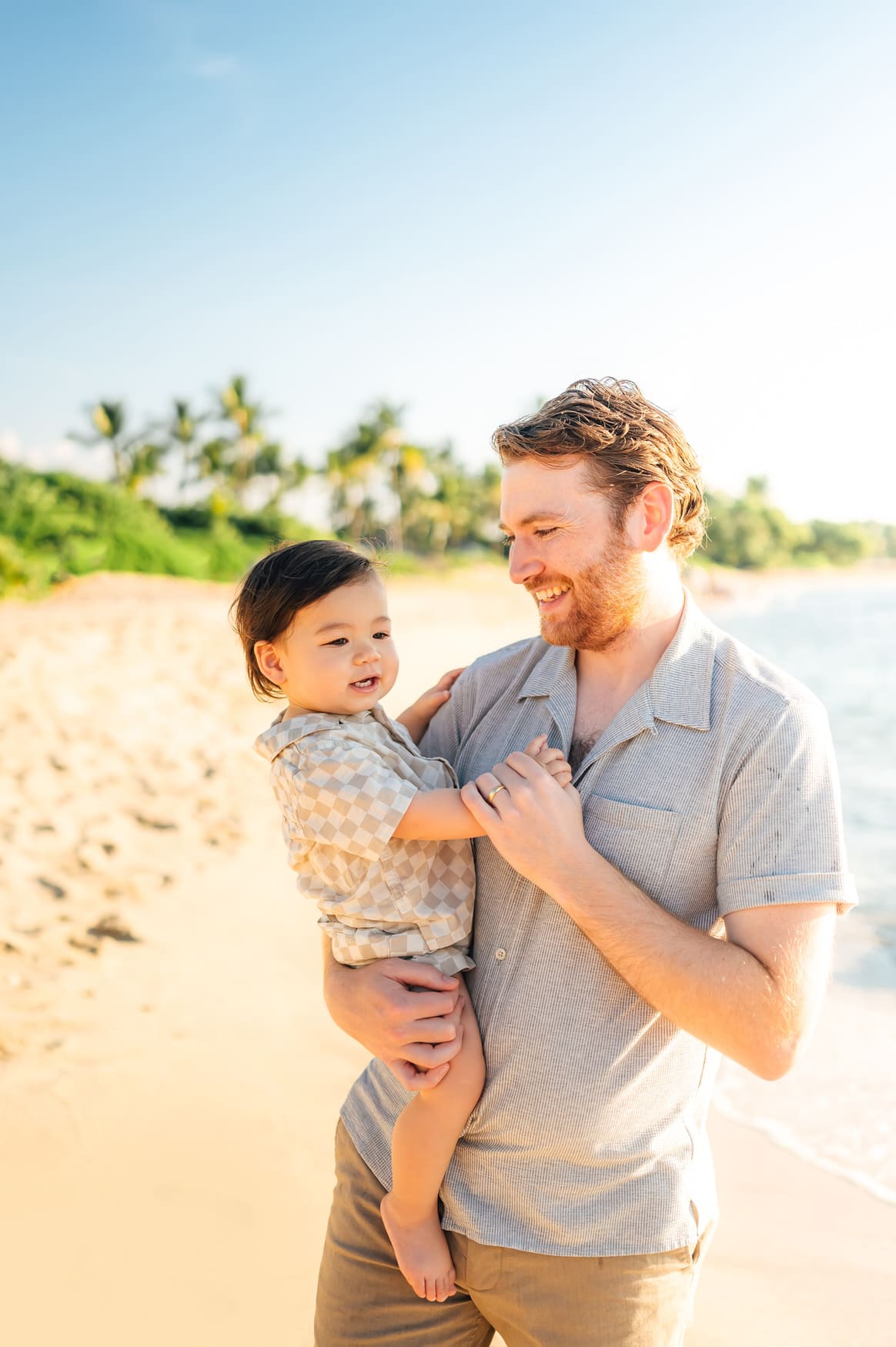
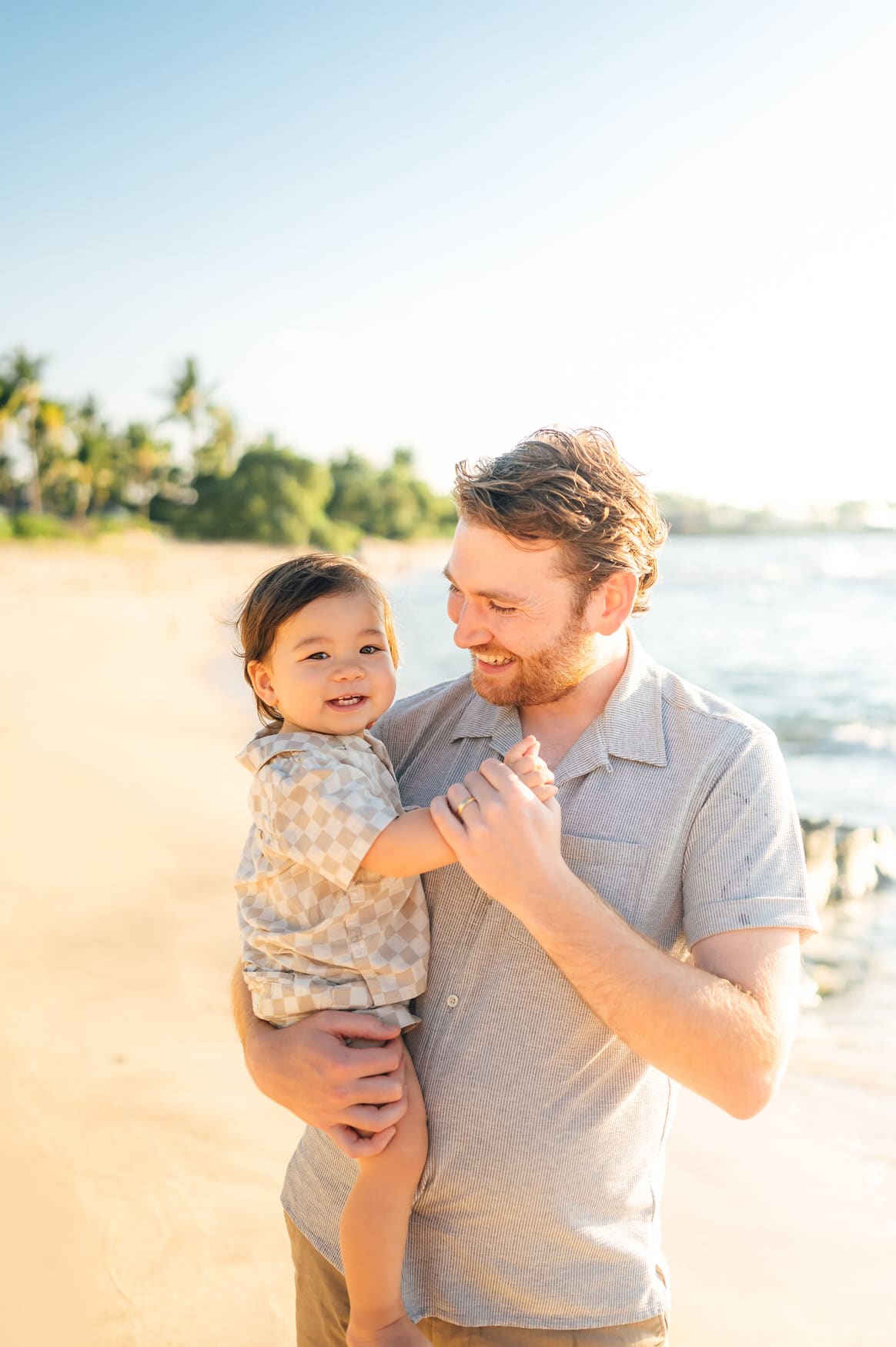
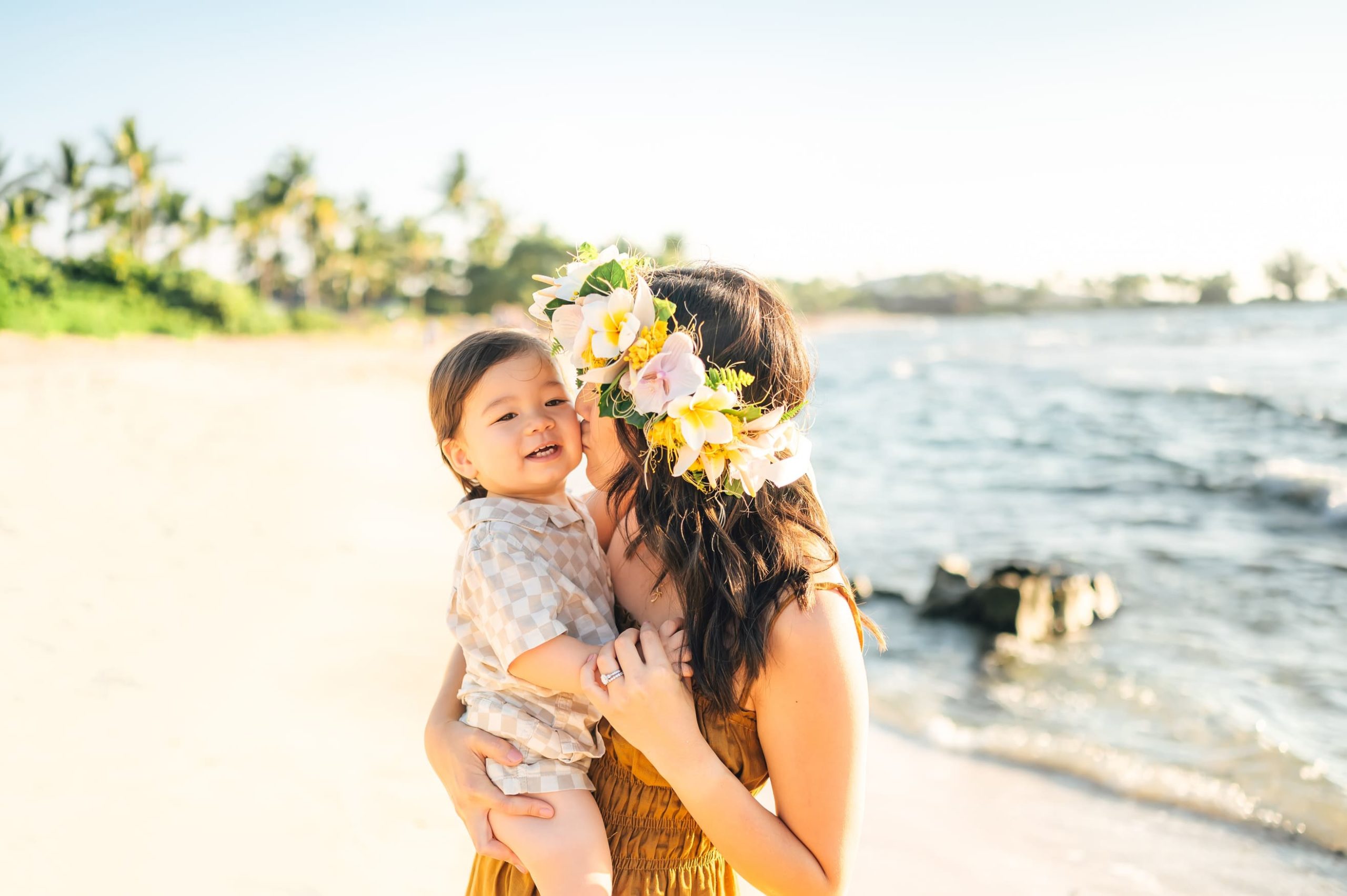
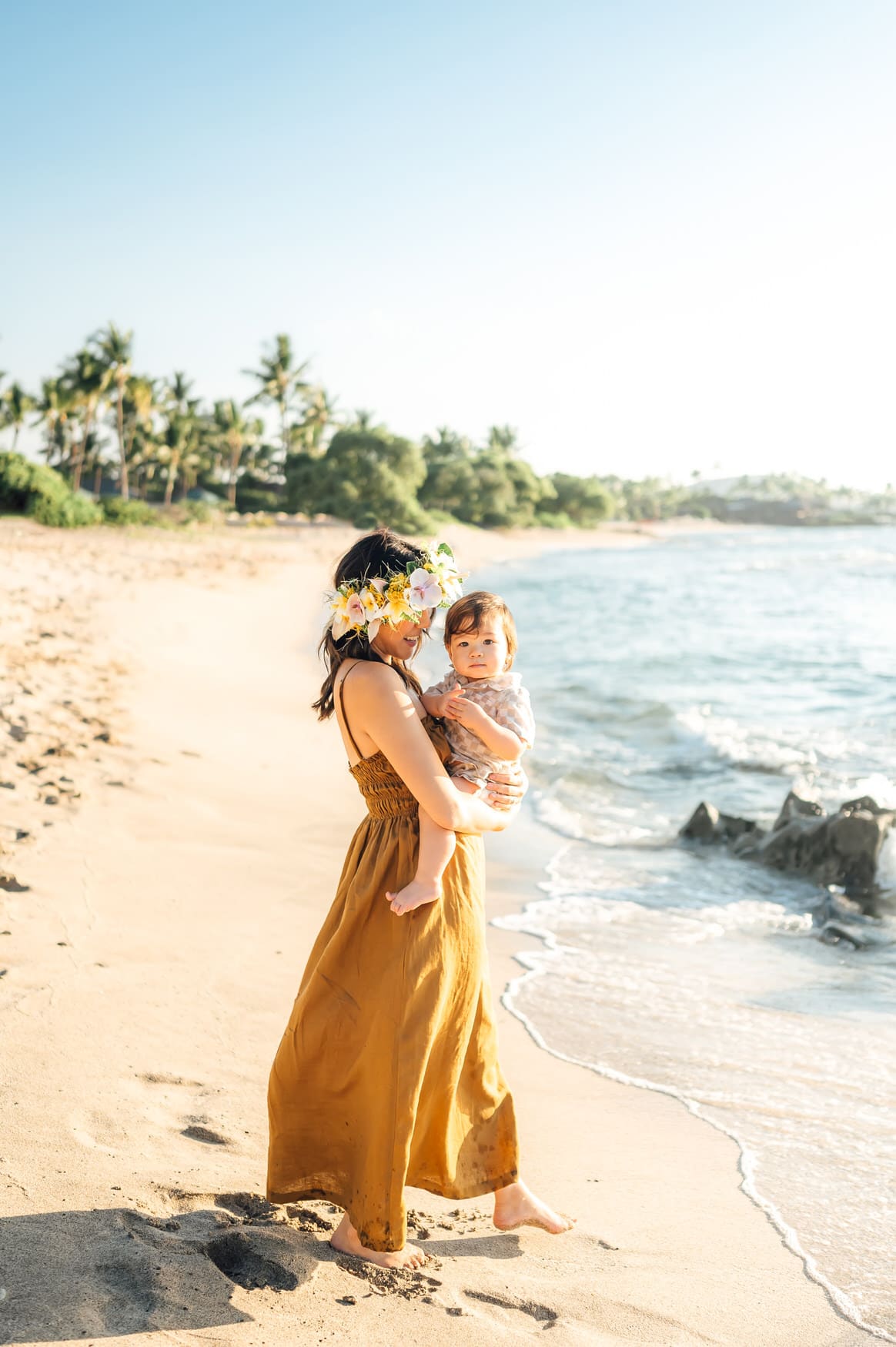
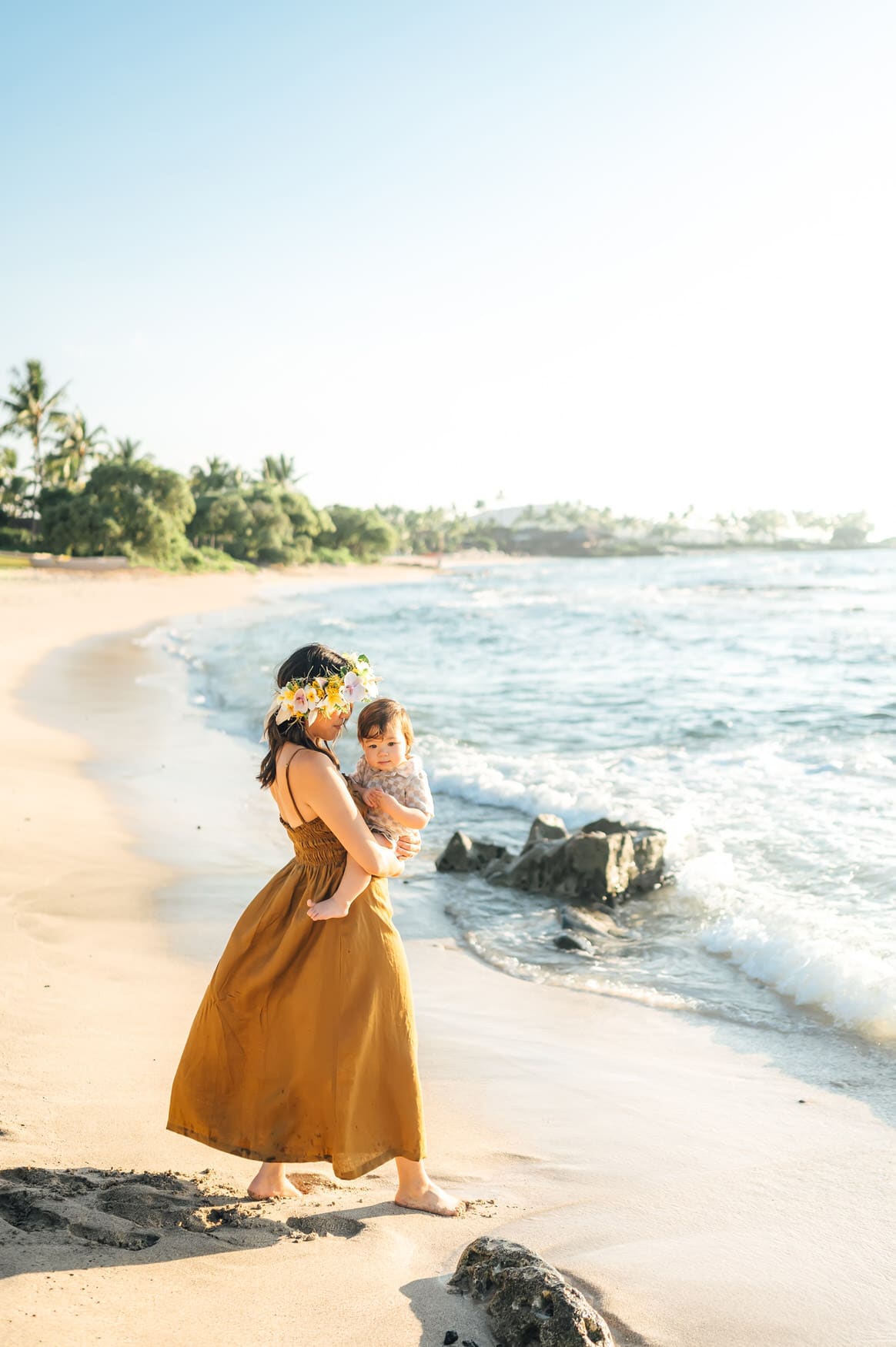
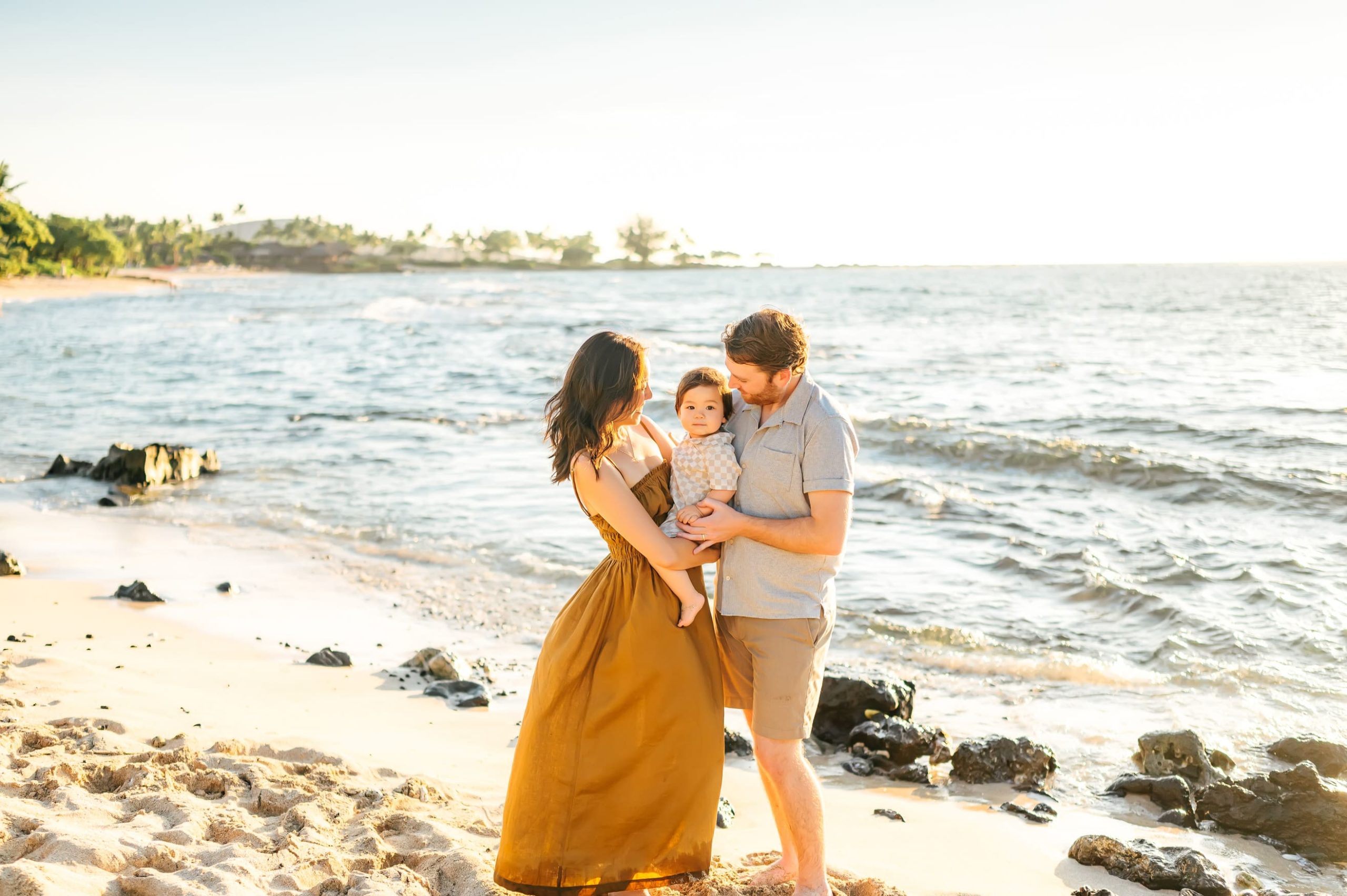
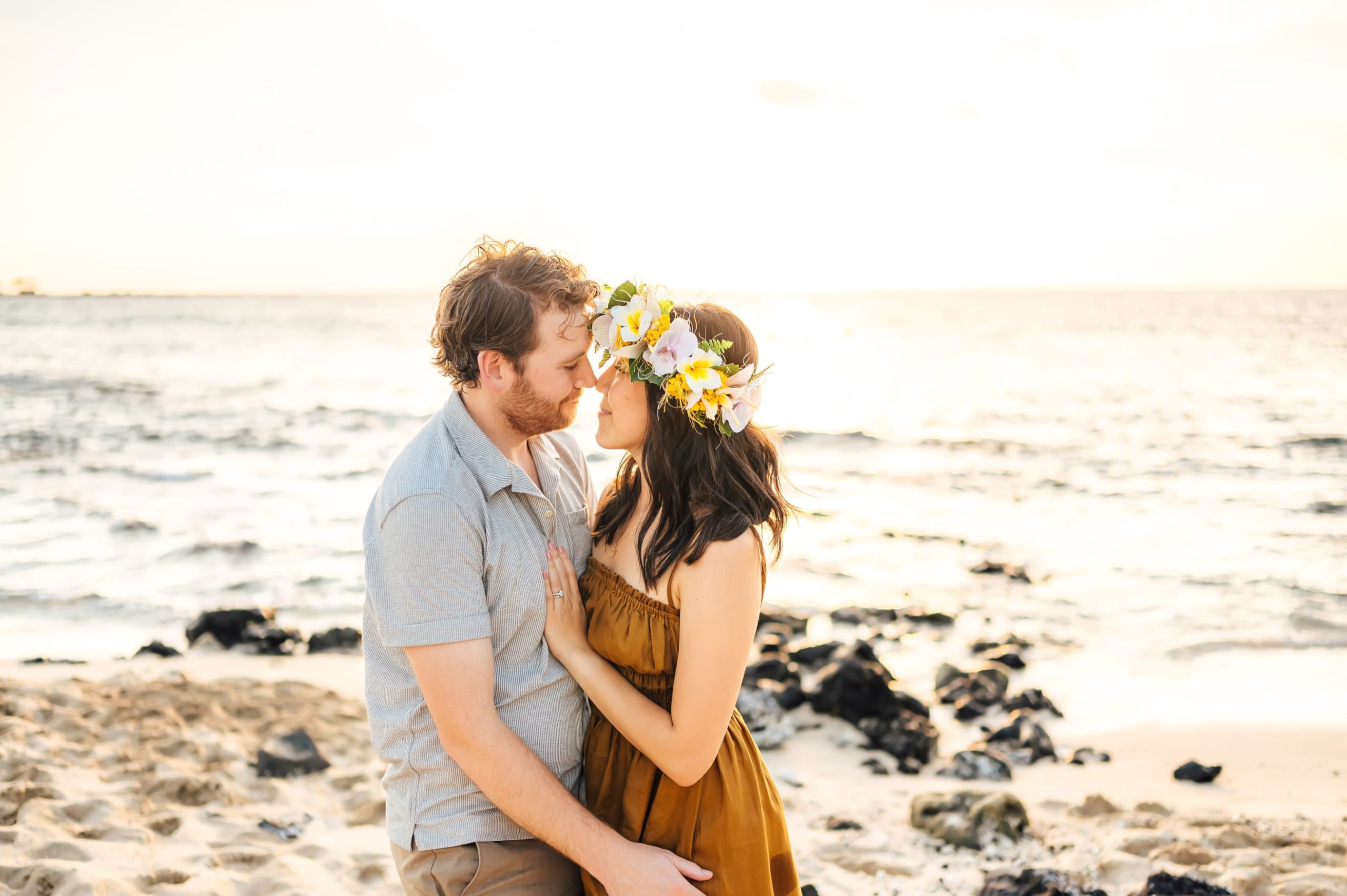
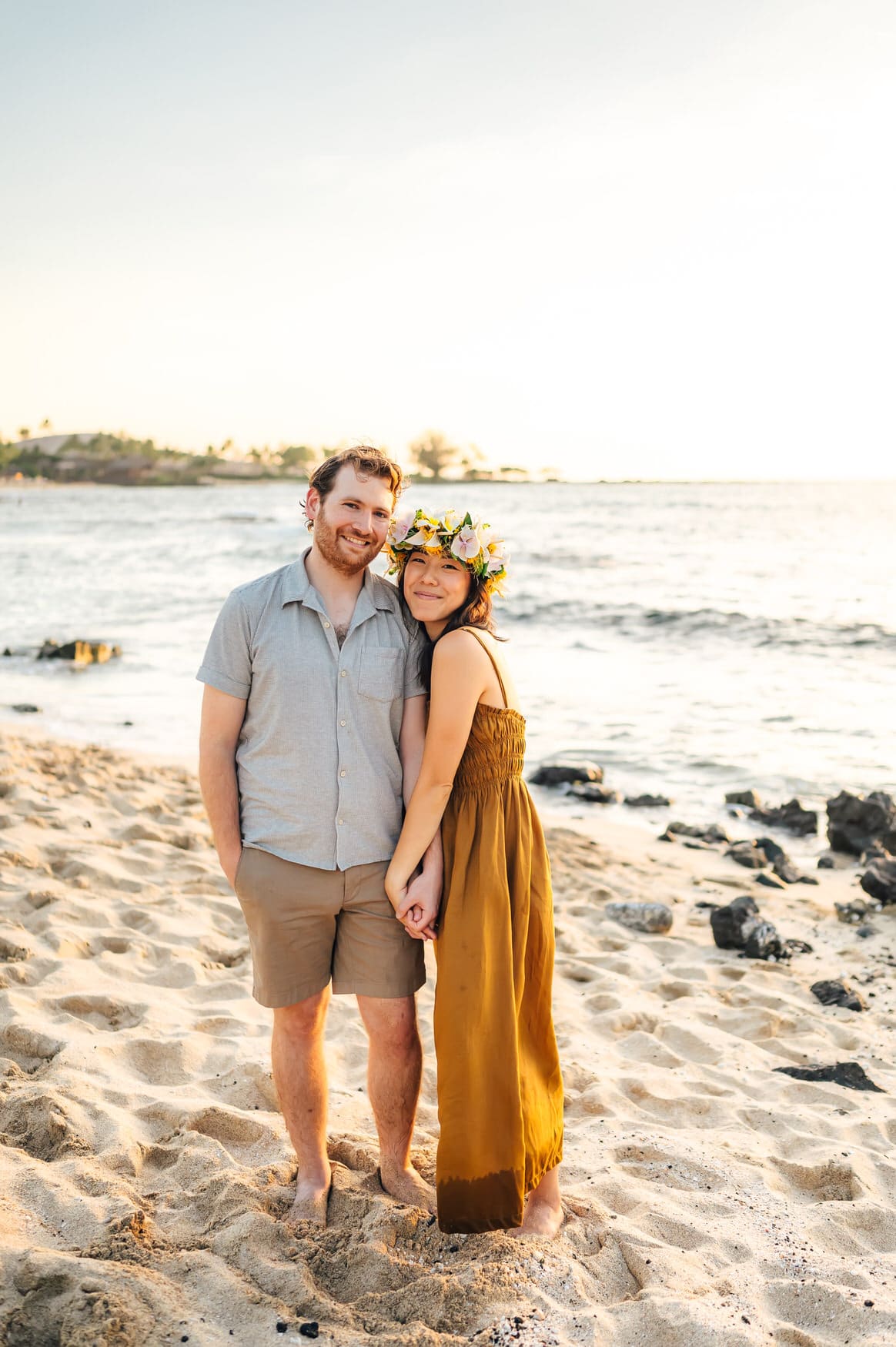
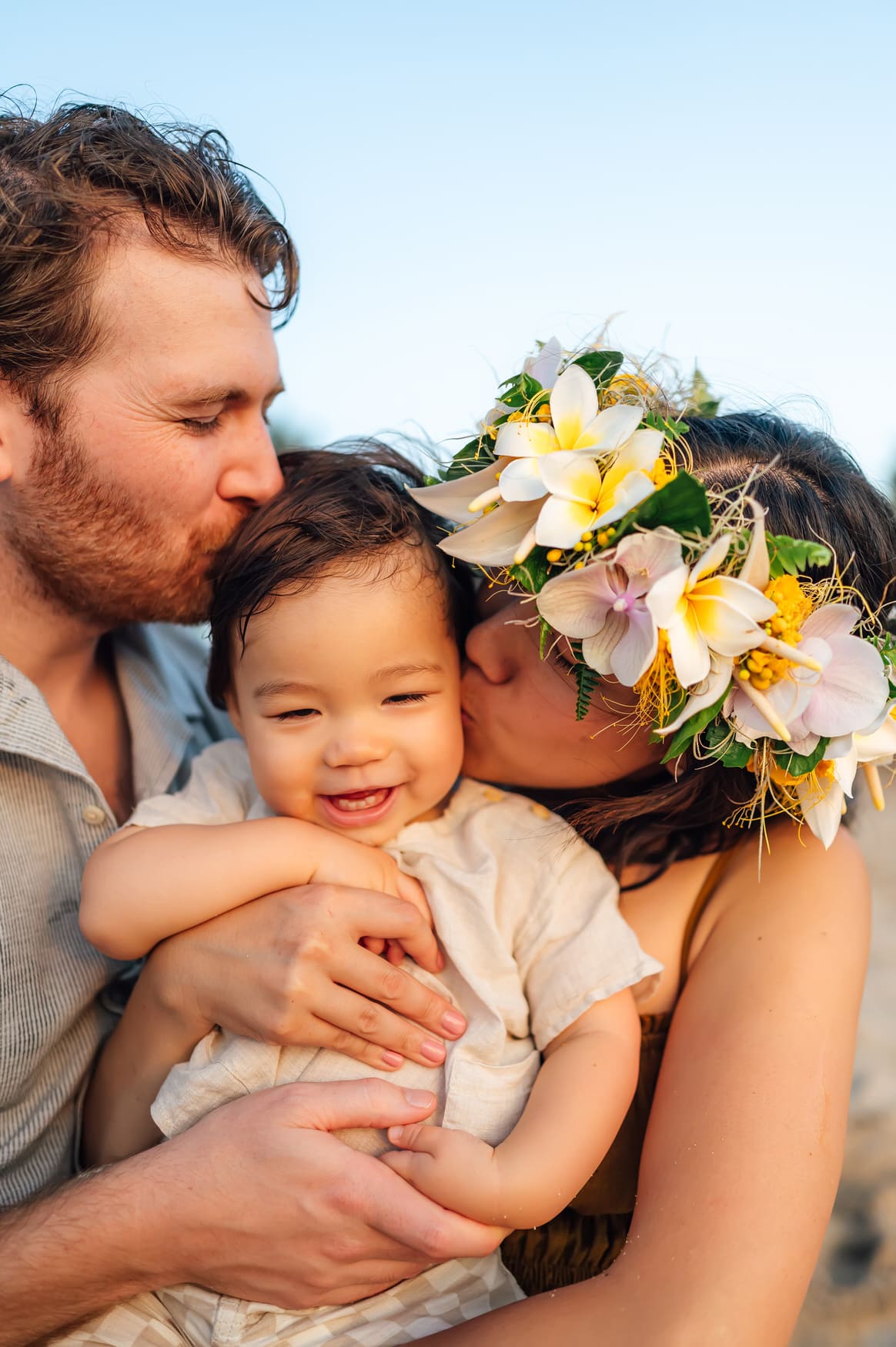
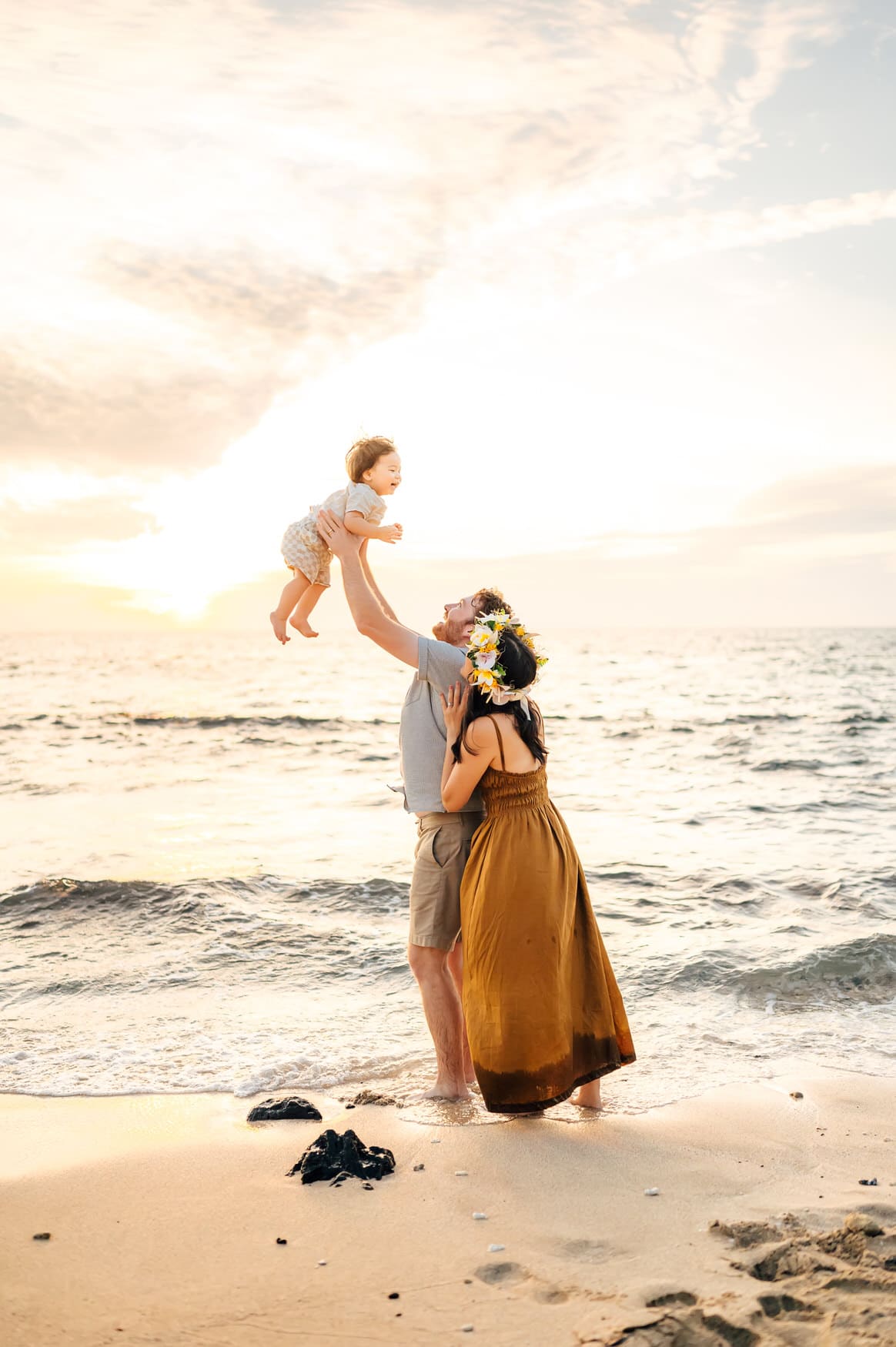
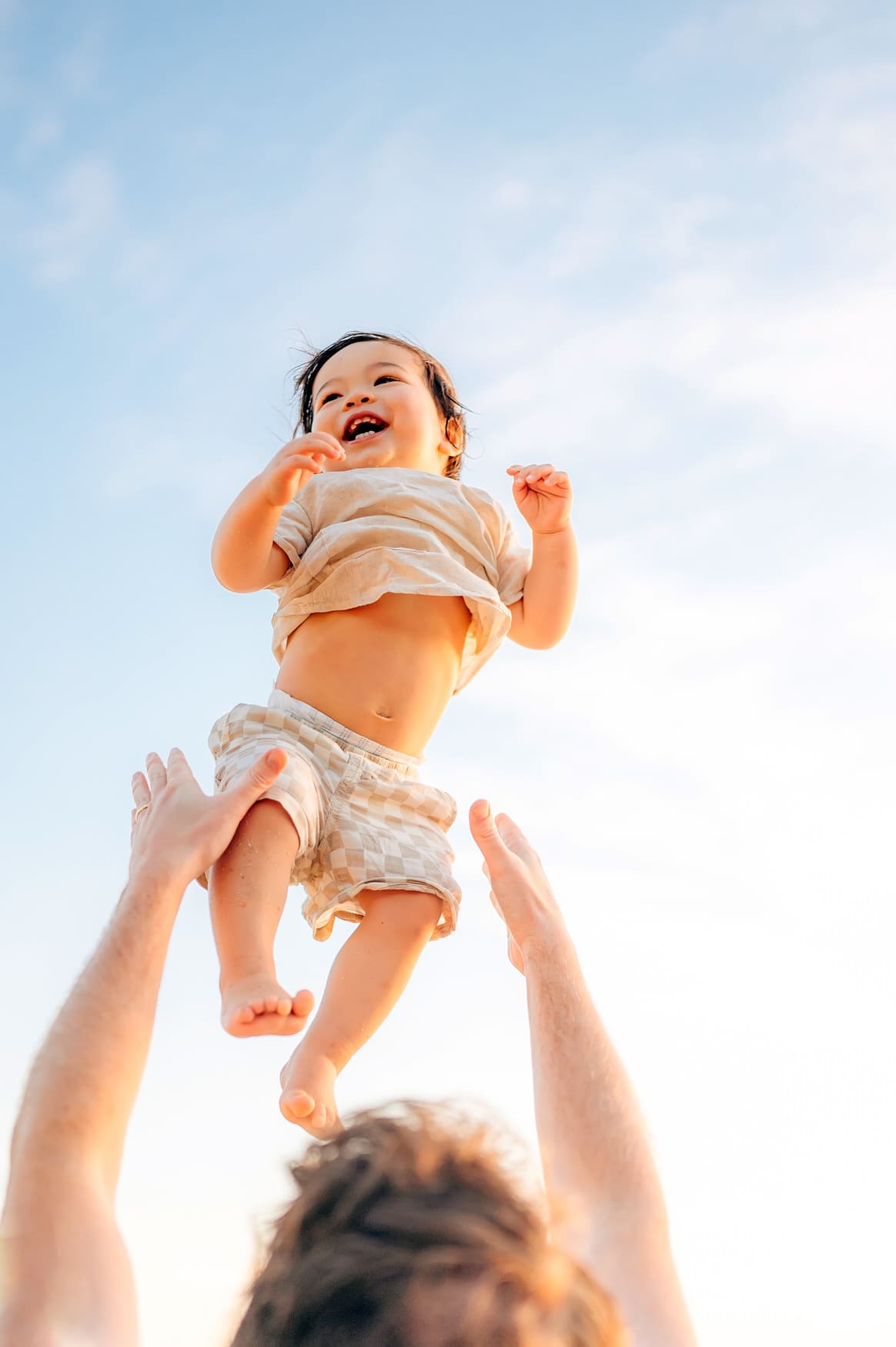
Golden hour is roughly the last 45 to 60 minutes before sunset. The sun sits low, which produces soft, warm light that flatters every skin tone. Shadows go long and gentle instead of harsh and overhead. The sky turns pink, gold, orange. Everyone looks good.
Compare that to midday sun, which sits directly overhead and creates raccoon-eye shadows under brows and chins, squinty expressions, and washed-out skin. If you’ve ever come home from vacation with photos where the lighting looked flat and harsh, it was probably noon.
This isn’t a photography buzzword. The difference in how your images look is real and obvious.
There’s also a golden hour at sunrise: the first 45 minutes after the sun clears the horizon. Same quality of light, different vibe. More on that below.
What time is golden hour in Hawaii?
Hawaii sits close to the equator, so sunset times don’t shift as dramatically between summer and winter as they do on the mainland. There’s still a meaningful gap, though. Here’s a general guide:
Big Island (Kailua-Kona area):
- Winter (November–February): Sunset around 5:45–6:00 PM
- Spring/Fall (March–April, September–October): Sunset around 6:15–6:45 PM
- Summer (May–August): Sunset around 7:00–7:15 PM
Maui:
- Winter: Sunset around 5:45–6:00 PM
- Summer: Sunset around 7:00–7:15 PM
Oahu:
- Summer sunsets come closer to 7:15 PM; winter closer to 5:50 PM
I always check the exact time at timeanddate.com before every session. It gives you the precise minute for your location. Plan to arrive at your beach spot at least 30 to 45 minutes before the listed sunset time. Golden light starts building before the sun actually sets, and the best window is usually 15 to 20 minutes before it drops.
One thing worth knowing if you have young kids: a 7 PM session in July works great for older kids and adults, but if your toddler’s bedtime is 7:30 PM, that session is going to be rough. For families with little ones, I usually suggest a sunrise session instead. More on that below.
Sunrise vs. sunset: which is better?
Both work. Here’s how they differ in practice:
Sunset golden hour:
- Warmer, more golden light (my personal favorite for color)
- Beaches are often quieter in the late evening than midday, but can still have people
- Kids may be tired after a full vacation day
- Best for couples, adults, and families with older kids
Sunrise golden hour:
- Cooler temperatures are a real plus in Hawaii summers
- Beaches are almost entirely empty
- Light is a bit softer and more muted, more pastel than golden
- Kids are usually at their best in the morning, great for families with babies and toddlers
- Sessions often start at 5:30–6:00 AM, so it takes commitment
Both are genuinely beautiful. The choice mostly comes down to your family’s schedule and energy.
My golden hour tips: what I learned after years on Hawaii beaches
These started as my own notes when I was learning. Now I share them with every family before their session.
Tip 1: Never put the sun directly in anyone’s face
This sounds obvious, but it’s the first thing new photographers and families forget. Direct sun in the eyes causes squinting, harsh shadows, and that washed-out, overexposed skin look.
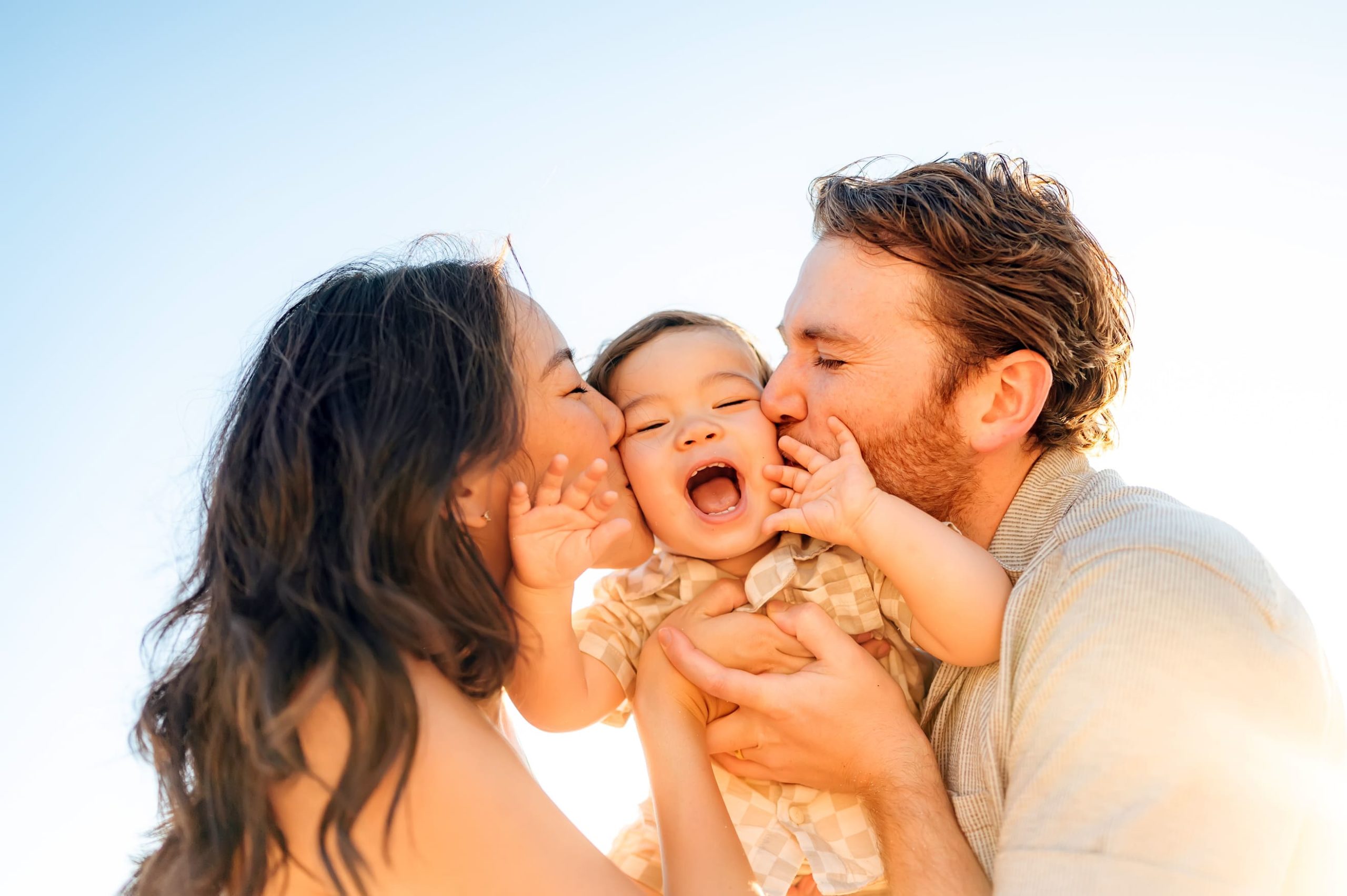
The fix is simple: have everyone face their shadow. Look down at the ground, find where the shadow is falling, and turn to face that direction. The sun is now behind you. It wraps around your hair and shoulders as rim light while your faces stay in soft, even shade.
This one change will improve your photos more than any camera setting.
Tip 2: Keep the sun slightly off to the side
Once the sun is behind your subjects, resist the urge to put it perfectly centered behind them. You want it just off to one side.
When the sun is exactly behind your subjects and directly into the camera, you get heavy lens haze and light flares that wash out faces. Artistic flares look great in one or two shots, but for clean, flattering portraits, the kind you’ll actually want to print, you want even lighting without hazy faces.
Angling slightly to the side solves this while still keeping that warm backlit glow.
Tip 3: Look for filtered light
This is the tip that took me the longest to figure out, and it’s my favorite.
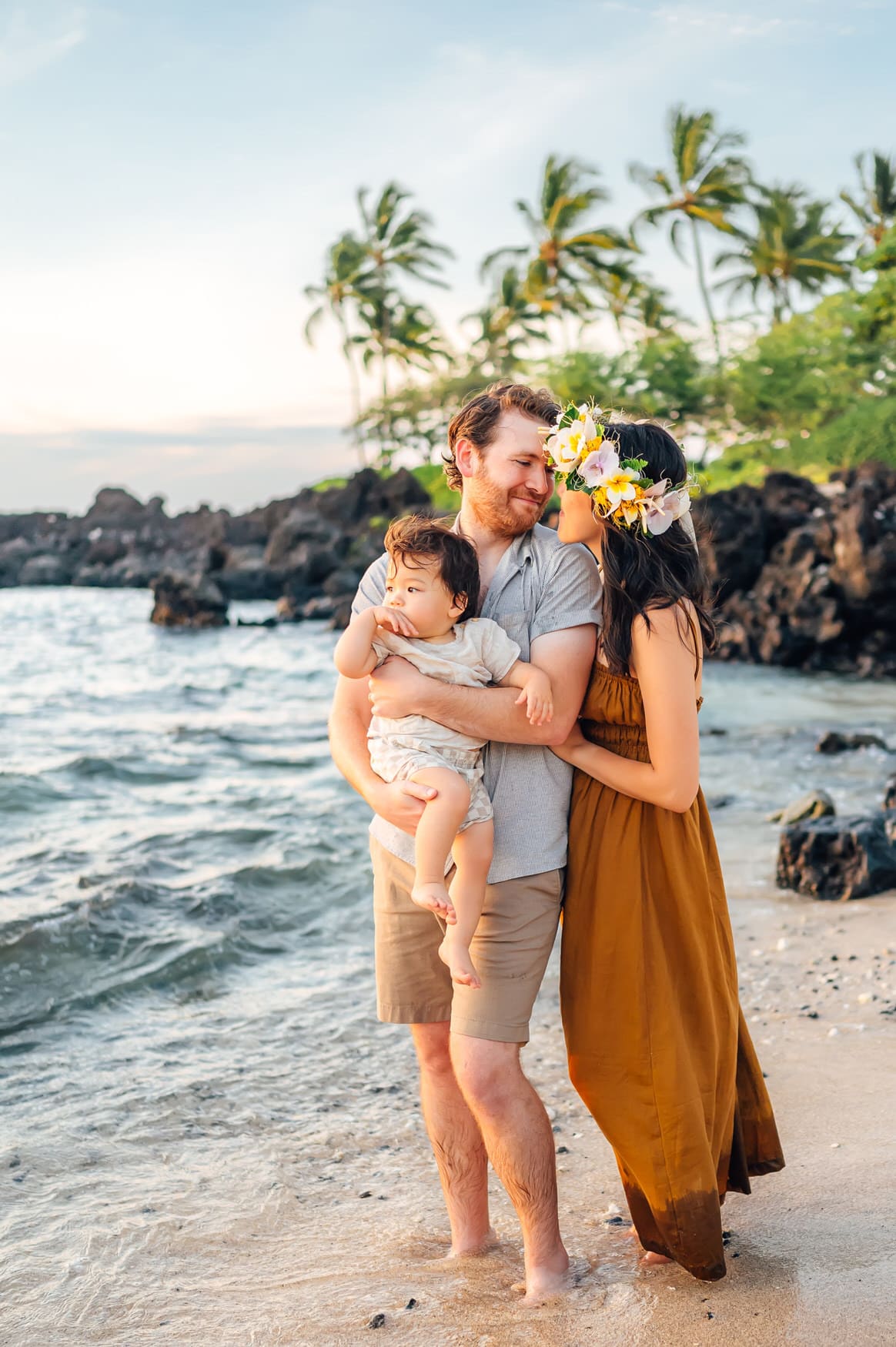
Filtered light is sunlight that’s been partially blocked by something natural: a tree, tall grass, beach vegetation, a rocky cliff. The sun comes through but it’s broken up and softened. The result is even, gentle light without the harshness of direct sun.
On Hawaii beaches, look for areas where palms or vegetation create dappled shade near the water. Hapuna Beach on the Big Island has good spots near the tree line, and Kaanapali on Maui works well for this. When you find that filtered patch, everything looks better.
Tip 4: Trust your camera as the light dims
Early in golden hour, you have plenty of light and can shoot wide open. But as the sun gets lower, light drops fast, usually faster than it feels.
The instinct is to keep dropping shutter speed to compensate. Don’t do this, especially with kids. A slow shutter means blur on anything moving, and kids are always moving.
Instead: raise your ISO. Modern cameras handle ISO 1600, 3200, even 6400 beautifully. A little digital grain is infinitely better than blurry, out-of-focus faces. I push ISO 1600–3200 during the last 15 minutes of most sessions.
If you’re a family reading this: just trust your photographer on timing. If they say they need to wrap up, it’s because the light has passed the workable window.
Tip 5: Don’t pack up right at sunset
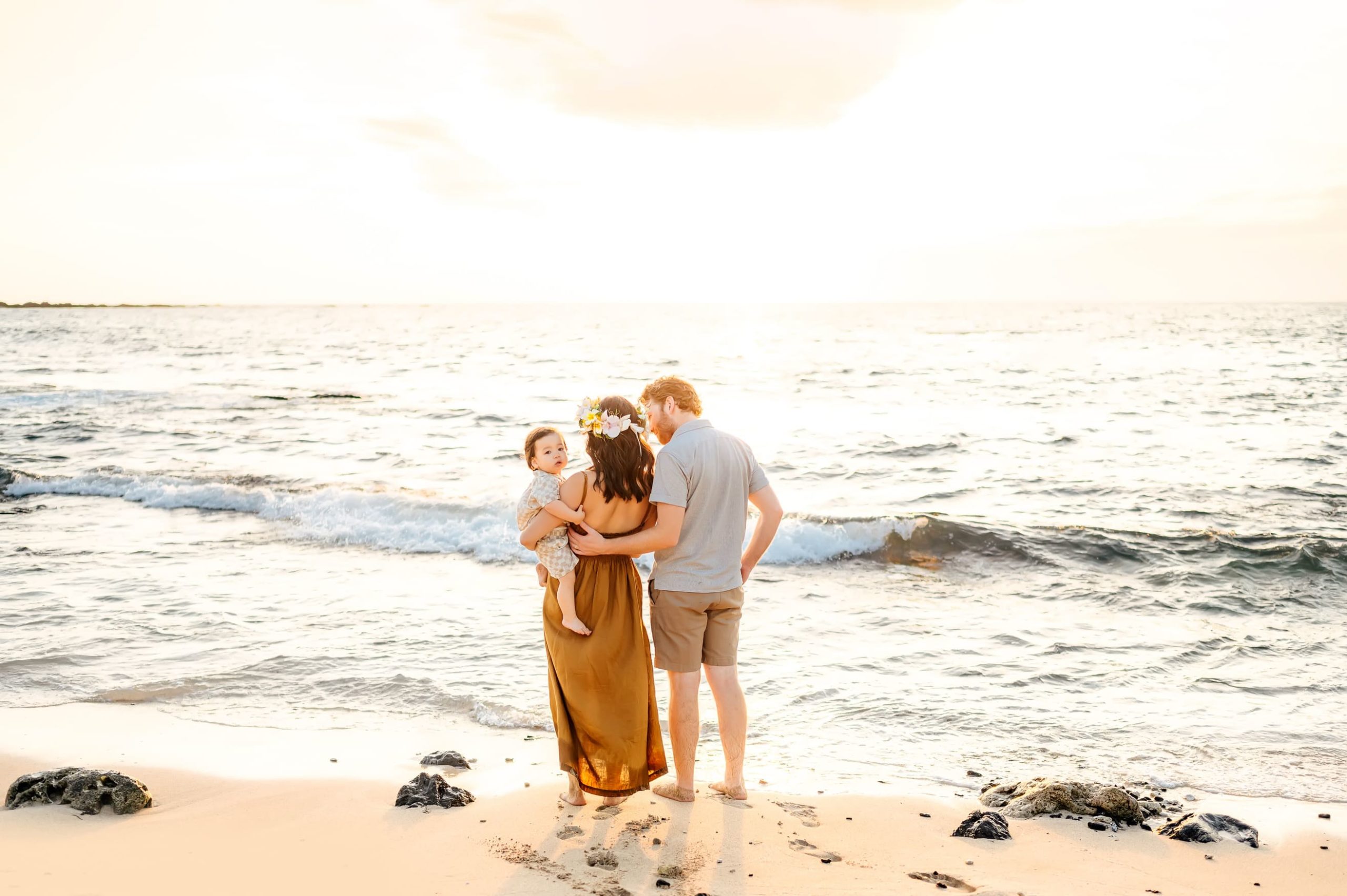
One of the most overlooked windows for photography is the 5-10 minutes after the sun drops below the horizon (on a clear evening!). The sky is still illuminated with reflected light, the colors are at their richest, and the direct sun is gone.
During this window, you can photograph facing any direction and get even, beautiful, soft light on faces. It’s one of my favorite times for portraits.
The tradeoff is that it gets dark quickly after that, so it’s a short window. But don’t leave right at sunset.
What to wear for a golden hour session in Hawaii
The light during golden hour is warm and golden, which means it interacts with your clothing colors. Here’s what works and what doesn’t.
Best colors for golden hour:
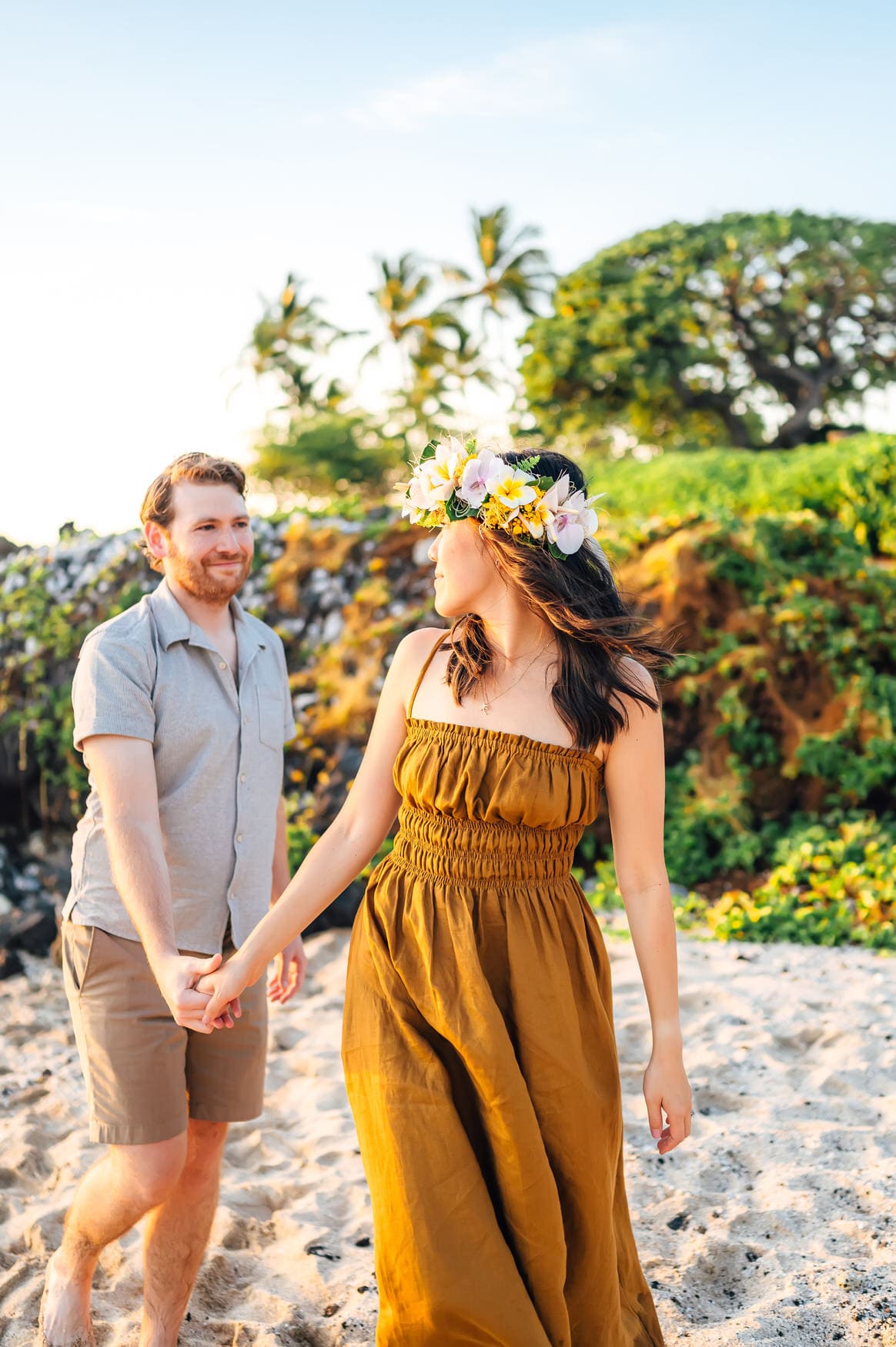
- Soft neutrals: cream, ivory, tan, linen, white
- Earth tones: terracotta, rust, dusty sage, warm greens
- Soft blues and muted teals
- Blush pinks and dusty lavenders
What to avoid:
- Neon or very bright colors reflect onto skin and look harsh
- All black goes flat
- Heavy logos and busy patterns pull attention away from faces
- Matching identical outfits look stiff; coordinate instead
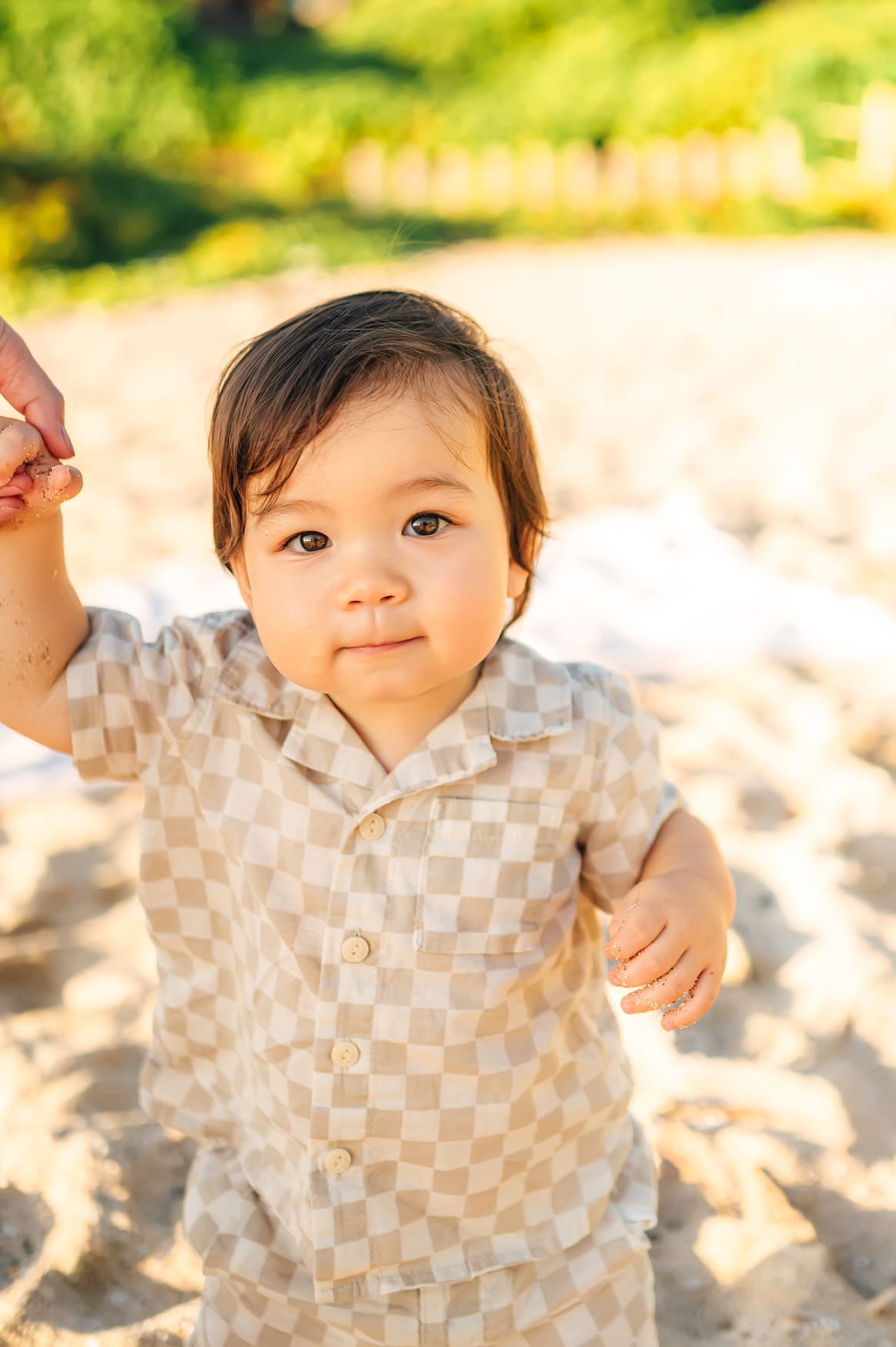
For fabric, linen, cotton, and chiffon work well. They stay cool, move in the breeze, and look relaxed on a beach. For kids, cotton rompers and simple shorts with a light top give them room to move.
One practical thing: you’ll be on sand. Leave the heels at the hotel. Bare feet almost always look better in beach photos anyway.
For more detailed outfit ideas and real examples from our sessions, see our full guide: What to Wear for Hawaii Family Beach Photos.
How to find your exact golden hour time
I give clients the specific meeting time and light window for their session date. But if you want to look it up yourself:
I use timeanddate.com before every session. Enter your beach location and date and it gives you the precise minute, and it works for every island. The Golden Hour One app does the same on your phone with a countdown. PhotoPills is more advanced and mostly used by photographers planning around light angle and sun position.
As a general rule for Hawaii: aim to be at your location with everyone ready to shoot 30–40 minutes before sunset. That early window, when the sun is still up but dropping, often has the warmest light of the whole session, and it gives everyone a few minutes to settle in before we’re racing the clock.
Frequently asked questions
How long does a golden hour session last?
A typical golden hour session runs 45 minutes to 1 hour. The light changes quickly, so we work efficiently. Some of the best sessions I’ve done were 30 minutes with a well-timed window.
What if it’s cloudy on the day of our session?
Overcast days are actually fine. Cloud cover spreads the light evenly, which is often more flattering than direct sun. You lose the vivid golden color, but the light quality is good. Rain is the only real concern, and Hawaii showers tend to be brief.
What if we have a baby or toddler?
Consider a sunrise session. Babies and toddlers are typically at their freshest and happiest in the morning, the beach is empty and quiet, and you’re done before the heat of the day. Sunset sessions can work too, but plan around nap schedules and have snacks ready.
How far in advance should we book?
For peak Hawaii travel seasons (December–January and June–August), I recommend booking 3–6 months in advance. Golden hour sessions fill up fast because every photographer wants that light.
Where are the best golden hour spots on the Big Island?
My favorites include Hapuna Beach, Puako Beach, Mauna Kea Beach, and Anaehoomalu Bay (A-Bay). Hapuna is a wide open white sand beach; Puako is quieter and less crowded; A-Bay has a more dramatic lava rock backdrop. Which one fits depends on the kind of images you want.
Ready to book?
Wilde Sparrow Photography shoots on the Big Island, Maui, and Oahu. If you’re visiting Hawaii and want photos that capture how it actually felt (the light, the kids, the color of that specific sunset), we’d love to work with you.
Contact us to check availability and start planning →
Wilde Sparrow Photography is a Hawaii-based family and portrait photography team specializing in beach sessions at golden hour across the Big Island, Maui, and Oahu.