
Hawaii family beach photo outfits: a guide from your photographer
You’ve booked a beach session in Hawaii. You’ve got the date, you’ve maybe even started thinking about the location. And then the question hits: what do we actually wear?
I get asked this constantly. It’s the number one thing families stress about before a session, and honestly, it doesn’t need to be that complicated. After years of photographing families on beaches across the Big Island and Maui, I’ve seen every combination you can imagine. Some work beautifully. Some I’d gently steer you away from. Here’s everything I know.
The one rule that actually matters
Before we get into colors and fabrics: wear something you feel good in. That sounds obvious, but I mean it specifically. If you’re fussing with a dress that keeps blowing up, or dad is sweating through a stiff button-down, or your toddler is miserable in something scratchy, it shows. The best photos come from people who are comfortable enough to actually be present, not thinking about their outfit.
Everything else in this guide is secondary to that.
Colors that work at the beach in Hawaii
Hawaii’s light is warm. During golden hour the sun turns everything amber and orange, which means certain colors look great and others fight the light in ways that are hard to fix in editing.
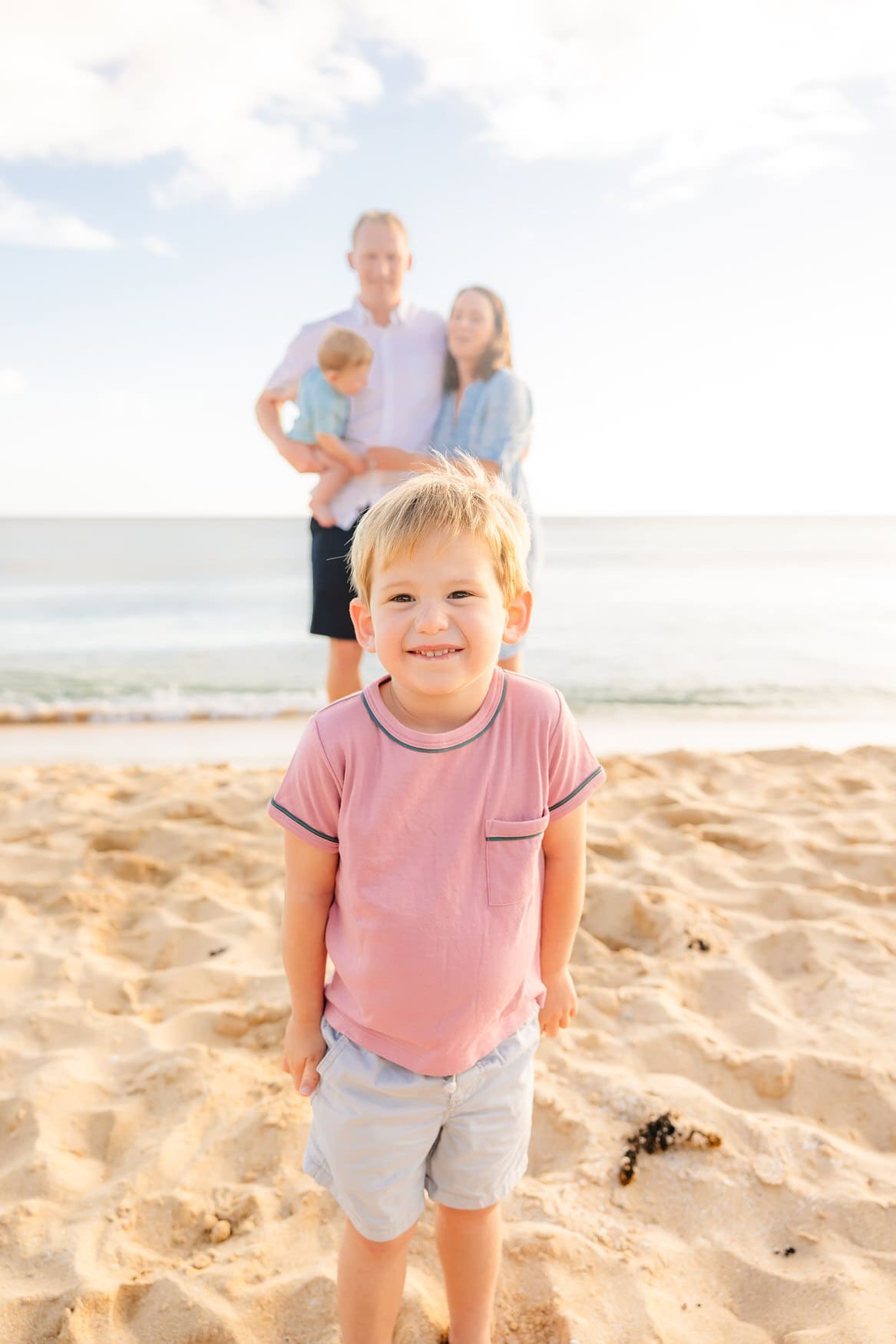
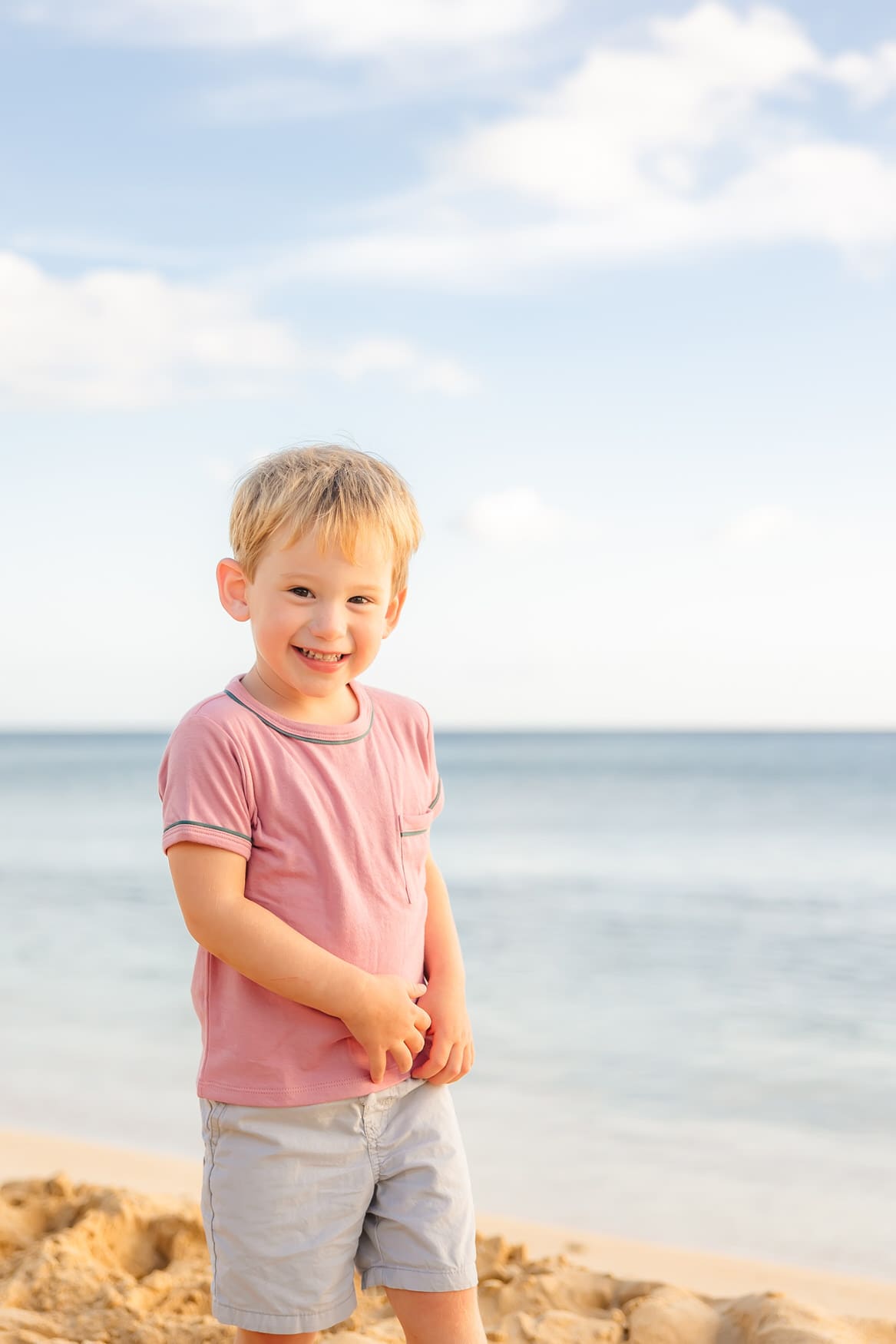
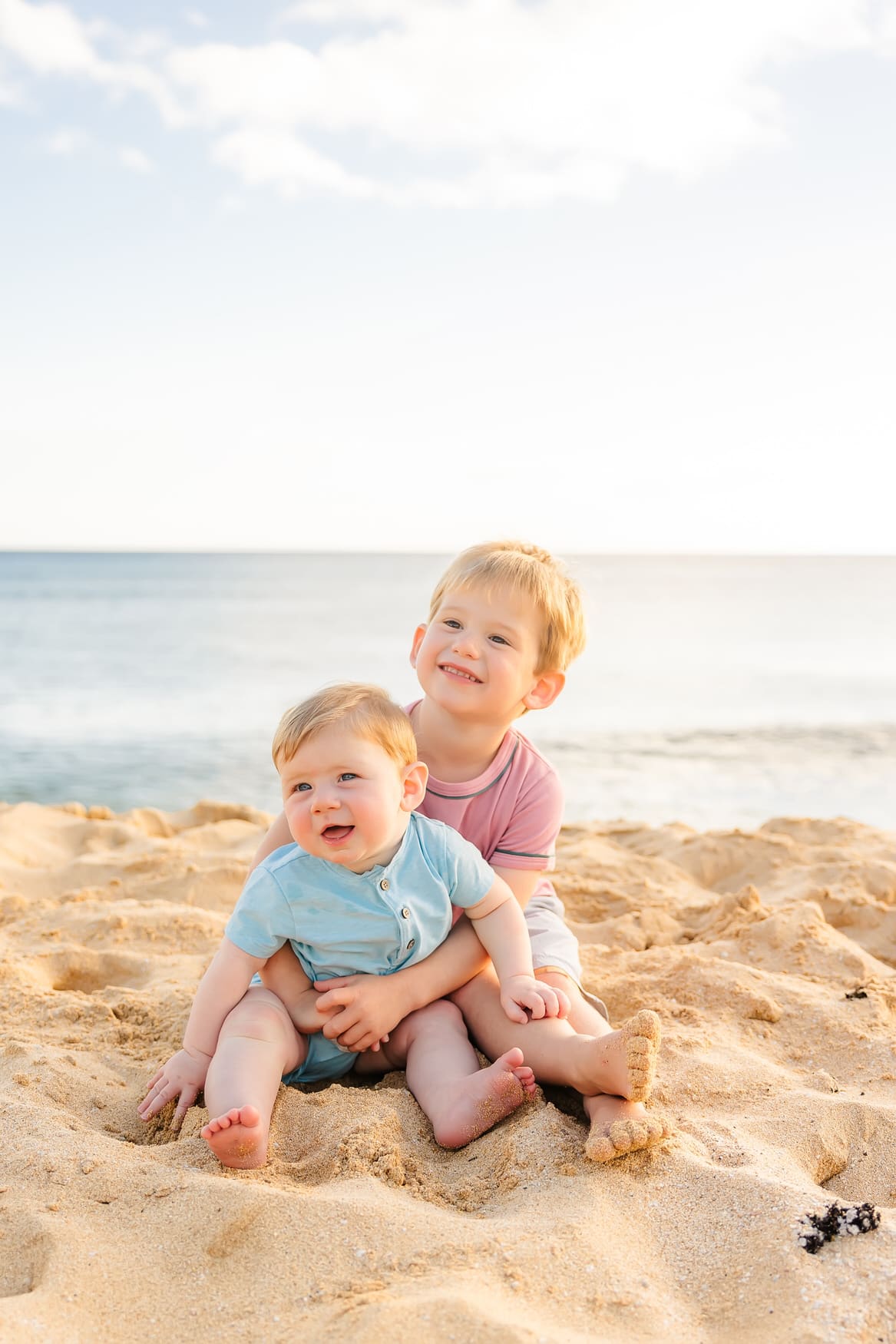
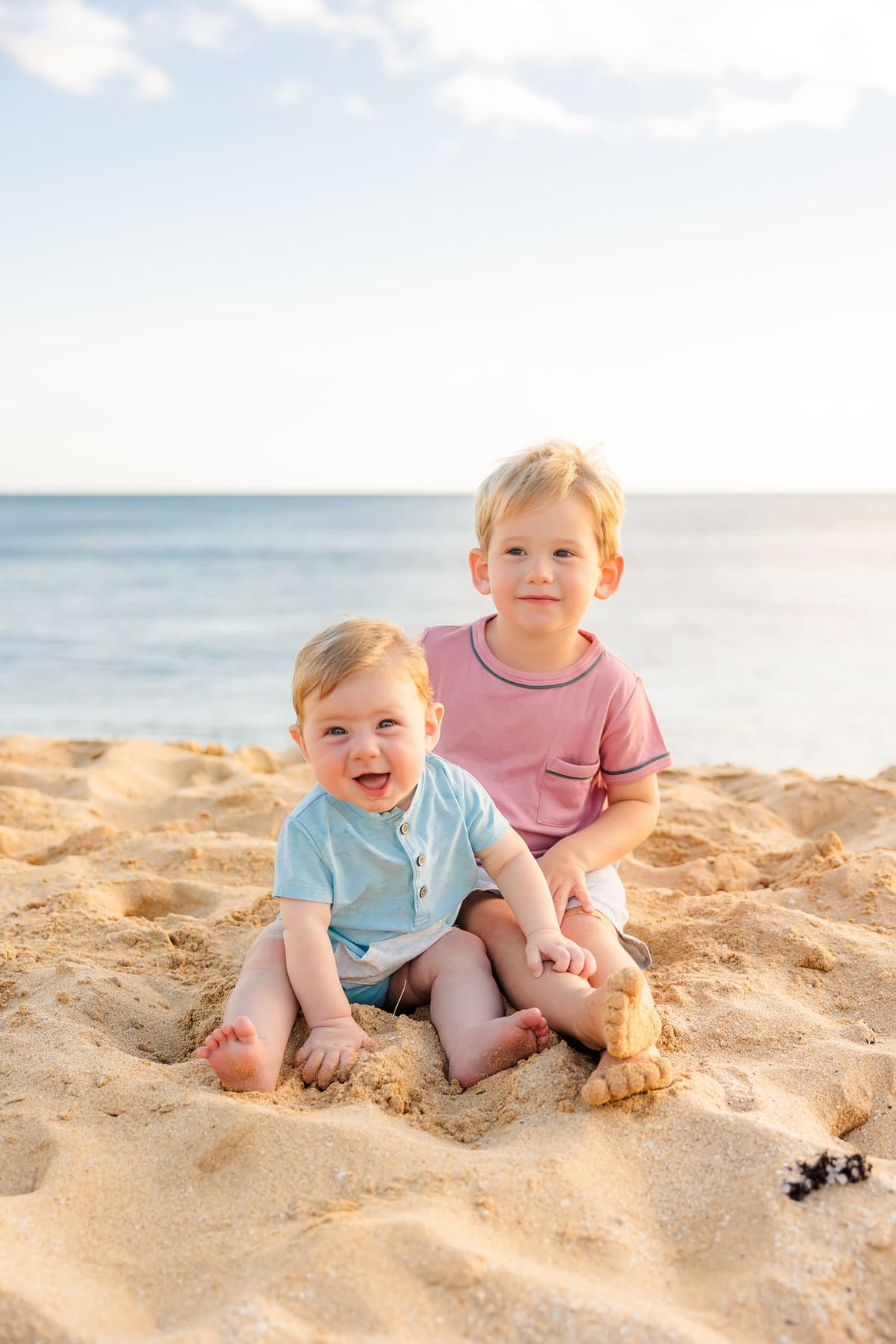
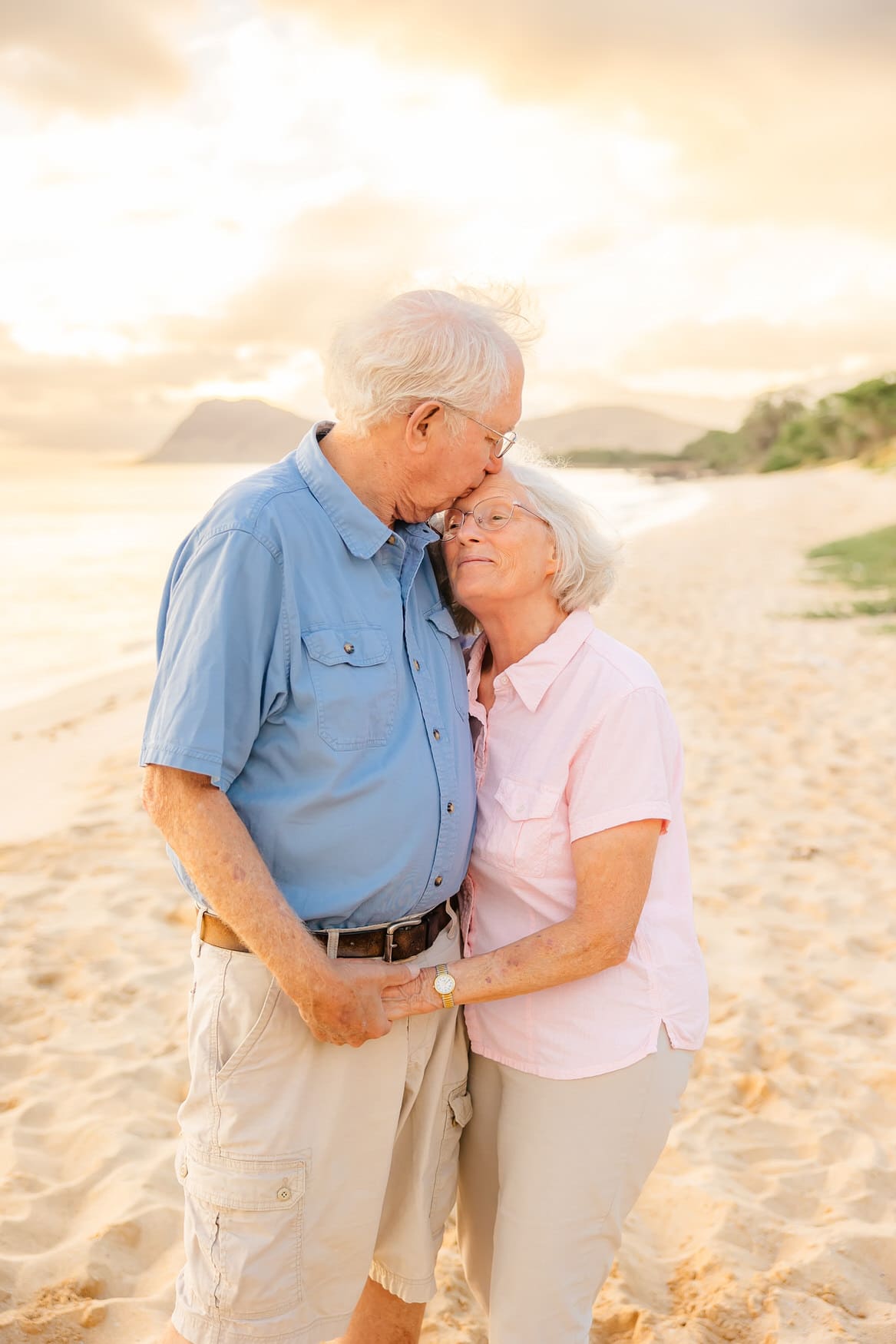
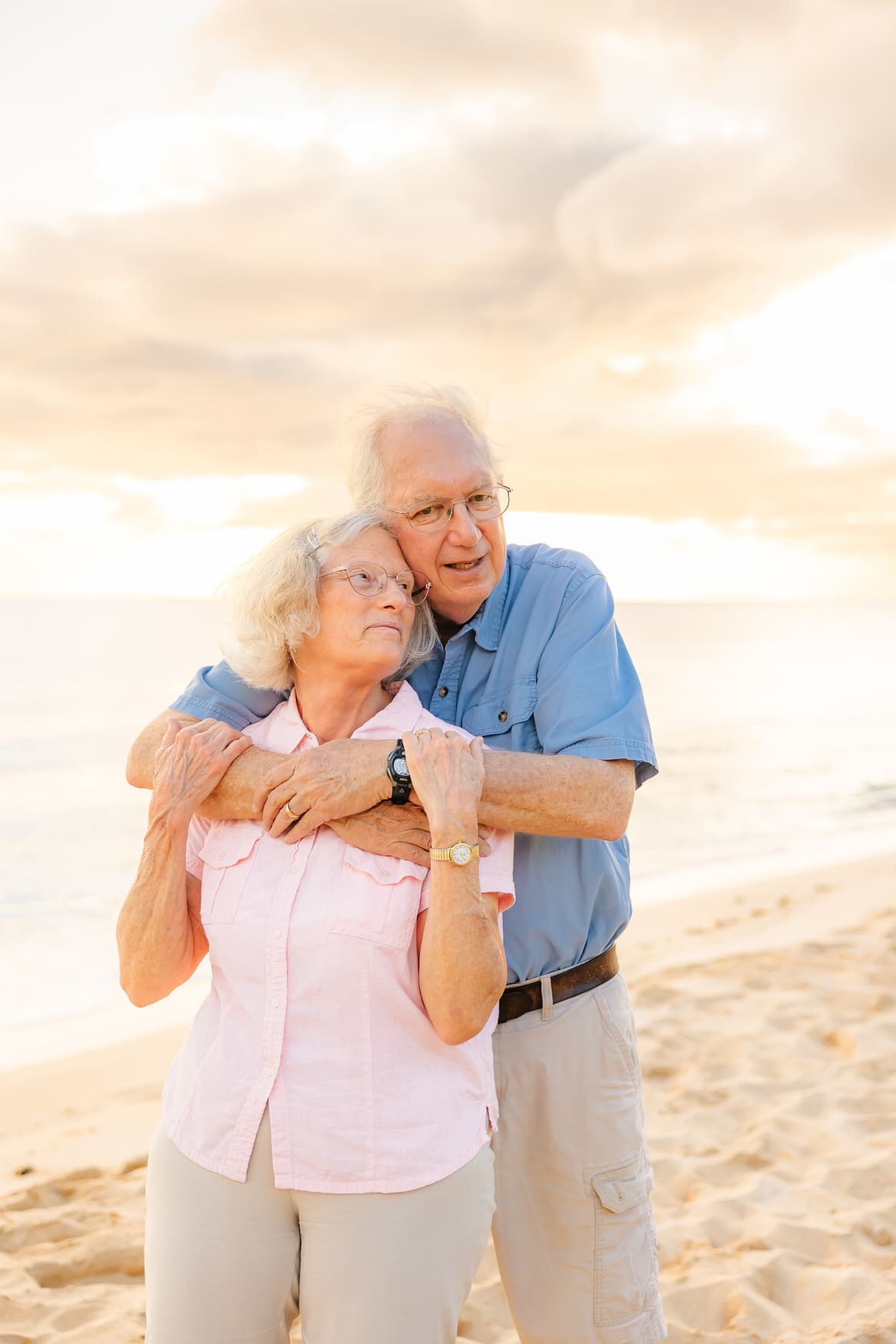
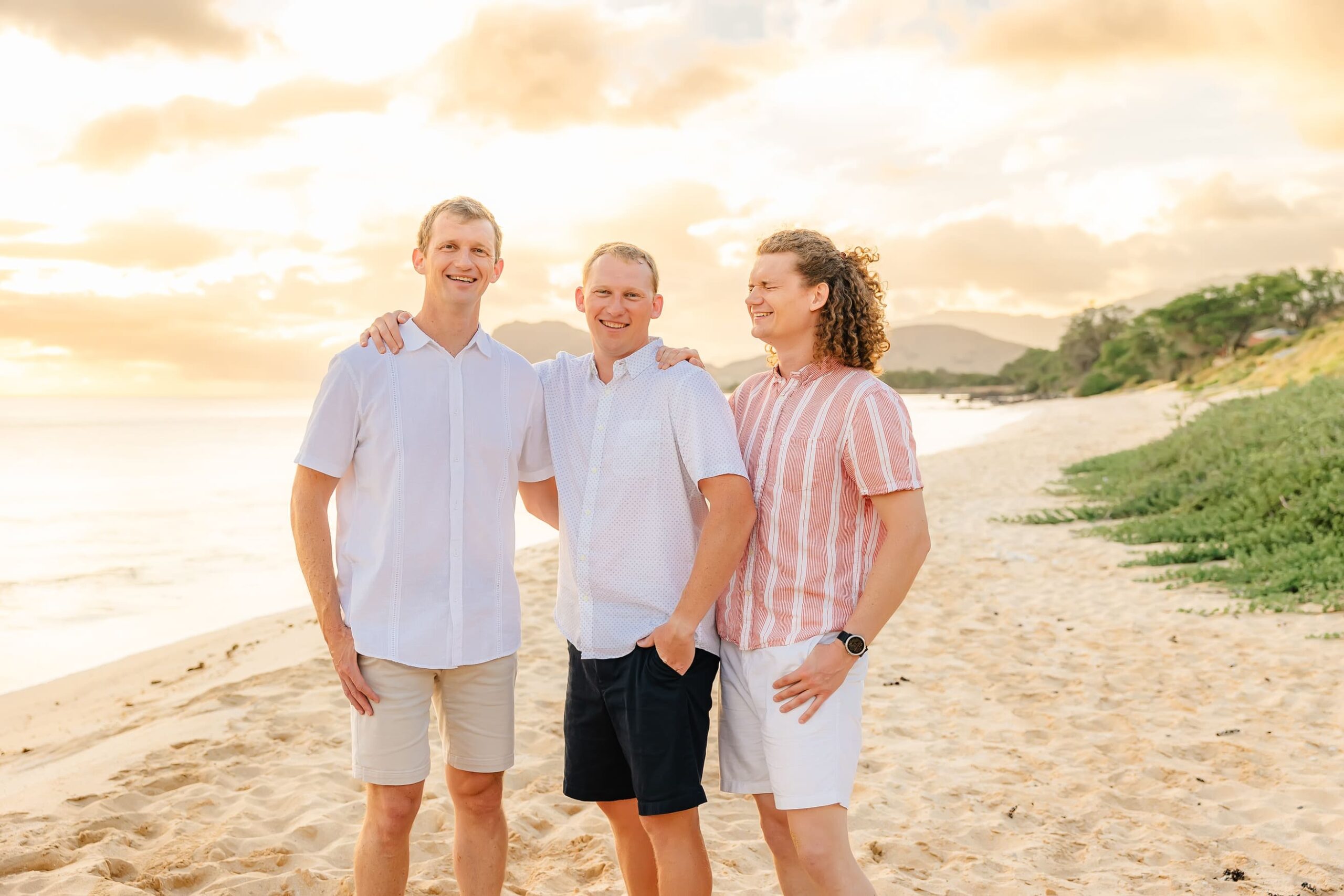
Soft neutrals are the most reliable. Cream, ivory, white, blush, sand, sage, dusty blue, soft terracotta. These tones sit quietly against the sand and ocean and let your family’s faces do the work. Muted pastels also photograph well, especially in the late afternoon. Soft pink, seafoam green, pale coral, lavender. Keep the saturation low. The beach already has a lot going on visually.
The two things I see trip people up most often are neons and bright oranges. The issue is color cast: neons bounce their color onto skin, so you end up with a green or orange tint on everyone’s faces that’s difficult to correct. Bright red can do the same at close range.
Large logos and graphics pull focus. So do very busy prints with lots of contrast. A thin stripe or small floral is fine. A bold, high-contrast Hawaiian print is the photographic equivalent of someone standing in the background making a face.
How to coordinate without matching
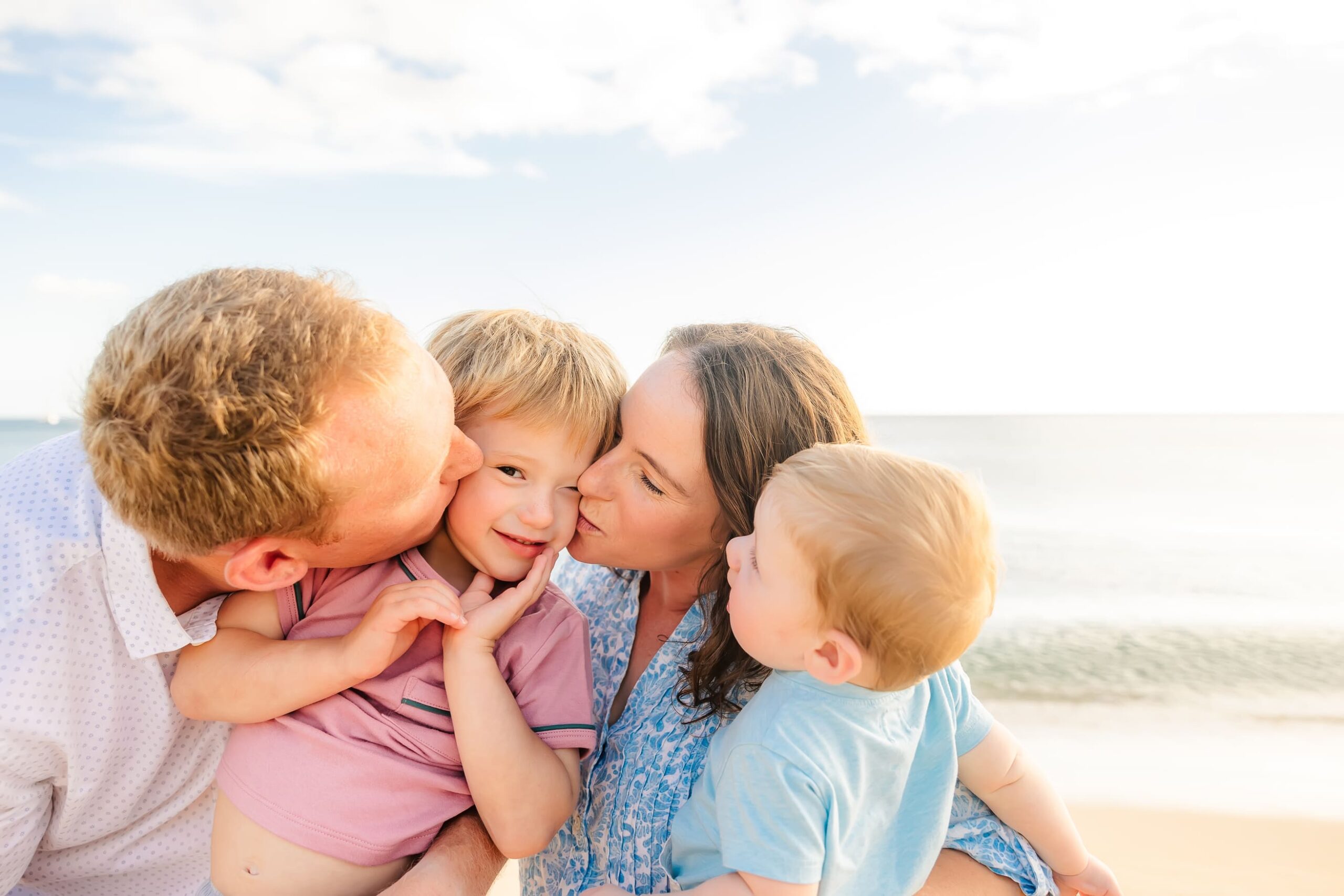
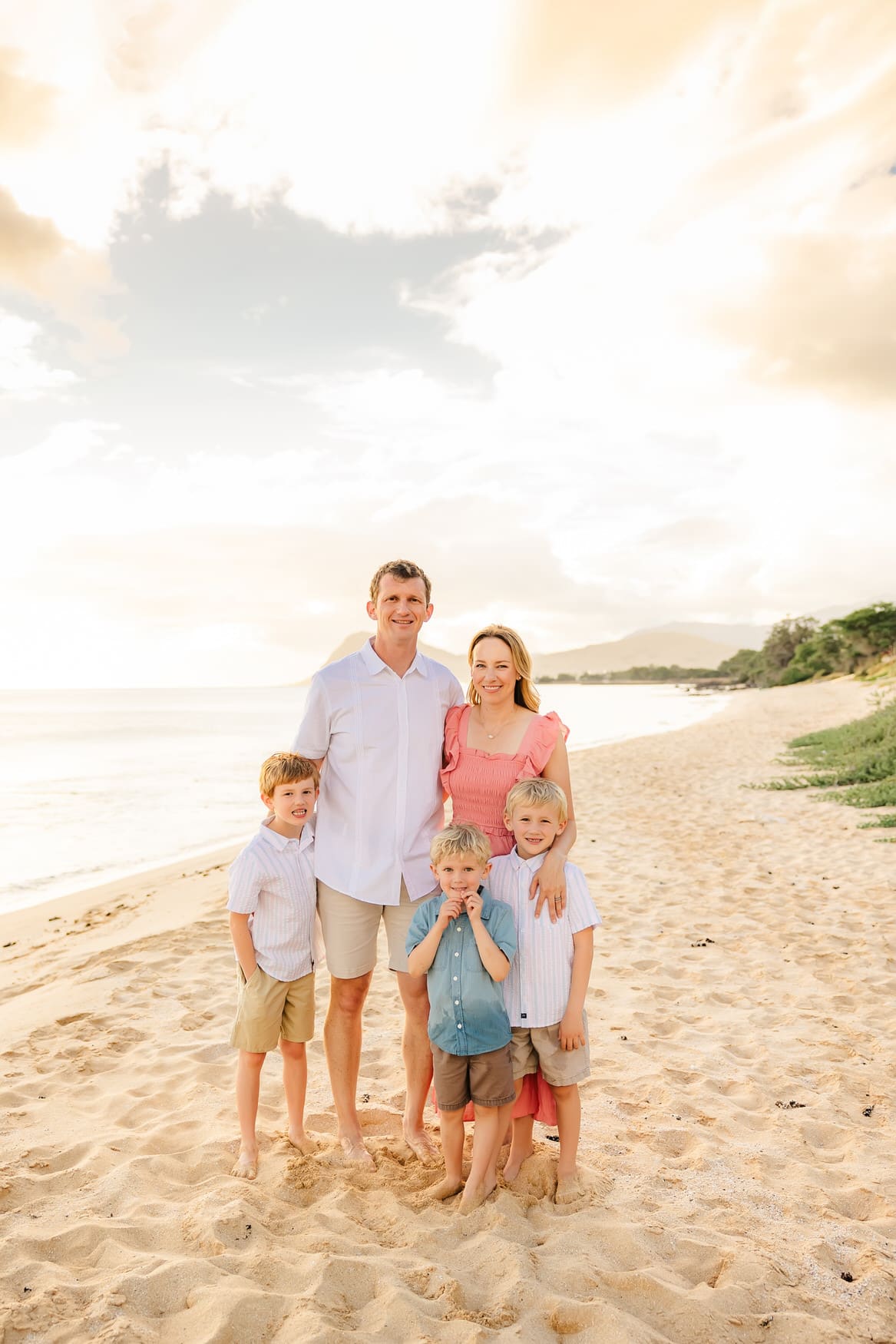
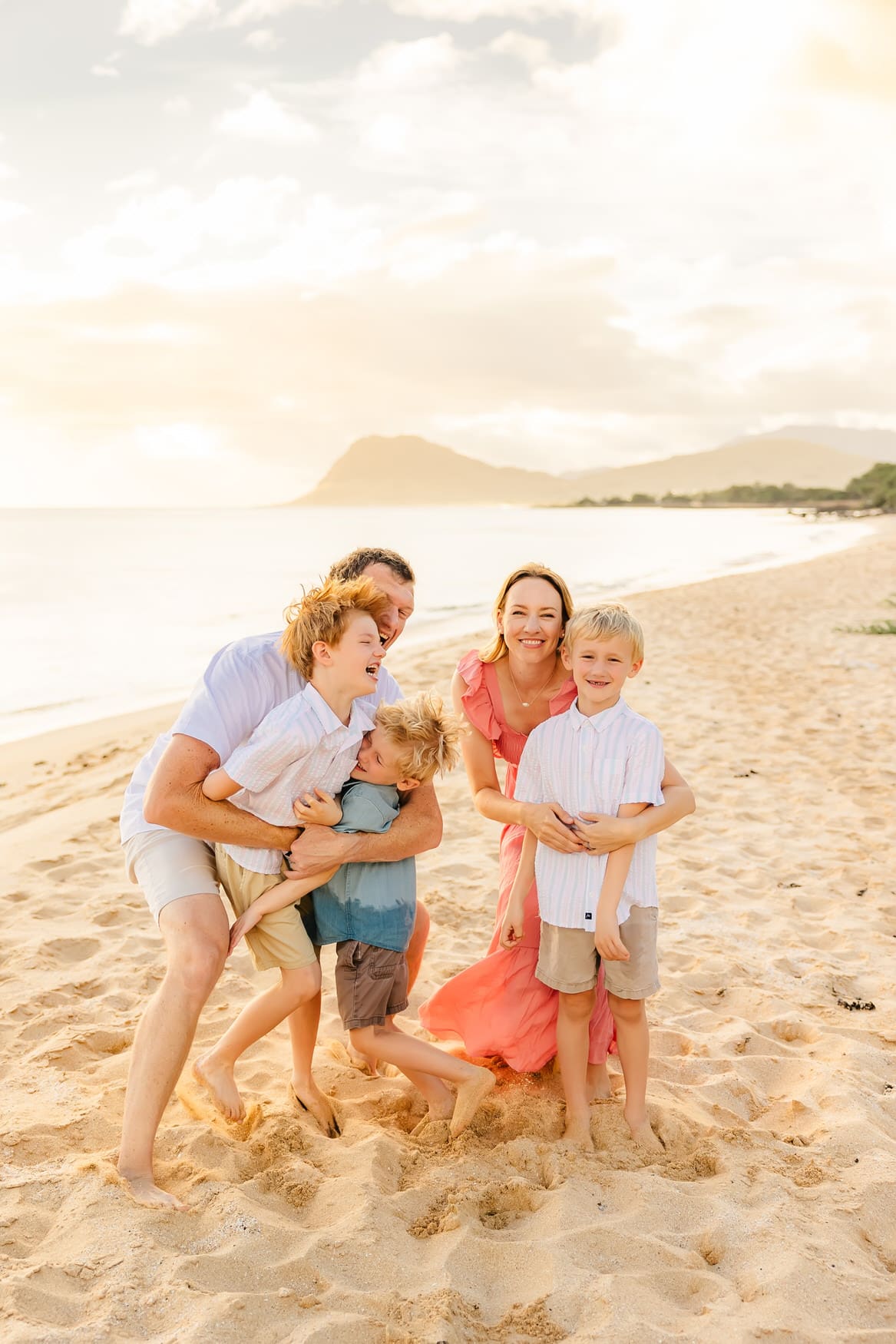
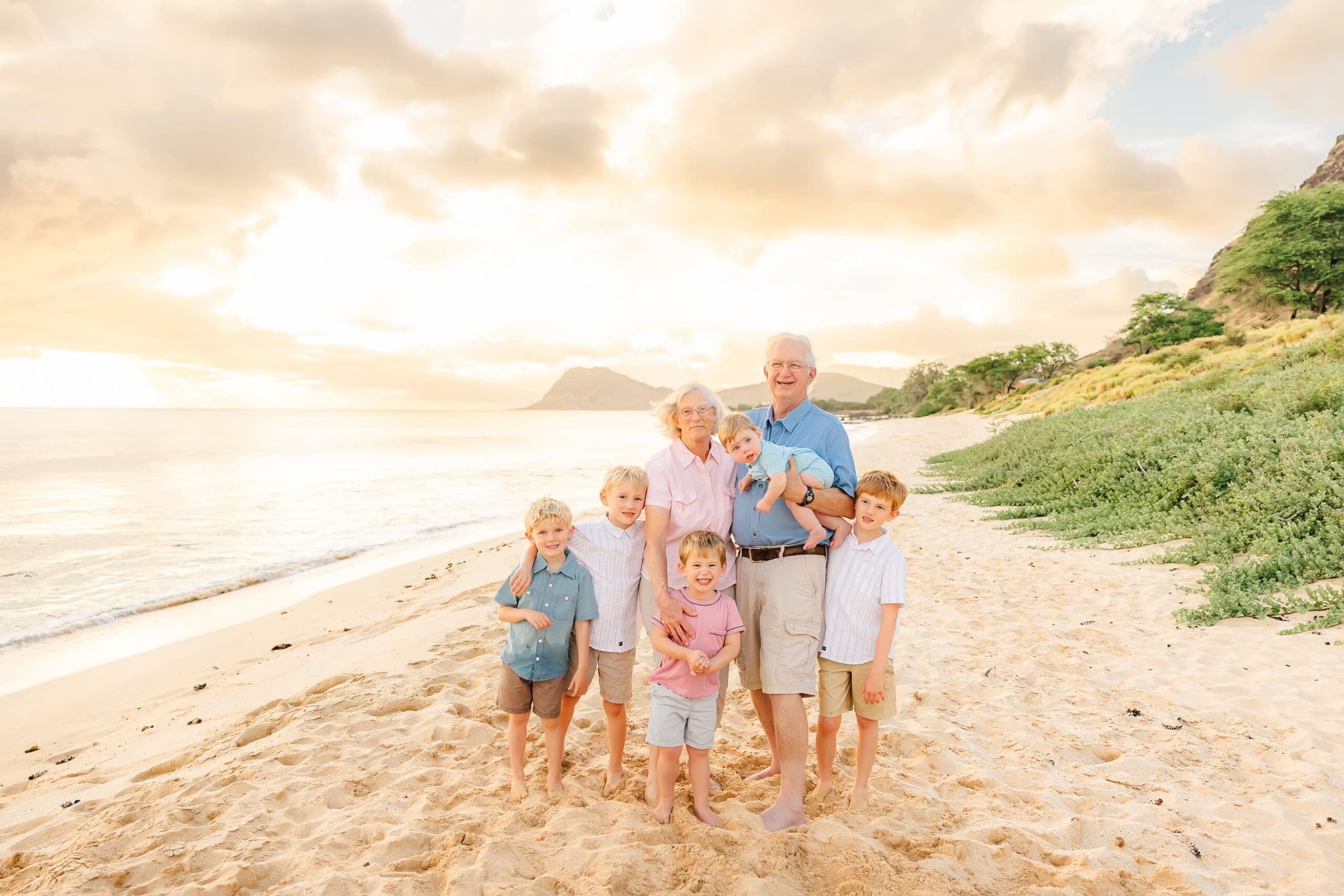
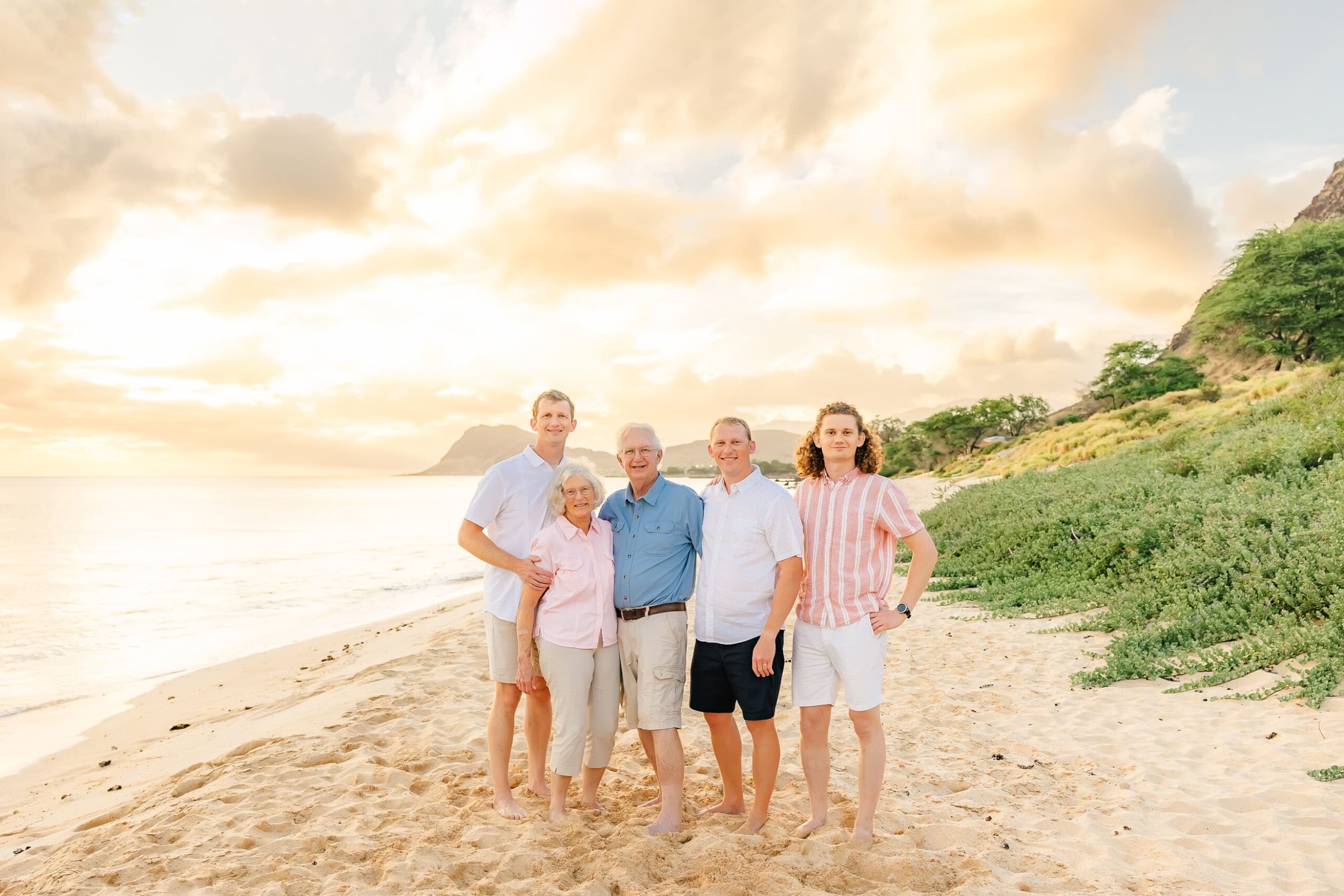
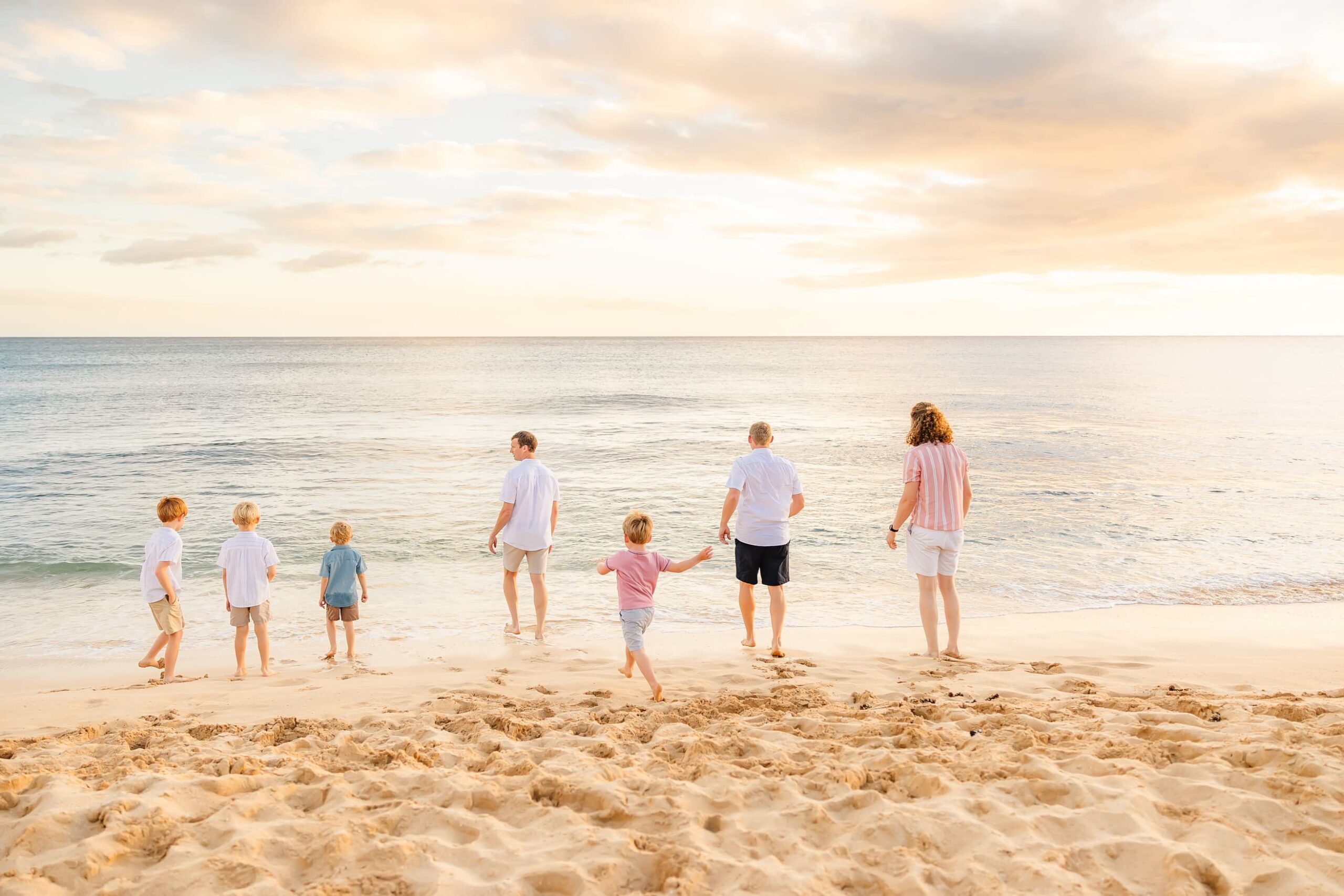
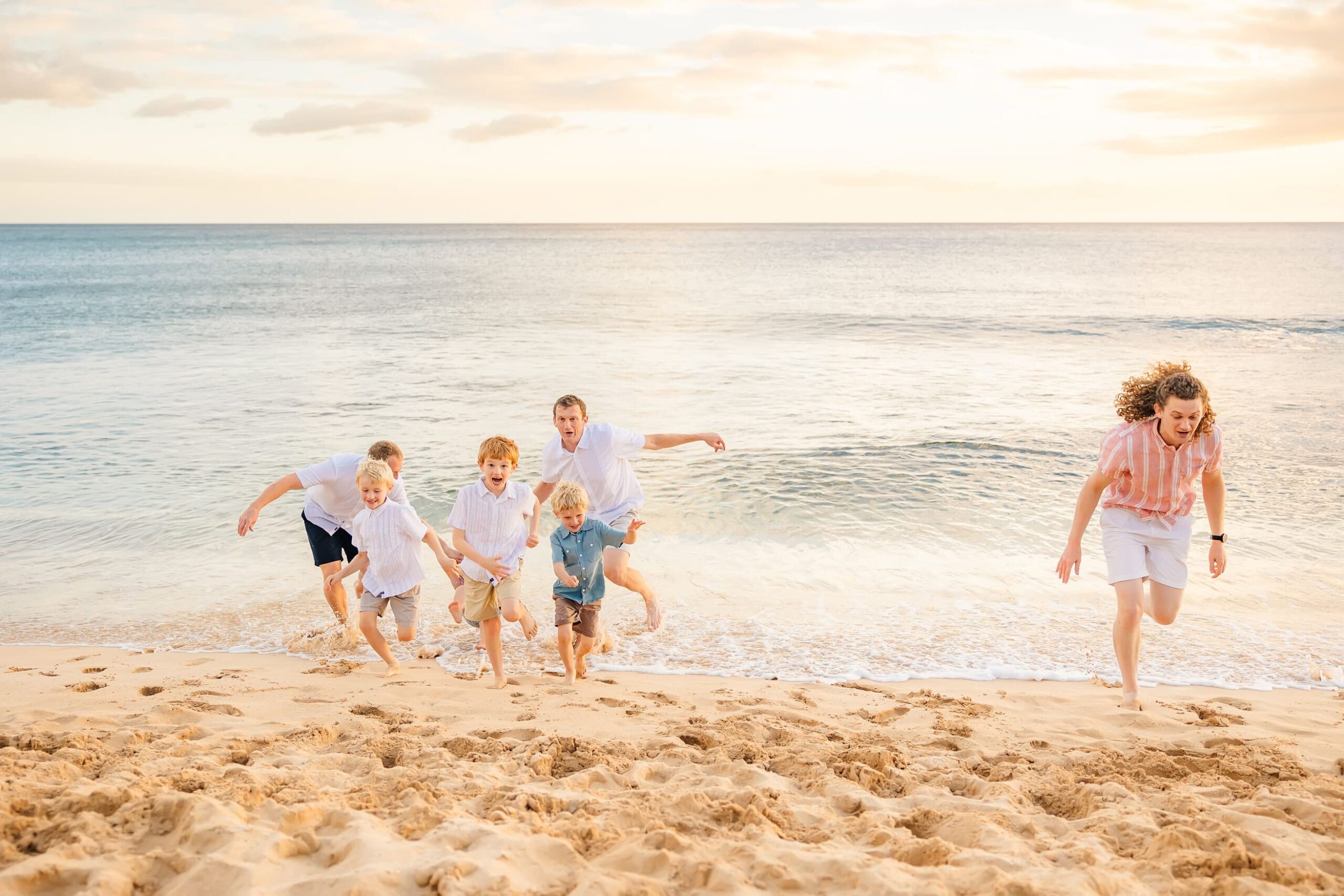
Matching head-to-toe has a dated feel and tends to make groups look stiff. The better approach is to pick a palette of two or three colors and distribute them across the family.
A simple way to do it: pick one outfit first (usually mom’s, more on that below) and pull two or three colors from it to build everyone else around. That creates cohesion without making everyone look like they’re wearing a uniform.
Two things that help keep groups looking good: limit it to one patterned piece per group. If mom is in a floral dress, everyone else should be in solids. Two people in different florals almost always clash, even if they’re in the same color family. Also try to keep the saturation level roughly consistent across everyone. Mixing a very bright color with very muted tones tends to make one person look out of place.
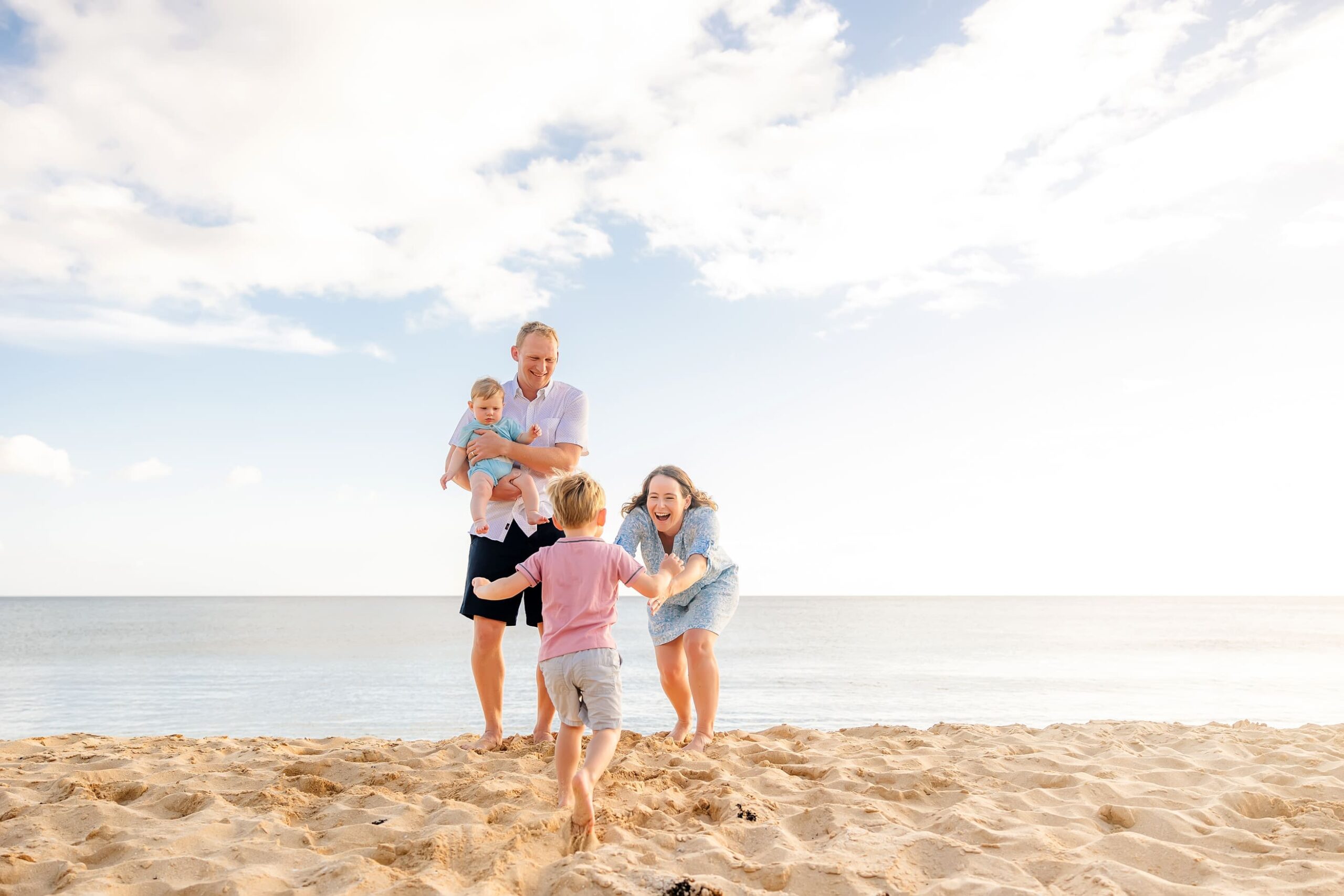
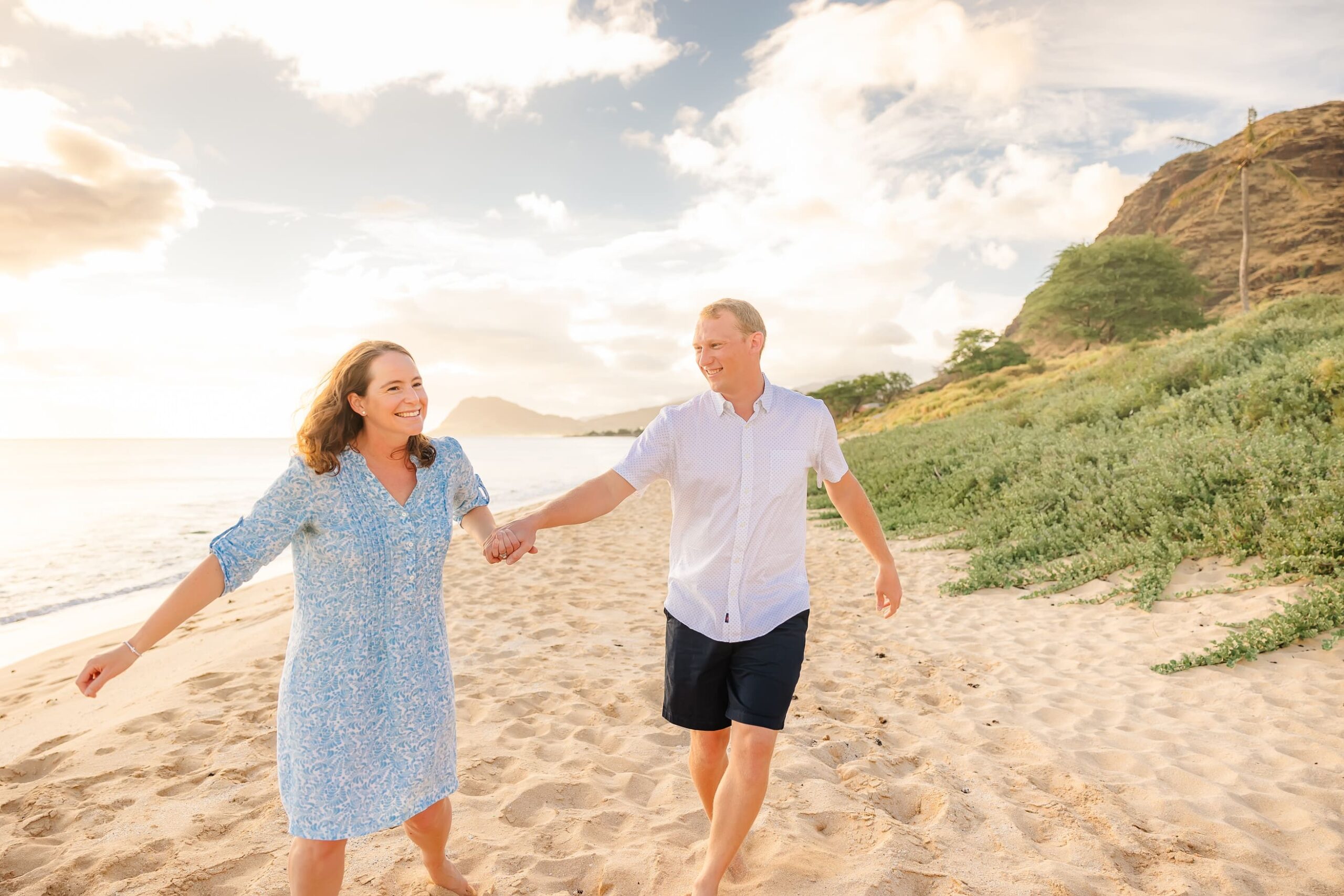
For a family of four, a formula that works reliably: mom in a patterned or textured dress, dad in a solid neutral, kids in soft tones pulled from mom’s palette.
What to wear, person by person
Start with mom
Always. Build the whole outfit plan around what mom wants to wear and feels best in. Her outfit tends to be the visual anchor of the group, and practically speaking, it has the most color options to pull from.
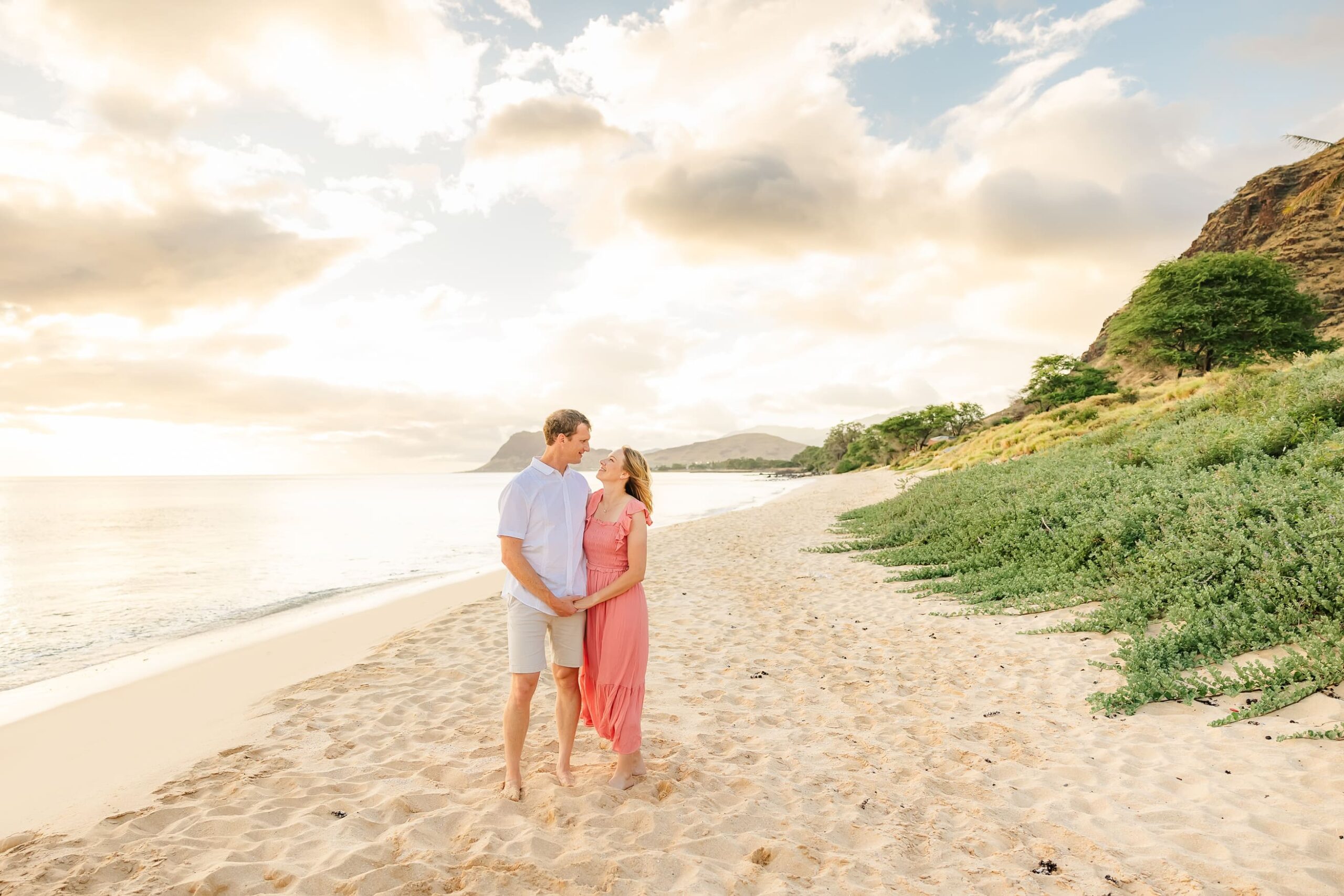
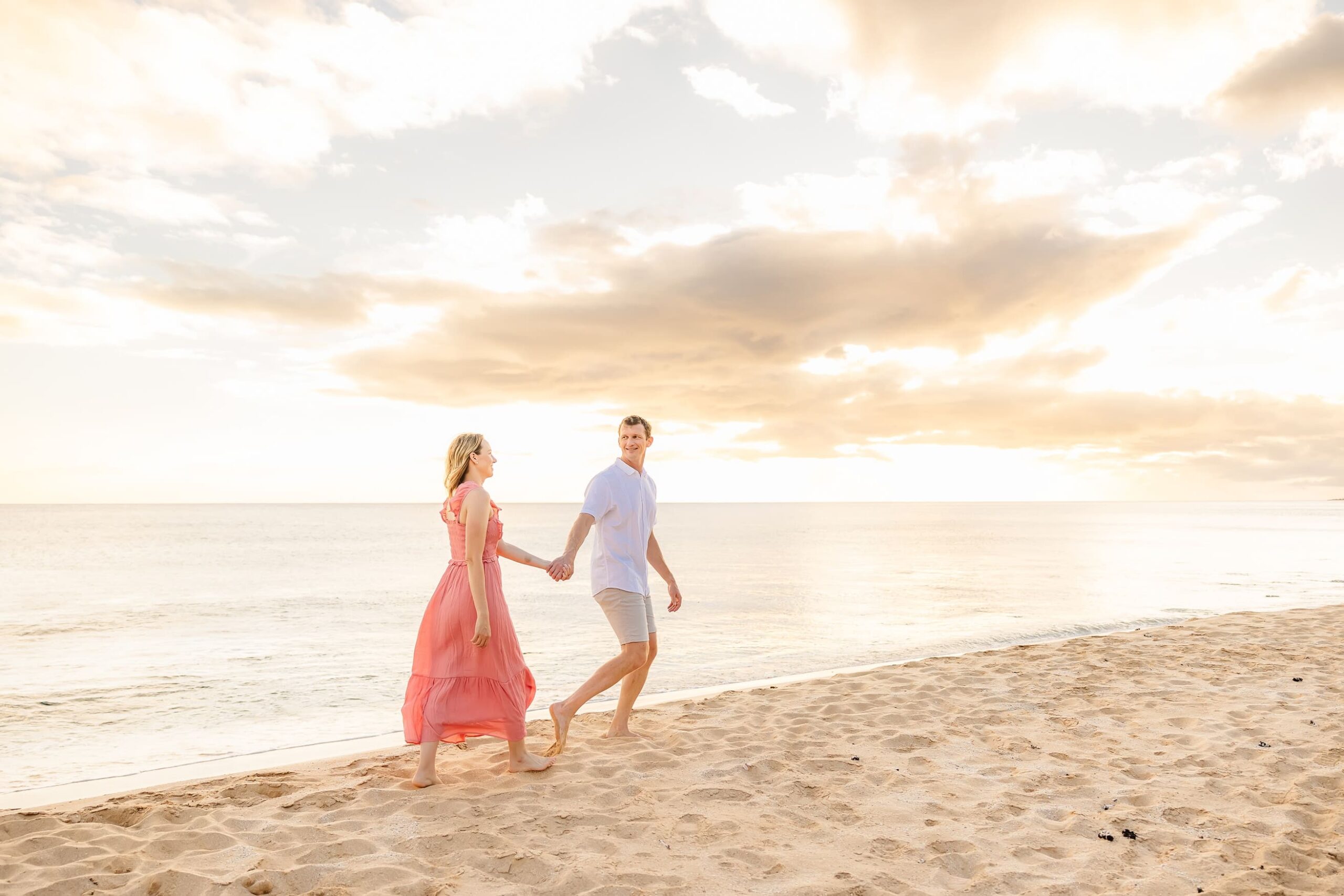
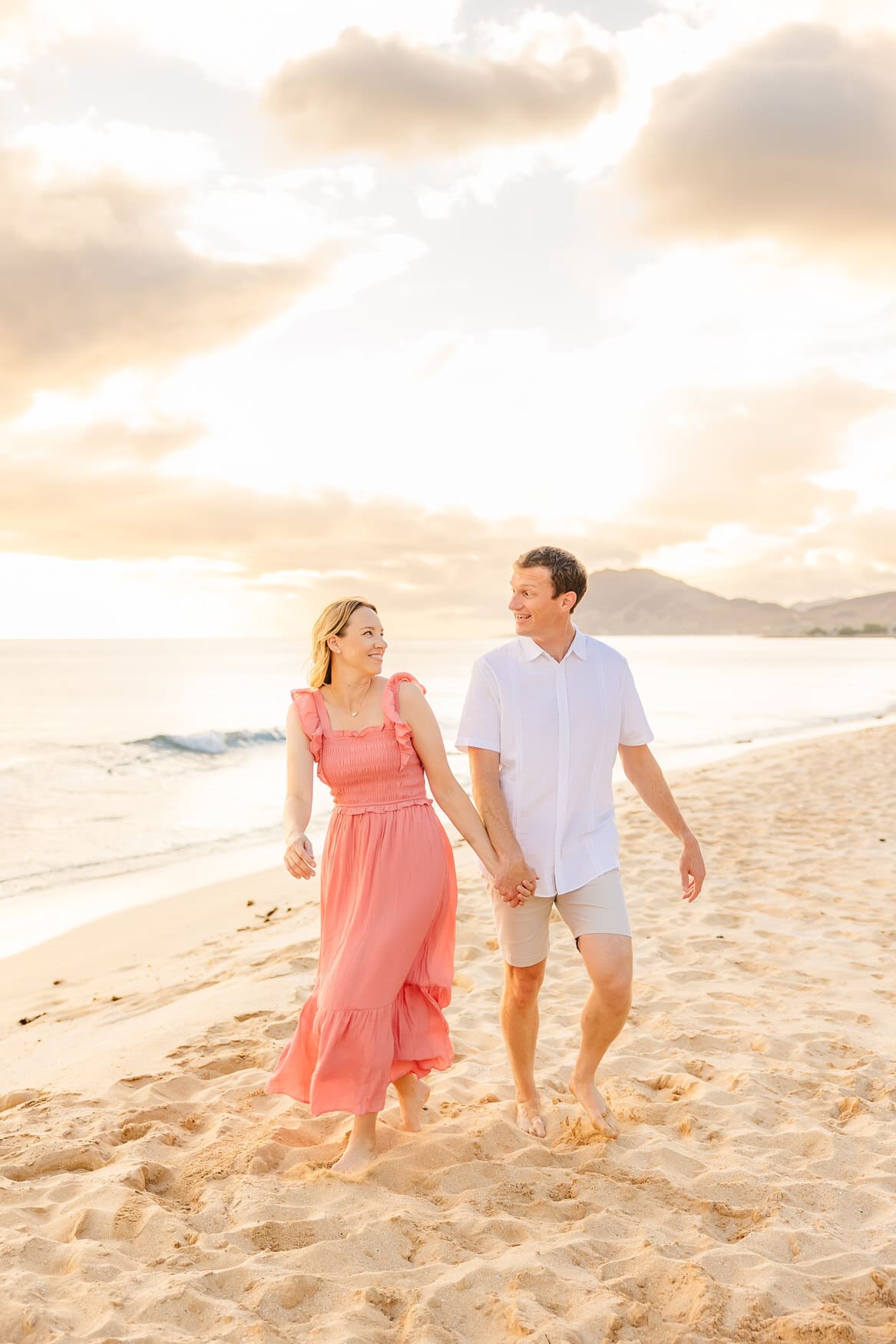
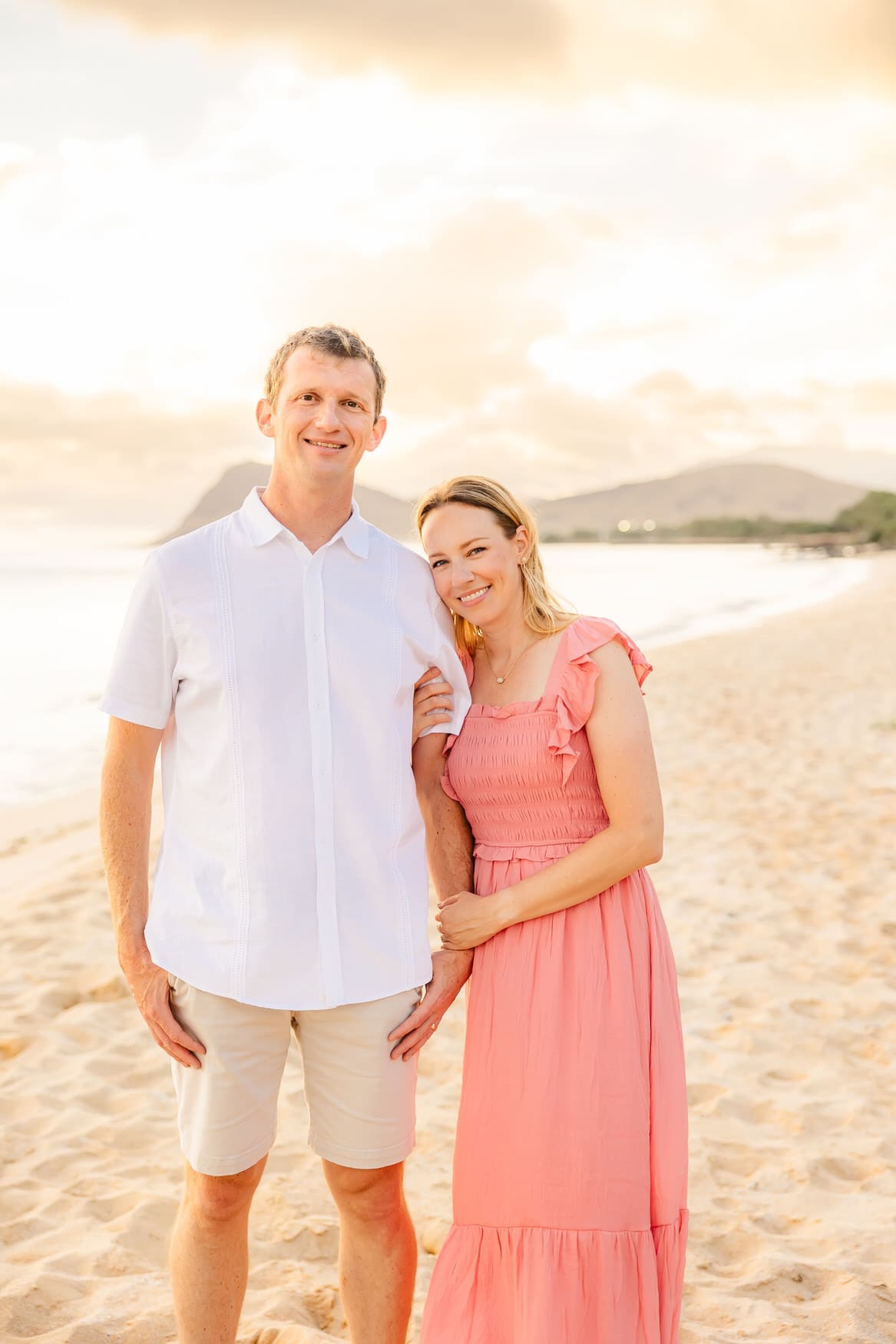
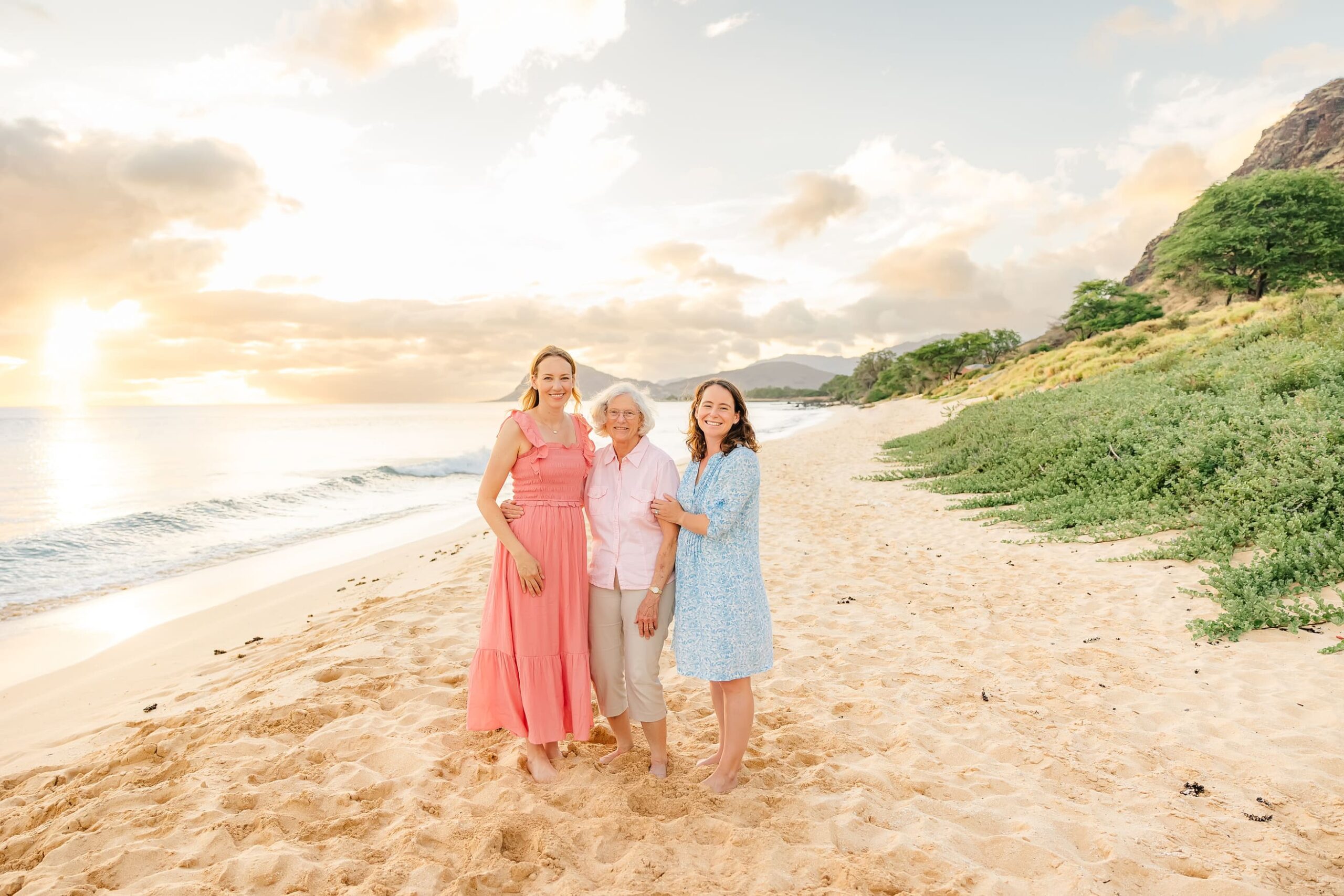
Flowy dresses and skirts photograph particularly well on the beach. Fabric that moves in the breeze looks alive in photos in a way that stiff, structured clothing just doesn’t. Look for linen, cotton gauze, or chiffon. Maxi or midi length works well. Anything that cinches at the waist and has some flow at the hem is going to look great.
For stores: Baltic Born and Vici have a lot of beach-appropriate dresses at mid-range prices. Free People tends toward boho which works nicely in Hawaii. Anthropologie if you want something with more texture and detail. H&M and Old Navy if you want to keep the budget down.
Dad
Men’s outfits are generally simpler. A well-fitted linen or cotton button-down in a neutral (white, cream, light blue, sage, soft tan) with chinos or casual pants. That’s really it. The fit matters more than the specific piece.
One specific tip: if dad runs warm, bring a second shirt. Sand, sun, and kids are a workout, and sweat is much easier to manage with a clean backup than to try to fix in editing. If you know you know.
Good places to look: Faherty makes great linen shirts designed for warm weather. Buck Mason, Gap, and Banana Republic all have reliable basics.
Kids
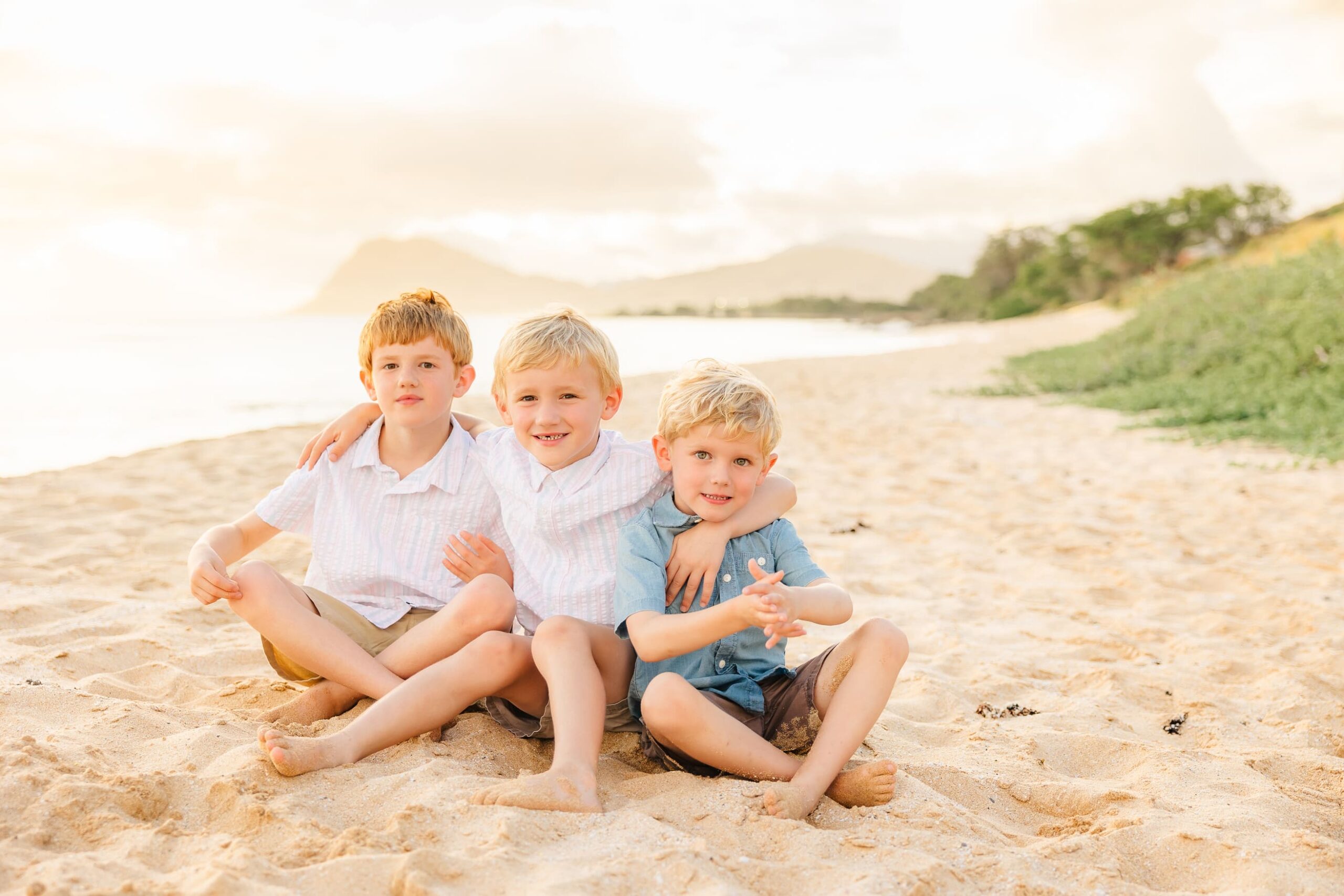
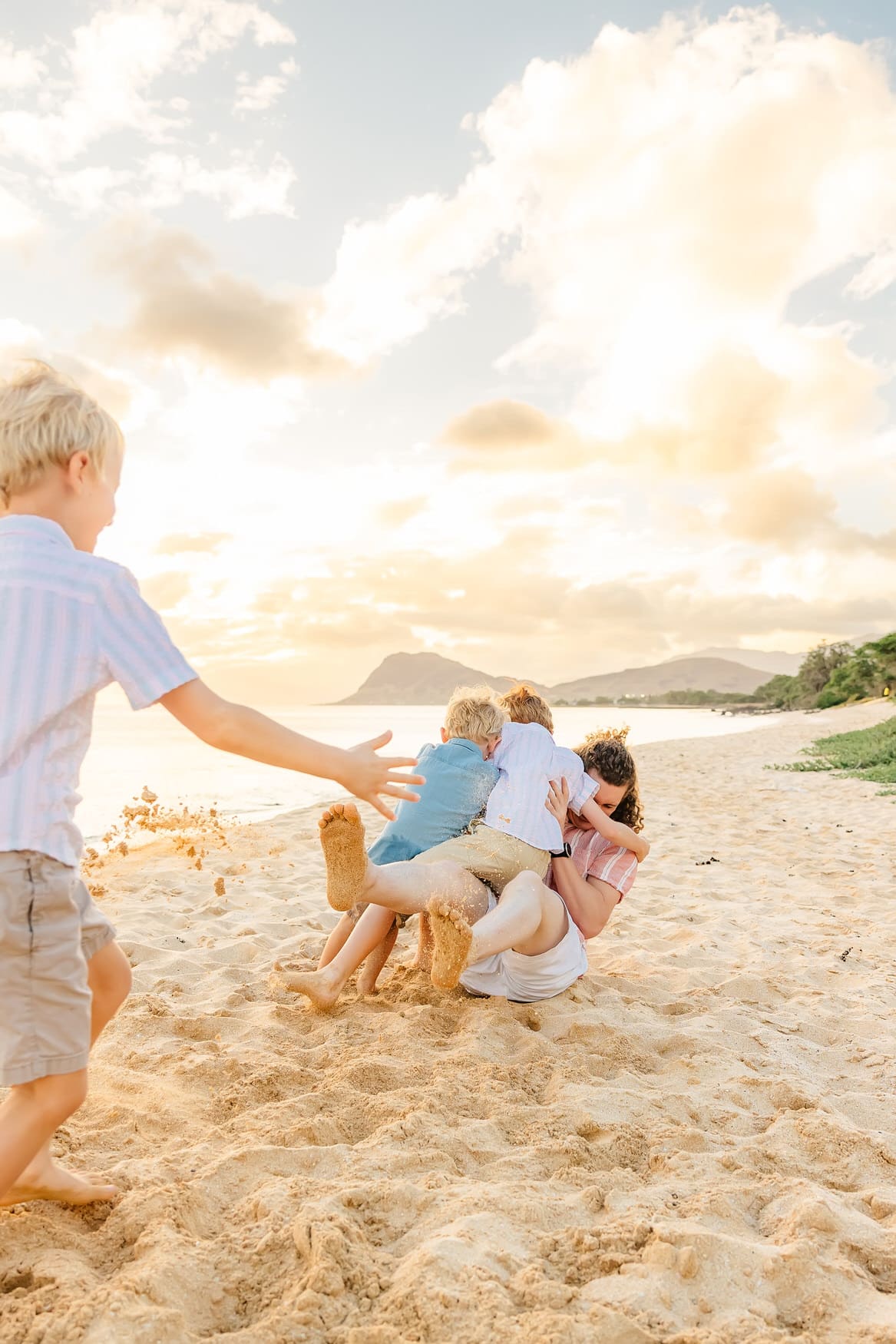
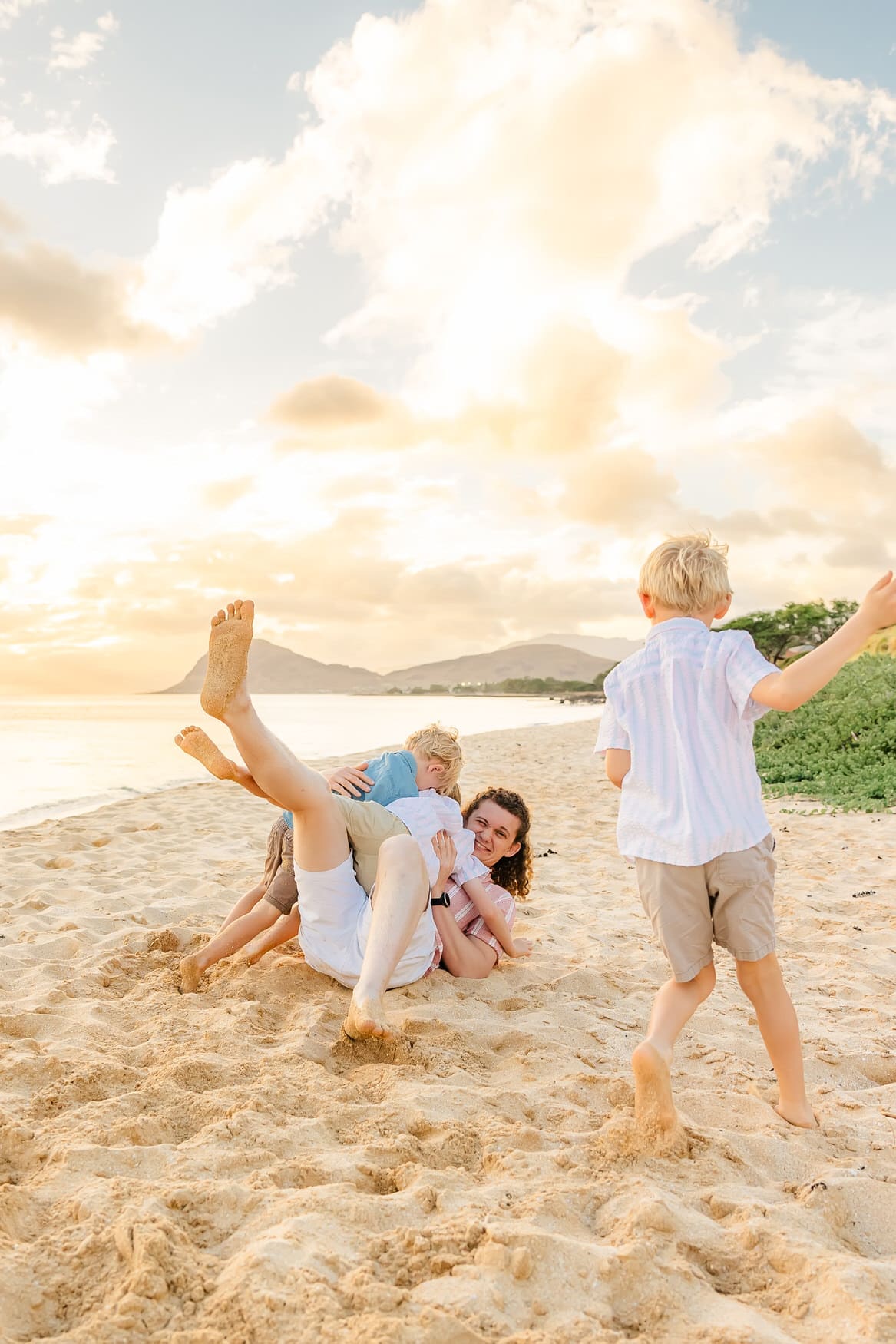
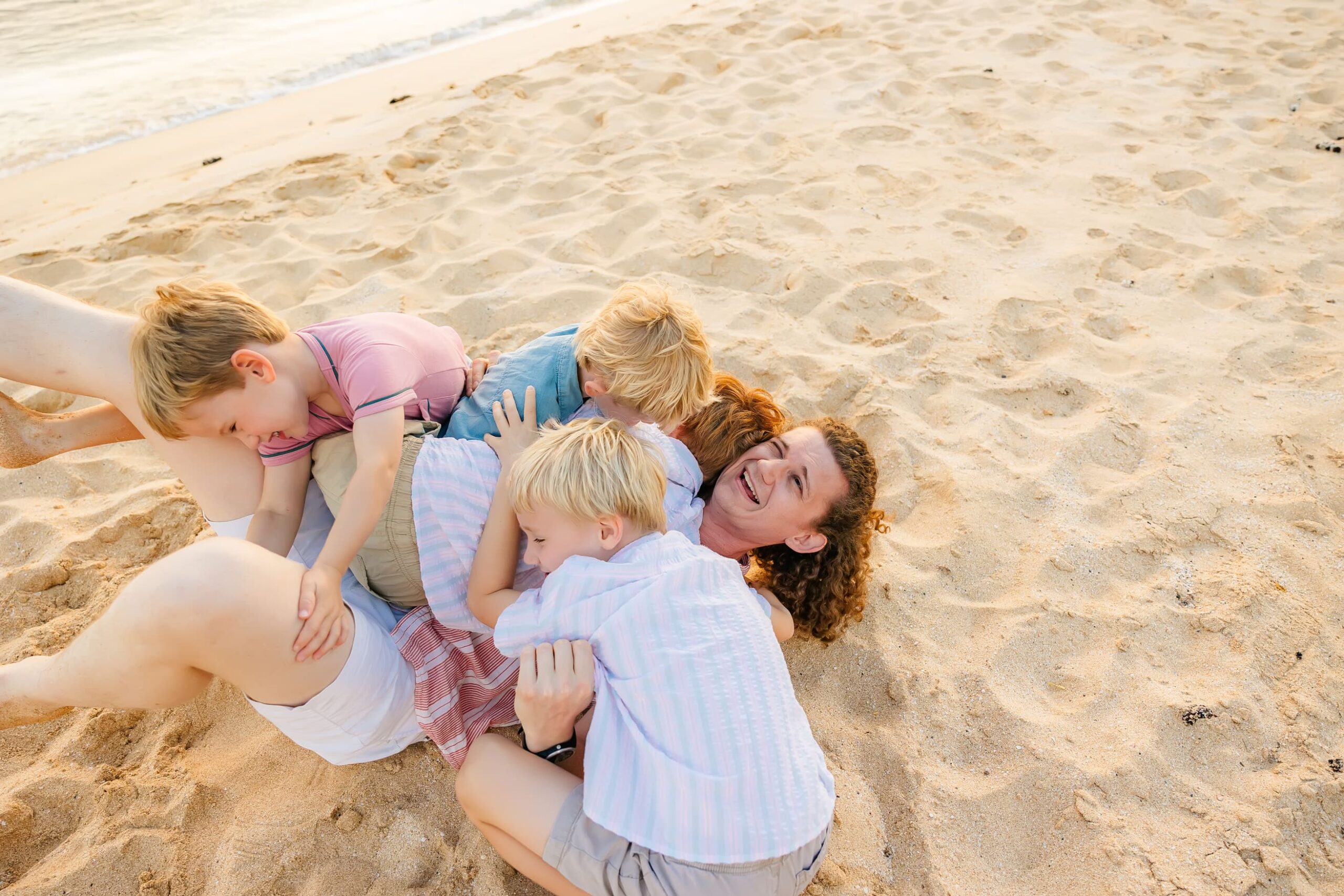
Comfort is the whole game with kids. If they’re miserable, the photos will reflect it. Put them in something they’re happy moving around in.
A trick that works well: let them choose between two options you’ve already approved. It gives them a sense of ownership and dramatically reduces the chance of a meltdown on the beach over clothing.
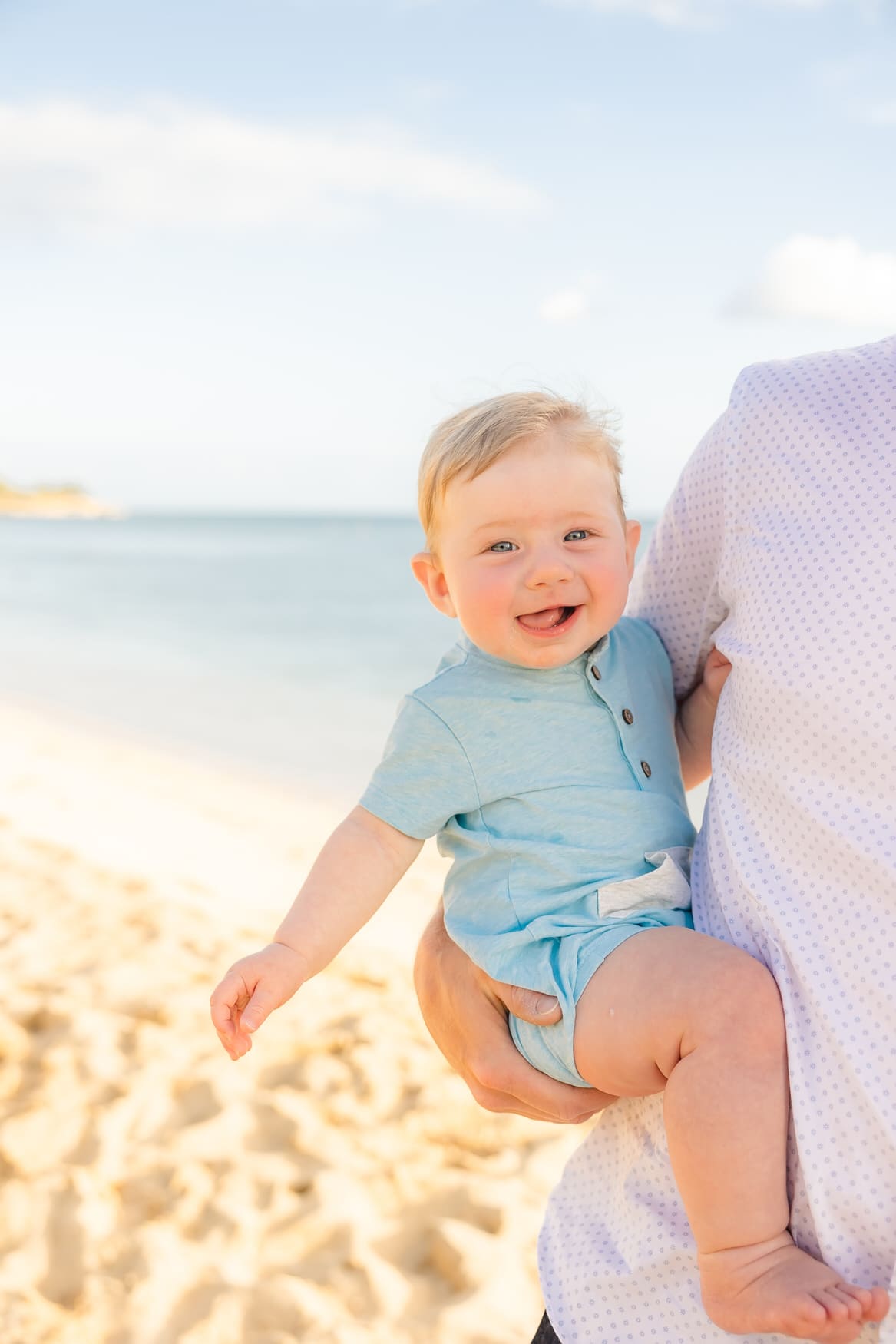
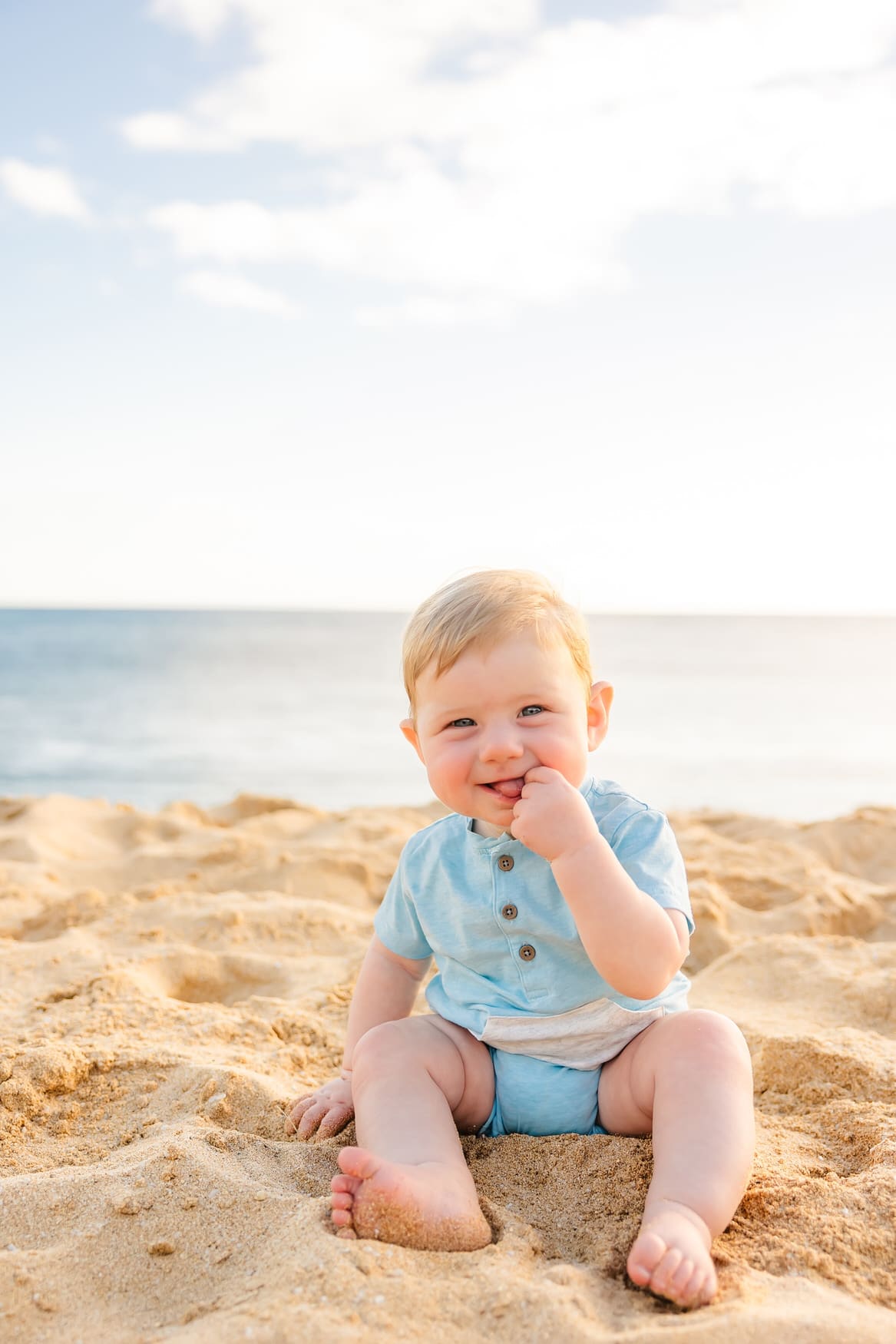
For girls, flowy dresses or skirts in soft tones from your palette. For boys, linen or cotton shorts with a simple button-down or a soft tee. Avoid anything that needs to stay tucked in or that they’ll keep pulling at. For babies, soft rompers or simple dresses in cotton or muslin work well. Neutral tones photograph beautifully against skin.
Good places to shop for kids: Zara and H&M for affordable, photogenic options. Rylee + Cru if you want something with more intentional styling. Target is genuinely underrated for beach session outfits.
Fabric and fit
Natural, breathable fabrics make a real difference in Hawaii. It’s warm, sometimes humid, and the beach adds sand, wind, and occasional spray. Linen and cotton move and breathe. Polyester and synthetic fabrics tend to look stiff, wrinkle oddly in the wind, and hold heat.
Fit matters as much as color. Clothes that fit well look intentional. Something slightly too big can look shapeless in photos in a way that’s hard to see in a mirror. If you’re wearing something flowy, make sure it’s a purposeful flow, not just too large.
One thing people forget: plan for wind. Hawaii beach sessions often have a good breeze, which is great for photos when fabric is moving with it, and a continuous battle when hair is going in every direction. Either plan a hairstyle that looks good with some movement (a loose braid or half-up style) or bring a few simple pins as backup.
Extended family and large groups
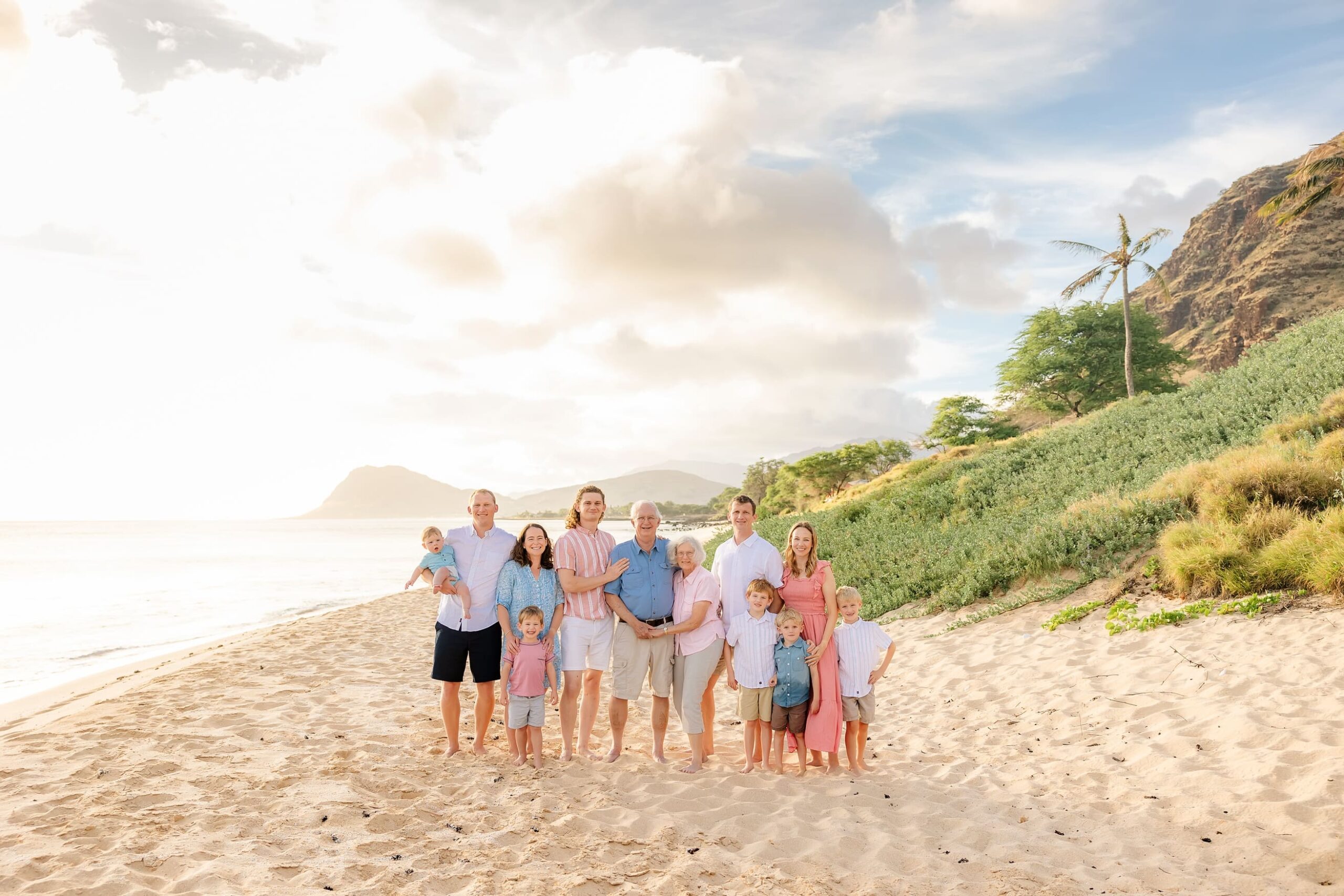
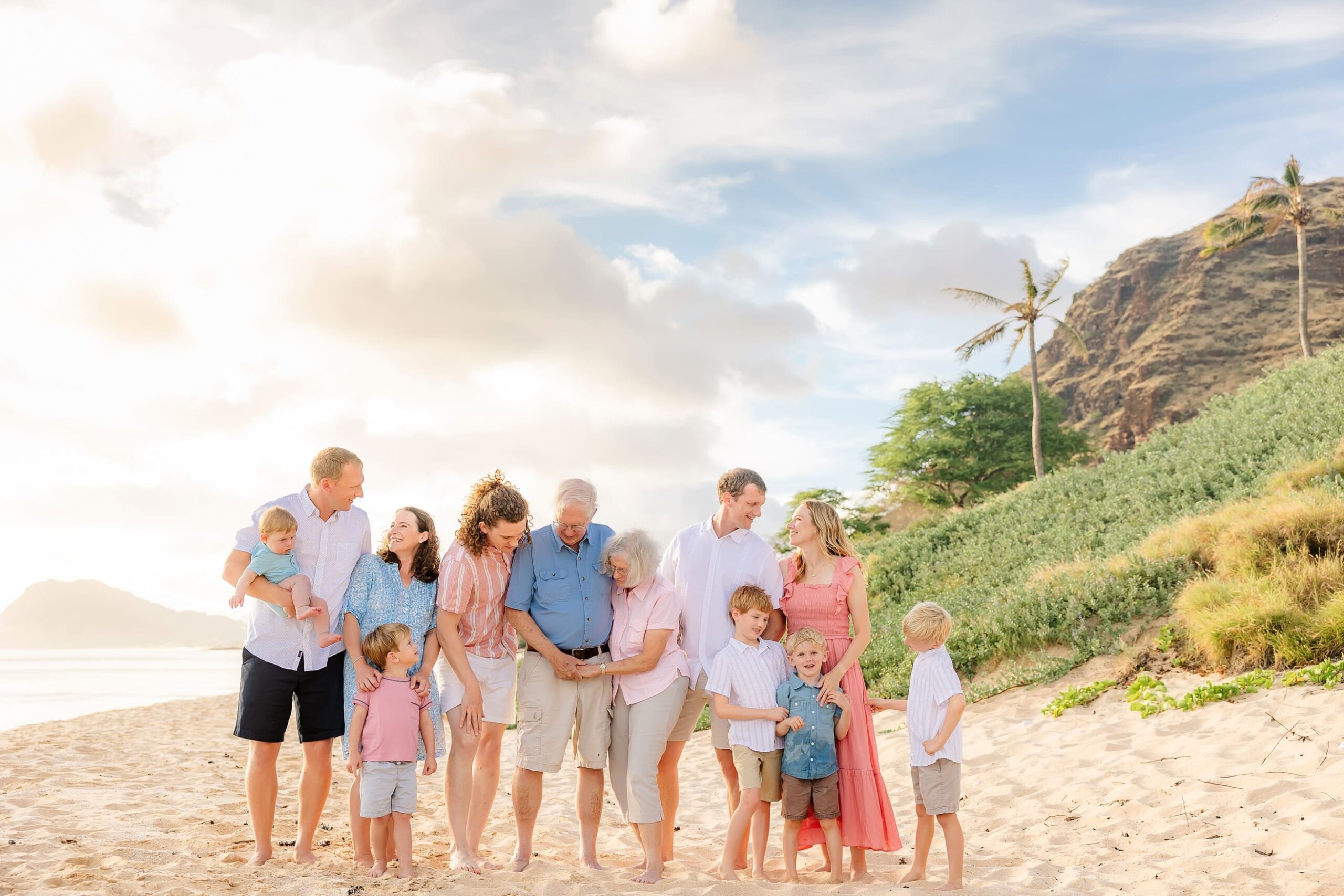
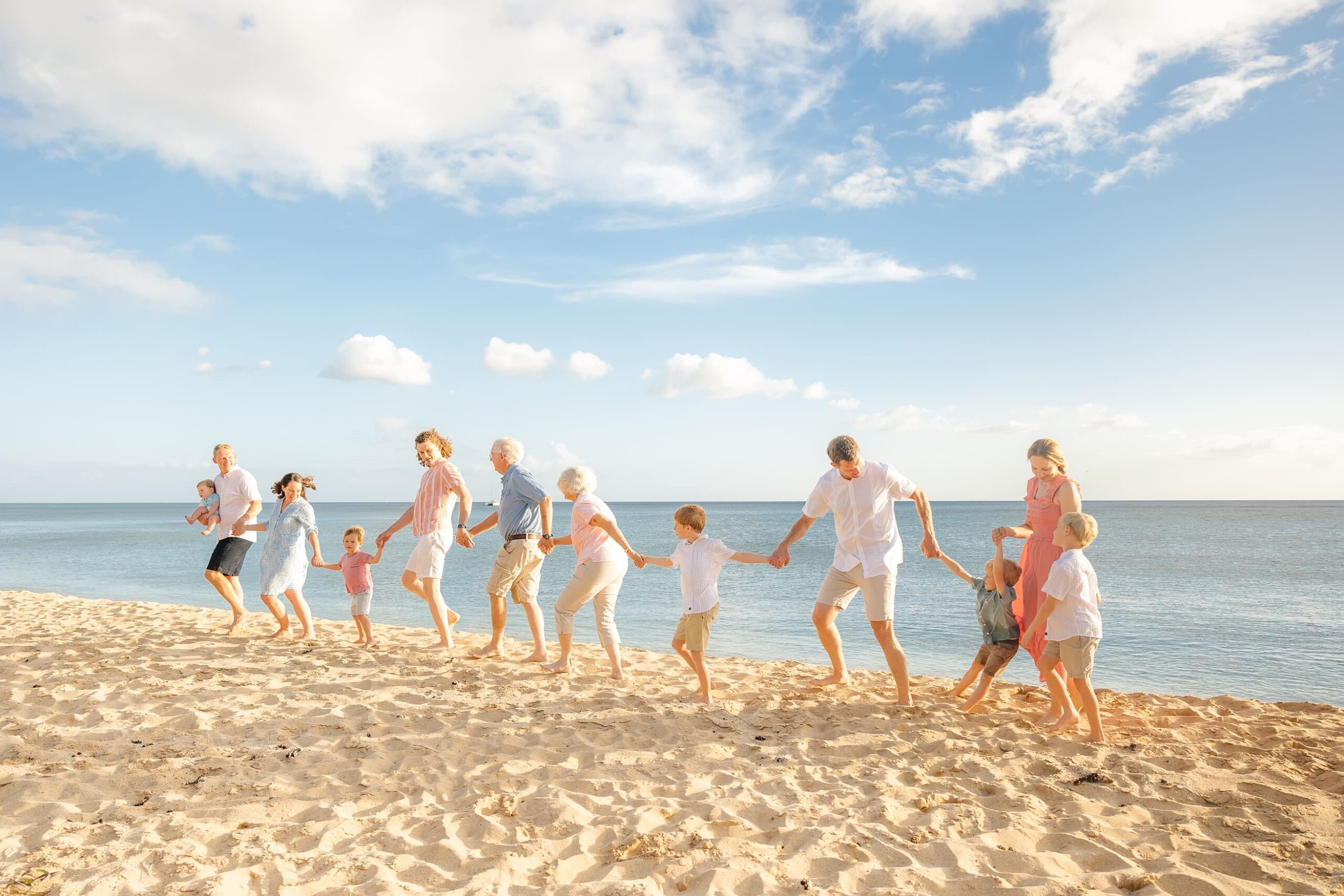
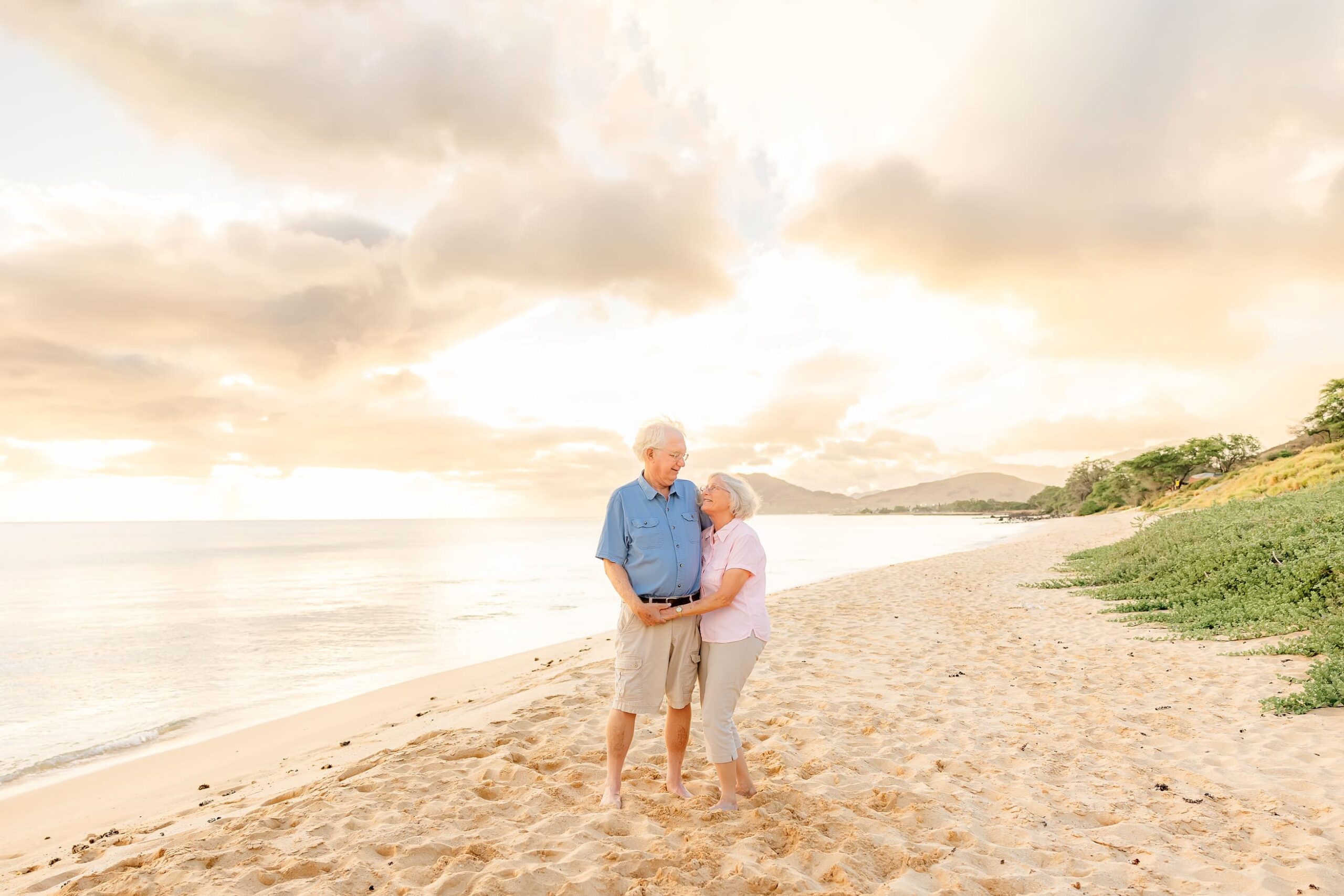
Coordinating outfits for ten or twelve people is a different challenge. Neutrals are your best friend. Anchoring a large group in neutrals with small pops of one or two accent colors is much more forgiving than trying to run a full color palette across that many people.
Limit patterns to one or two across the whole group. Imagine a row of grandparents, parents, and kids where three different people are wearing three different florals. Even in the same color family, it gets visually chaotic. One pattern max, or just go all-solid.
If your extended family spans multiple nuclear families, one approach that works well: give each nuclear family its own coordinating palette within the broader scheme. One family in cream and dusty blue, another in ivory and sage, a third in blush and tan. Related but not identical.
Don’t overthink shoes for beach sessions. Most families go barefoot, and the sand handles that better than anything you’d bring. If you do want shoes for some of the session, simple white sneakers or flat sandals in a neutral work. Flip-flops that clap and flop with every step are more disruptive than people expect.
The practical stuff
Bring a backup outfit. Someone is going to get wet. It might be an accident, it might be a kid running into a wave, it might be an enthusiastic dad. A simple change of clothes means a small moment doesn’t end the session.
Don’t debut new clothing at the session. If you’ve never worn the outfit, you don’t know how it moves, where it bunches, or which direction the wrap goes. Break things in. Figure that out at home.
A small tote with a towel, a hairbrush or comb, and a few safety pins is worth having within reach. You probably won’t need most of it. But when you need a safety pin on a beach, you really need it.
Frequently asked questions
Should we match?
I’d lean against it. Coordinated looks more natural than matchy-matchy, and photos tend to have more life when there’s some variation between people. That said, if matching is something your family does or the kids are excited about, go for it. The emotional reality of the session matters more than the exact outfit formula.
What about Hawaiian prints?
They can work if the colors are soft and muted. The ones that tend to be a problem are high-contrast prints with very saturated colors, especially anything with bright orange or red. If the print is quieter, it can look great. When in doubt, send me a photo before the session.
Is white a bad choice at the beach?
White actually photographs well in Hawaii. It reflects the warm light and stands out cleanly against the sand and ocean. The downside is purely practical: sand shows, and if someone goes near the water, it shows that too. If you wear white and accept it might get a little sandy, it’s a solid choice.
Does the time of day change the outfit recommendations?
A little. Sunrise sessions have softer, cooler light, so cooler tones work particularly well. Sunset sessions have that warm amber glow that pairs well with earth tones, blush, and cream. If you’re doing a midday session, stick to lighter tones and avoid white, which can blow out in direct sun.
Can I send you photos of our outfits before the session?
Yes, please do. I’ve talked families through outfit swaps before we shoot and it’s always been worth it. If you’re unsure about something, just ask. It takes a few minutes and it means we go into the session knowing everything is sorted.
A note on overthinking this
I’ve photographed families in very carefully curated outfits who didn’t connect with each other, and I’ve photographed families in mismatched clothes who had the best time. The outfits are a frame. They should feel like you, be comfortable enough to forget about, and work well enough together that the group looks intentional.
That’s all it needs to do.
If you’re booking a Hawaii session with us and want help thinking through outfits before we shoot, I’m happy to do a quick back-and-forth over email. Reach out through the contact page.